Hydrogen & Electric Aircraft Market
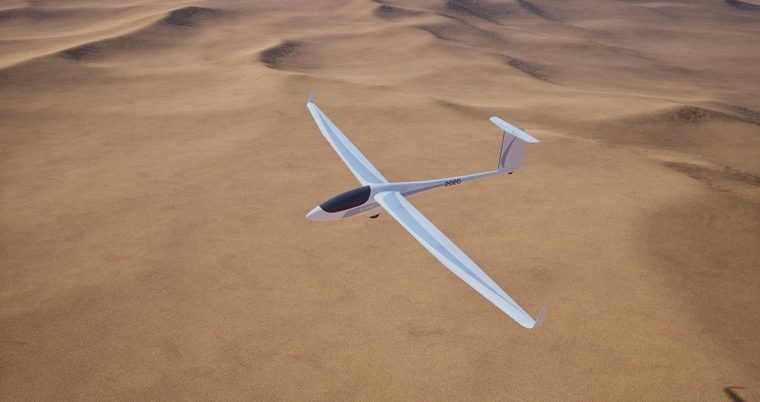
Visiongain has published a new report entitled Hydrogen & Electric Aircraft Market Report 2026-2036 (Including Impact of U.S. Trade Tariffs): Forecasts by Development Stage (Prototype/Flight Test, Pre-Certification), by Application (Passenger Transport, Cargo & Logistics, Other), by Aircraft Configuration (Fixed-Wing (CTOL, STOL), VTOL/eVTOL , Rotorcraft, Other), by Powertrain (Battery-Electric, Hybrid-Electric, Hydrogen Fuel-Cell Electric, Hydrogen Combustion (ICE/Turbine on LH₂), Hydrogen Hybrid-Electric (Fuel Cell + Battery/Turbogenerator)), by Component (Electric Motors, Power Electronics, Battery Packs & BMS, Fuel-Cell Stacks & Balance-of-Plant, Hydrogen Tanks & Cryogenic Systems, Other) AND Regional and Leading National Market Analysis PLUS Analysis of Leading Companies.
The global hydrogen & electric aircraft market is estimated at US$614.7 million in 2026 and is projected to grow at a CAGR of 28.4% during the forecast period 2026-2036.
Impact of US Trade Tariffs on the Global Hydrogen & Electric Aircraft Market
The introduction of new United States tariffs on advanced aerospace technologies, hydrogen systems, battery components, and electric propulsion equipment has created a complex environment for the global hydrogen and electric aircraft market. These tariffs increase import costs for critical components such as fuel-cell stacks, rare-earth magnets, cryogenic tanks, power electronics, and high-energy battery materials, many of which are supplied by Europe, Japan, South Korea, and China. As a result, manufacturers face higher production costs, longer procurement cycles, and potential delays in prototype development and certification programs. However, the tariffs also accelerate domestic supply-chain localisation within the United States, encouraging investment in new manufacturing facilities, research hubs, and raw-material processing plants that could strengthen long-term resilience and competitiveness.
At a global level, the tariff environment reshapes trade flows and collaborative programs. Some international companies may shift assembly operations into North America to retain market access, while others may prioritise partnerships in Europe and Asia-Pacific, where zero-emission aviation strategies are more heavily incentivised. Therefore, the overall impact of United States tariffs depends heavily on the duration of policy enforcement and the response strategies adopted by aerospace manufacturers, suppliers, and governments.
Hydrogen Propulsion Technology Maturation and OEM Realignment: Demonstrations, Fuel-Cell Powertrains, and a Cautious Timeline for Large Aircraft
Hydrogen propulsion—both fuel-cell electric and hydrogen-combustion architectures—has advanced from concept to demonstrator and system integration testing, prompting OEMs to reconfigure programmes around fuel-cell stacks, cryogenic handling and hybrid electric architectures; however, technical maturation has proven slower than many early optimistic timelines, forcing leading OEMs to recalibrate target entry dates and re-prioritise fuel-cell vs cryogenic combustion tradeoffs as they balance certification risk, weight penalties and infrastructure dependencies. Companies are now moving to demonstrator-to-prototype sequences (fuel-cell stacks, megawatt-scale powertrains and liquid hydrogen breadboard testing) to validate thermal management, safety cases and integration into aircraft systems, while also partnering with engine manufacturers, cryogenics specialists and hydrogen suppliers to tackle the end-to-end complexity. These demonstrator advances have converted hydrogen from a far-term theoretical option into a credible multi-decade transition pathway for medium-to-long range aviation, but they have also revealed that introducing hydrogen at large scale requires synchronized progress across supply, infrastructure and regulation—hence the industry’s now more conservative public timelines and staged deployment strategies
How will this Report Benefit you?
Visiongain’s 423-page report provides 124 tables and 191 charts/graphs. Our new study is suitable for anyone requiring commercial, in-depth analyses for the hydrogen & electric aircraft market, along with detailed segment analysis in the market. Our new study will help you evaluate the overall global and regional market for hydrogen & electric aircraft. Get financial analysis of the overall market and different segments including development stage, application, aircraft configuration, powertrain, and component, and capture higher market share. We believe that there are strong opportunities in this fast-growing hydrogen & electric aircraft market. See how to use the existing and upcoming opportunities in this market to gain revenue benefits in the near future. Moreover, the report will help you to improve your strategic decision-making, allowing you to frame growth strategies, reinforce the analysis of other market players, and maximise the productivity of the company.
What are the Current Market Drivers?
Hydrogen-Electric Powertrain Prototypes and Start-Up Momentum: Why Modular Powertrains Change Regional Aviation Economics.
A wave of start-ups and specialist integrators developing modular hydrogen-electric powertrains (drop-in units sized for 10–80 seat regional aircraft) has created a practical near-term pathway to zero-emission regional flight by focusing on conversions and demonstrator retrofits rather than whole-airframe redesigns; these modular systems enable progressive fleet renewal by allowing operators to convert existing turboprops to hydrogen-electric or hybrid-electric propulsion, shortening time-to-market and leveraging established airframes and operator logistics. The start-up ecosystem’s success in flight-testing progressively larger powertrain blocks validates the modular conversion model and attracts anchor deals from regional carriers prepared to green their short-haul networks, creating a cascade effect where certified modular powertrains unlock incremental hydrogen demand and justify localized hydrogen refuelling and logistics investments—thus creating a self-reinforcing, regional market that can scale before long-range hydrogen or fully electric large aircraft achieve maturity..
Battery Energy-Density and Electric Propulsion Breakthroughs: Pushing Range Limits for Short-Haul Aircraft While Reframing Use Cases
Battery technology improvements—cell chemistry, pack safety, thermal management and aviation-grade certification of high-density batteries—are steadily extending the viable mission envelope for electric propulsion, shifting the practical addressable market toward short regional hops, commuter services and urban air mobility; as energy density improves and battery systems are developed to rigorous aviation safety standards, electric propulsion becomes increasingly viable for single-aisle regional legs and air taxi concepts, changing airline network economics by lowering operating costs, noise and maintenance overhead on short sectors. These improvements also drive hybrid electric topologies where battery and fuel (hydrogen or liquid fuels) combinations optimize mission efficiency: operators can deploy electric systems for frequent short sectors while preserving conventional or hydrogen solutions for longer routes, thereby creating an incremental adoption curve and multiple commercial pathways for OEMs and tier-one suppliers.
Where are the Market Opportunities?
Regional Hydrogen-Electric Aviation: A Practical Entry Point to Zero-Emission Commercial Flight”
Targeting regional air travel (20–90 seat aircraft) with hydrogen-electric or hybrid powertrains is the most immediate commercial opportunity because these missions balance payload, range and frequency in a way that matches early powertrain performance and local hydrogen logistics feasibility; conversion kits and demonstrator retrofits for proven regional turboprops enable operators to decarbonise short sectors relatively quickly, while regional routes also tend to be politically supported (regional connectivity funds, green route incentives) and offer visible emissions reductions for networked carriers. Successful regional roll-outs create localized hydrogen economies of scale (refuelling, maintenance, training) and provide a repeatable blueprint for expanding to larger aircraft classes as technology and infrastructure mature.
Aircraft and Engine Retrofit Kits: Rapid Commercialisation Pathway via Conversion-First Strategies
Retrofit conversion kits that replace turboprop or turbofan powerplants with hydrogen-electric modules or battery-electric motors provide a near-term commercial pathway because they avoid the decade-plus cycle of introducing a wholly new certified airframe; retrofits permit airlines to use existing fleet assets and crews while deploying lower-emission propulsion, thereby shortening payback periods and enabling incremental fleet decarbonisation. Companies that develop modular, certified conversion packages will capture aftermarket revenue, long-term service contracts and first-mover advantage in retrofit markets, making conversion kits a practical and scalable business model bridging today’s legacy fleets to tomorrow’s zero-emission operations.
Competitive Landscape
The major players operating in the hydrogen & electric aircraft market are Airbus SE, Archer Aviation, BETA Technologies, Bye Aerospace, Embraer S.A., Eve Air Mobility, GKN Aerospace, Heart Aerospace, Joby Aviation, magniX, Pipistrel, Rolls-Royce Holdings Plc, Stralis Aicraft Pty Ltd, Urban Aeronautics Ltd., ZeroAvia, These major players operating in this market have adopted various strategies comprising M&A, collaborations, investment in R&D, regional business expansion, partnerships, and new product launch.
Recent Developments
- 08-Dec-25, Airbus finalized its acquisition of key Spirit AeroSystems facilities supporting A350, A320, and A220 programmes. Over 4,000 employees join Airbus as sites in the U.S., France, Morocco, Northern Ireland, and Scotland are integrated. Airbus also receives $439M compensation and additional settlement payments as part of the agreement.
- 03-Dec-25, Archer announced major partnerships to build an air taxi network in Miami, enabling future urban mobility services. The collaboration integrates vertiport development, real estate access, and community planning to support Midnight aircraft operations.
- 02-Dec-25, Eve chose BETA Technologies to supply electric pusher motors for its conforming prototypes and production eVTOLs. The 10-year agreement is valued up to USD $1 billion, supporting Eve’s 2,800-aircraft backlog and enhancing its supply chain reliability.
- 02-Dec-25, Archer and Karem Aircraft formed an exclusive partnership to integrate advanced, military-grade rotor systems into Archer’s next-generation dual-use VTOL platform. The technology aims to enhance performance, durability, and mission flexibility for commercial and defense use.
- 20-Nov-25, BETA and Near Earth Autonomy are co-developing autonomy systems for dual-use electric and hybrid VTOL aircraft. BETA has already flown 1,000+ hours of uncrewed missions, and integrated perception and guidance systems will move to flight testing in early 2026.
- 19-Nov-25, Archer signed a major partnership to deploy eVTOL air mobility services in the Kingdom of Saudi Arabia. The collaboration supports sustainable tourism at Red Sea developments and expands the region’s advanced air mobility infrastructure.
Notes for Editors
If you are interested in a more detailed overview of this report, please send an e-mail to contactus@visiongain.com or call +44 207 336 6100.
About Visiongain
Visiongain is one of the fastest-growing and most innovative independent media companies in Europe. Based in London, UK, Visiongain produces a host of business-to-business reports focusing on the automotive, aviation, chemicals, cyber, defence, energy, food & drink, materials, packaging, pharmaceutical and utilities sectors.
Visiongain publishes reports produced by analysts who are qualified experts in their field. Visiongain has firmly established itself as the first port of call for the business professional who needs independent, high-quality, original material to rely and depend on.


