Aircraft Computers Market
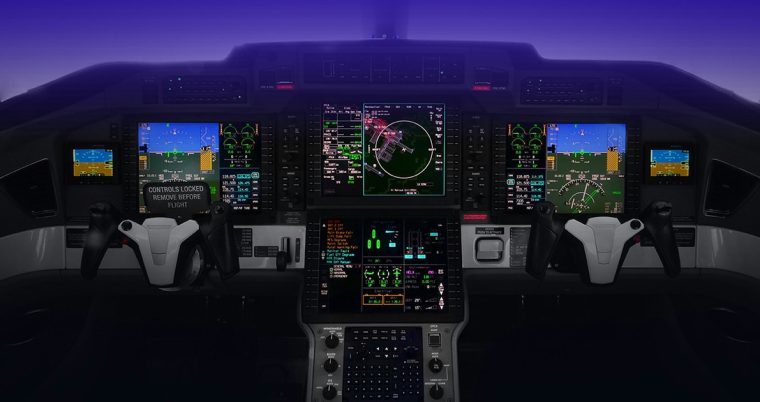
Visiongain has published a new report entitled Aircraft Computers Market Report 2026-2036 (Including Impact of U.S. Trade Tariffs): Forecasts by Fitment (Line-Fit/OEM Installations, Retrofit/Upgrades & Modernisation), by Platform (Commercial Aviation, Military Aviation, Business & General Aviation), by End-user (OEMs (Aircraft & Helicopter Manufacturers), MROs & Upgrade Centers, Airlines & Commercial Operators, Other), by Application (Primary Flight Control Computers (FCC), Navigation, Flight Planning & Performance, Mission Management, Surveillance & Weapons, Engine & Powerplant Management, Safety, Monitoring & Health Management), by Type (Flight Control & Guidance, Integrated Modular Avionics (IMA) Modules, Flight Management & Navigation, Mission & Display Computers, Engine & System Control Computers, Air Data, Sensor & Health Management) AND Regional and Leading National Market Analysis PLUS Analysis of Leading Companies.
The global aircraft computers market is estimated at US$7,933.2 million in 2026 and is projected to grow at a CAGR of 5.2% during the forecast period 2026-2036.
Impact of US Trade Tariffs on the Global Aircraft Computers Market
The imposition of new U.S. tariffs on aerospace components, electronics, and dual-use technologies has created significant uncertainty across the global aircraft computers market. Aircraft computers—such as flight-control computers, mission processors, engine control units, and integrated modular avionics—depend heavily on globally interconnected supply chains involving semiconductor producers, avionics vendors, and system integrators spread across the U.S., Europe, and Asia. Tariffs increase the cost of importing key components, delay sourcing cycles, and complicate manufacturing schedules for OEMs and Tier-1 suppliers. This environment has intensified pressure on supply chains already strained by post-pandemic recovery and rising geopolitical tensions. As a result, manufacturers are exploring new procurement strategies, including supplier diversification, reshoring, and long-term contracting. The market response, however, varies depending on the severity and duration of tariff policies. The following recovery scenarios—V-shaped, U-shaped, and L-shaped—illustrate how different tariff timelines could reshape production costs, delivery schedules, R&D investments, and global competitiveness within the aircraft computers market.
Integrated Modular Avionics and Open Architectures: MOSA & FACE Principles Enabling Faster Upgrades and Supplier Competition
The industry’s migration toward Modular Open Systems Architectures (MOSA/DO-178C-aligned software partitioning and FACE for military systems, ARINC 653 for civil) is reshaping procurement and supplier strategies: avionics integrators and primes now compete to provide certified, modular computing blocks that support rapid capability insertion, COTS reuse and lower life-cycle cost; this architectural transition increases addressable market for middleware, RTOS, hypervisors and safety-certified development toolchains, while creating new business models (software subscriptions, capability-as-a-service) that capture recurring revenue beyond hardware sales. In practice, large primes and integrators (Collins Aerospace, Thales, L3Harris, BAE) are moving toward modular systems and demonstrating open-architecture pilots, efforts that speed fielding of new capabilities while increasing the aftermarket TAM for certified software releases and upgrades.
How will this Report Benefit you?
Visiongain’s 436-page report provides 127 tables and 215 charts/graphs. Our new study is suitable for anyone requiring commercial, in-depth analyses for the aircraft computers market, along with detailed segment analysis in the market. Our new study will help you evaluate the overall global and regional market for aircraft computers. Get financial analysis of the overall market and different segments including fitment, platform, end-user, application, and type, and capture higher market share. We believe that there are strong opportunities in these fast-growing aircraft computers market. See how to use the existing and upcoming opportunities in this market to gain revenue benefits in the near future. Moreover, the report will help you to improve your strategic decision-making, allowing you to frame growth strategies, reinforce the analysis of other market players, and maximise the productivity of the company.
What are the Current Market Drivers?
Autonomy, Sensor Fusion and AI Workloads: New Compute Demands from Perception, Decision and Mission Systems
Autonomous functions, advanced sensor fusion (radar, EO/IR, LIDAR), and embedded AI/ML inference at the edge are creating a new class of workload for aircraft mission computers: deterministic low-latency processing for perception and decision support, hardware acceleration for neural networks, and secure model update pipelines. This trend increases the value of avionics that can host validated AI stacks and provide certification evidence for deterministic behavior under fault conditions; as a consequence, aerospace primes and defense buyers prioritise mission computers with hardware acceleration and robust partitioning for mixed-criticality workloads, producing higher ASPs and stronger vendor lock-in for suppliers that can demonstrate certified AI throughput and safety cases. Thales, Honeywell and other avionics leaders are concurrently reinforcing cyber and AI integration capabilities to address this demand.
Regulatory & Certification Complexity Raising Entry Barriers, But Rewarding Scale and Proven Processes
The aircraft-grade certification environment (DO-178C, DO-254, ARP4754A, EASA/FAA airworthiness standards) imposes long lead times, demanding test evidence and traceable software toolchains that make it expensive and time-consuming for new suppliers to enter the flight-computing market; however, once a supplier demonstrates certified production and toolchain maturity, they obtain de facto preferred-supplier status and extended service and upgrade prospects. This dynamic favours established avionics companies and large primes that have invested in accredited development processes and airborne-qualified components, and it explains recent strategic M&A and carve-outs as primes consolidate certified capability (for example, the flight-controls and actuation transaction activity in 2025 illustrates how strategic handsets of certified systems are being realigned to create stronger, vertically integrated avionics portfolios).
Where are the Market Opportunities?
Aftermarket Refresh and Software-Defined Avionics: Monetizable Recurring Revenue via SW-Upgrades and Capability Subscriptions
The shift to software-defined avionics creates a sustainable recurring-revenue opportunity: once a modular certified compute platform is installed, vendors can monetise feature upgrades, safety patches, performance enhancements, and new capabilities via controlled software releases and certifications; airlines and militaries prefer this model because it reduces hardware churn while enabling capability evolution. Suppliers that develop robust certified update pipelines, SAE/FACE-compatible interfaces and transparent safety cases can capture ongoing service revenues and create sticky customer relationships, this effectively transforms mission computers into platforms for continuous monetisation rather than one-off hardware sales.
Civil-Military Convergence Offers Scale: Dual-Use Mission Computers Capture Defense Premiums and Commercial Volumes
Mission computers that satisfy both civil airworthiness and military ruggedness commands confer a strategic commercial advantage: suppliers that can adapt certified commercial architectures to military requirements (and vice versa) access larger TAMs, higher ASPs and accelerated production runs. Recent contracts and upgrades in both sectors demonstrate cross-pollination (e.g., military flight control computer upgrades and civil modular open-systems pilots), creating opportunities for suppliers to amortise certification costs across mixed civil and defense platforms and to offer tailored variants that meet different security and performance requirements.
Competitive Landscape
The major players operating in the aircraft computers market are Airbus SE, Aviation Industry Corporation of China (AVIC), BAE Systems Plc, Denel SOC Ltd., EDGE Group PJSC, Elbit Systems Ltd, Embraer S.A., GE Aerospace Services, Hindustan Aeronautics Limited (HAL), Israel Aerospace Industries Ltd. (IAI), Korea Aerospace Industries (KAI), L3Harris Technologies, Inc, Leonardo SpA, Raytheon Technologies (RTX), Thales SA, These major players operating in this market have adopted various strategies comprising M&A, collaborations, investment in R&D, regional business expansion, partnerships, and new product launch.
Recent Developments
- 05-Dec-25, Leonardo and the Italian National Armaments Directorate signed a multi-year, performance-based logistics contract (2026–2028) to support the Italian Air Force’s C-27J Spartan fleet and the full-motion simulator at the International Training Centre in Pisa, ensuring high aircraft availability and simulator readiness.
- 02-Dec-25, Embraer signed five MoUs with Poland’s PGZ and subsidiaries WZL-1, WZL-2, WSK “PZL-Kalisz” and WBCKT. The agreements lay the groundwork for long-term cooperation in aerospace & defence, covering MRO, component manufacturing, supply chain solutions and potential C4ISR activities.
- 01-Dec-25, Airbus issued an update on the Alert Operators Transmission (AOT) of 28 November 2025 for precautionary modifications on ~6,000 A320 Family aircraft. The majority of aircraft have been modified, with fewer than 100 still undergoing changes, as Airbus works with airlines to safely return them to service.
- 19-Nov-25, HAL and HENSOLDT signed a strategic partnership at Dubai Airshow 2025 to integrate an advanced Obstacle Avoidance System (OAS) on helicopters. The collaboration enhances flight safety and supports the modernization of India’s indigenous rotary-wing fleet.
- 19-Nov-25, Saudia Group signed a strategic agreement for GEnx-1B engines to power 39 Boeing 787-9/10 aircraft, including a multi-year MRO programme, spares and training via Saudia Technic. The deal strengthens GE’s position in the Middle East and supports Saudi aerospace industrialisation.
- 19-Nov-25, flydubai selected GE’s Safety Insight and FlightPulse software-as-a-service tools for its fleet, enabling advanced flight data analytics, risk identification and pilot feedback. The platforms support improved safety, operational efficiency and sustainability.
Notes for Editors
If you are interested in a more detailed overview of this report, please send an e-mail to contactus@visiongain.com or call +44 207 336 6100.
About Visiongain
Visiongain is one of the fastest-growing and most innovative independent media companies in Europe. Based in London, UK, Visiongain produces a host of business-to-business reports focusing on the automotive, aviation, chemicals, cyber, defence, energy, food & drink, materials, packaging, pharmaceutical and utilities sectors.
Visiongain publishes reports produced by analysts who are qualified experts in their field. Visiongain has firmly established itself as the first port of call for the business professional who needs independent, high-quality, original material to rely and depend on.


