Anti-Drone Market
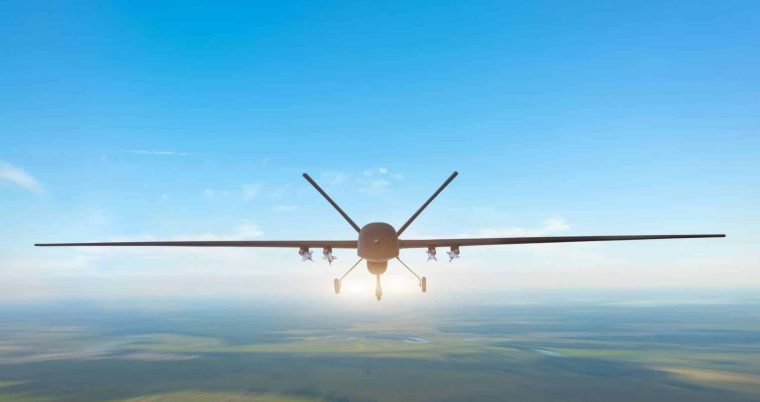
Visiongain has published a new report entitled Anti-Drone Market Report 2025–2035 (Including Impact of U.S. Trade Tariffs): Forecasts by Range Capability (Short/Medium-Range, Long-Range), by Platform (Ground-based, Handheld, UAV-based), by Application (Military & Defence, Homeland Security, Commercial, Critical Infrastructure), by Mitigation Approach (Net-Based Capture, Projectile Interceptors, RF Jamming, GNSS Spoofing, Other), by Detection Technology (RF Scanners, Radar Systems, Electro-Optical Cameras, Infrared Imaging, Multi-Sensor Integration, Other) AND Regional and Leading National Market Analysis PLUS Analysis of Leading Companies.
The global anti-drone market is estimated at US$2,604.8 million in 2025 and is projected to grow at a CAGR of 28.9% during the forecast period 2025-2035.
Impact of US Trade Tariffs on the Global Anti-Drone Market
The imposition of U.S. tariffs on defence-related components, electronics, and advanced sensor systems is expected to have a direct effect on the global anti-drone market. Since many counter-UAS platforms rely on specialized electronics, radars, RF modules, and optical sensors sourced from international suppliers, tariffs increase costs across the supply chain. Higher procurement expenses could pressure manufacturers to localize production or diversify supply chains, while also creating opportunities for regional players to fill gaps in the U.S. and allied markets. At the same time, tariffs may trigger retaliatory trade policies, leading to a slowdown in technology transfers and joint ventures, which are crucial for accelerating counter-drone innovation.
Tariff Impact: V-shaped Recovery
A V-shaped recovery scenario assumes that tariff-related disruptions are short-term, with the market quickly adapting through domestic sourcing and strategic partnerships. In this scenario, initial procurement costs rise, but defence agencies accelerate investments in local manufacturing hubs, R&D, and supplier diversification. For example, U.S. companies could partner with domestic electronics manufacturers to produce radar modules or jammer components, thereby reducing dependency on imports. Within two to three years, the anti-drone market would stabilize, and strong demand from military and homeland security applications would restore growth momentum.
Maturing Government Programs & Institutional Contracts
The C-UAS market is being stabilized and grown by institutional buyers transitioning from pilot projects to formal programs of record. These programs rely on rigorous testing and standards that favor interoperable, layered solutions. In the U.S., the Joint Counter-small Unmanned Aircraft Systems Office (JCO) and new congressional legislation are pointing to a sustained programmatic market, which has resulted in significant contracts like the $197 million award to Raytheon for Coyote interceptors and a $43.5 million contract to Epirus for its Leonidas HPM systems. The latter represents a clear validation of non-kinetic solutions. The overall effect of this factor is predictable market growth and accelerated product qualification, as repeatable test events and codified procurement processes provide a clear path for new technologies to be adopted.
How will this Report Benefit you?
Visiongain’s 423-page report provides 126 tables and 213 charts/graphs. Our new study is suitable for anyone requiring commercial, in-depth analyses for the anti-drone market, along with detailed segment analysis in the market. Our new study will help you evaluate the overall global and regional market for anti-drone. Get financial analysis of the overall market and different segments including by range capability, platform, application, mitigation approach, and detection technology, and capture higher market share. We believe that there are strong opportunities in this fast-growing anti-drone market. See how to use the existing and upcoming opportunities in this market to gain revenue benefits in the near future. Moreover, the report will help you to improve your strategic decision-making, allowing you to frame growth strategies, reinforce the analysis of other market players, and maximise the productivity of the company.
What are the Current Market Drivers?
The Rise of Low-Cost Effectors & Favorable Economics
A key driver of innovation is the need for affordable magazines to counter cheap, numerous drone threats. This is steering investment toward technologies like lasers, HPM, and reusable interceptors to lower the marginal cost of each engagement. Israel’s combat-validated Iron Beam laser, which has successfully downed hostile drones, is a prime example of a cost-effective layer being scaled for production. Similarly, Anduril’s Roadrunner, a jet-powered and optionally reusable interceptor, has received an expanded Pentagon production contract. As these directed energy (DE) and reusable effector technologies mature, they will enable blended architectures that reduce total lifecycle costs and facilitate larger, more widespread deployments of C-UAS systems.
Expanding to Civilian & Enterprise Channels
The C-UAS market is broadening its addressable base beyond military applications to include airports, stadiums, prisons, critical infrastructure, and large public events. These entities are now routine buyers of counter-drone solutions, representing a major new growth vector. Axon’s acquisition of Dedrone, which integrates airspace security into its public safety software and hardware stack, exemplifies this expansion. Dedrone by Axon’s 2025 detection intelligence reports from sites across EMEA and Asia provide clear evidence of active enterprise deployments and the powerful data network effects that come with them. This shift toward standardized enterprise buyers and integrated public safety workflows is accelerating the adoption of C-UAS solutions that rely on recurring software and service revenue models.
Where are the Market Opportunities?
AI/ML for Sensor Fusion & Autonomy
The use of artificial intelligence and machine learning is a key opportunity to enhance C-UAS capabilities. AI/ML can fuse data from radar, RF, EO/IR, and passive sensors to improve classification accuracy and reduce false positives. Edge autonomy can also be used to shorten the kill-chain, from detection to engagement. Companies can capitalize on this by embedding computer vision and machine learning into their C2 suites, integrating automated interceptors like Anduril’s Roadrunner, and monetizing these capabilities through software subscriptions and updates, shifting from a hardware-only model.
Expanding into Public Safety & Enterprise Channels
Non-defense buyers, such as airports, stadiums, utilities, and prisons, represent a major and expanding market segment for C-UAS technology. These entities offer a source of recurring revenue for detection, analytics, and response workflows. Companies can leverage this by bundling detection analytics with public safety ecosystems (as seen with Axon and Dedrone) and selling their solutions as managed services (SaaS + O&M). Aligning with existing enterprise protection and event security budgets will be key to unlocking this opportunity..
Competitive Landscape
The major players operating in the anti-drone market are AgEagle Aerial Systems Inc., Bharat Electronics Limited, Blighter Surveillance Systems, CACI International Inc, Dedrone(Axon), DroneShield Ltd, Elbit Systems Ltd, Leonardo SpA, Liteye Systems, Inc, Lockheed Martin Corporation, Northrop Grumman Corporation, RADA Electronic Industries Ltd, Raytheon Technologies (RTX), Saab AB, Thales SA, These major players operating in this market have adopted various strategies comprising M&A, collaborations, investment in R&D, regional business expansion, partnerships, and new product launch.
Recent Developments
- 23-Apr-25, Lockheed Martin announced a definitive agreement to acquire Amentum’s Rapid Solutions business for $360 million in cash. This acquisition aims to enhance Lockheed Martin’s capabilities in airborne and space Intelligence, Surveillance, and Reconnaissance (ISR), advanced communications, and tactical systems.
- 23-Apr-25, DZYNE introduced the Dronebuster® 4-EU, a wearable and fixed-site counter-drone system tailored for European SRD frequency bands with PNT attack capability. A multi-million-dollar global contract drives expanded production.
- 15-Apr-25, AgEagle showcased its eBee VISION drone at the 173rd Airborne Brigade Innovation Symposium, highlighting its role in military UAS operations.
- 09-Apr-25, DroneShield has announced the release of a sophisticated online platform for building bespoke counterdrone (C-UAS) solutions detailed arrangements to build a 3D custom layout to protect their prospective site(s), such as a military base or a civilian installation.
Notes for Editors
If you are interested in a more detailed overview of this report, please send an e-mail to contactus@visiongain.com or call +44 207 336 6100.
About Visiongain
Visiongain is one of the fastest-growing and most innovative independent media companies in Europe. Based in London, UK, Visiongain produces a host of business-to-business reports focusing on the automotive, aviation, chemicals, cyber, defence, energy, food & drink, materials, packaging, pharmaceutical and utilities sectors.
Visiongain publishes reports produced by analysts who are qualified experts in their field. Visiongain has firmly established itself as the first port of call for the business professional who needs independent, high-quality, original material to rely and depend on.
