Biorefinery Market
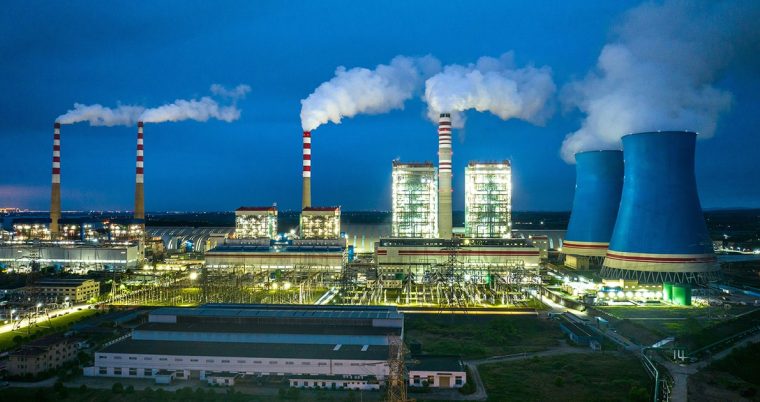
Visiongain has published a new report entitled Biorefinery Market Report 2026-2036 (Including Impact of U.S. Trade Tariffs): Forecasts by Type (First-Generation, Second & Third-Generation), by Product Type (Biofuels, Biochemicals, Biomaterials), by Conversion Process (Biochemical Conversion, Thermochemical Conversion, Chemical Conversion, Mechanical / Physical Processes), by End-use Sector (Transportation Fuels, Power Generation, Industrial & Chemical, Residential & Commercial Heating, Other), by Feedstock (Energy Crops, Agricultural Residues, Forestry Residues, Industrial Waste & By-products, Organic Municipal Solid Waste (MSW), Algae (Microalgae, Macroalgae)) AND Regional and Leading National Market Analysis PLUS Analysis of Leading Companies.
The global biorefinery market is estimated at US$288.10 billion in 2026 and is projected to grow at a CAGR of 9.1% during the forecast period 2026-2036.
Impact of US Trade Tariffs on the Global Biorefinery Market
U.S. tariffs on biofuels, bio-based chemicals, feedstocks, and related equipment have the potential to significantly influence the global biorefinery market, affecting trade flows, project economics, and investment decisions. As the United States plays a critical role in bioethanol, renewable diesel, sustainable aviation fuel, and biorefinery technology markets, changes in tariff structures can alter cost competitiveness for both domestic and international producers. Higher tariffs may raise the cost of imported feedstocks, catalysts, enzymes, and process equipment, while retaliatory measures can restrict export opportunities for U.S.-produced biofuels and biochemicals. The overall market impact depends on the duration of tariffs, policy responses, and the ability of companies to adapt supply chains.
Energy Security, Rural Prosperity and Blending Mandates Are Locking Biofuels into National Fuel Strategies
A second, distinct demand engine is energy security combined with rural economic development, which leads governments to hard-wire biofuels into their fuel policies through blending mandates and tax incentives rather than relying only on carbon pricing. The IEA notes that over 80 countries now support biofuels through mandates or incentives, with Brazil and Indonesia among those accelerating deployment by raising biodiesel blending targets (Brazil to B15 by 2026; Indonesia to B35). Such policies give farmers and rural industries a stable outlet for crops and residues while reducing fossil fuel imports—politically attractive even when oil prices are volatile. In India, for example, ambitious E20 blending targets and new 2G ethanol plants using paddy straw (such as IOCL’s Panipat facility) are explicitly framed as tools to cut import dependence and stubble-burning pollution while adding rural income streams. In Brazil, Raízen’s sugarcane-based bioenergy parks now integrate first-generation ethanol with residue-based E2G (“E2G is made from sugarcane bagasse and straw”), leveraging existing agro-industrial infrastructure to increase fuel output by around 50% without extra cropland. These kinds of blending mandates and integrated agro-industrial strategies lock biofuels into national transport fuel mixes for decades, providing a structurally supportive demand floor for biorefinery outputs.
How will this Report Benefit you?
Visiongain’s 423-page report provides 125 tables and 215 charts/graphs. Our new study is suitable for anyone requiring commercial, in-depth analyses for the biorefinery market, along with detailed segment analysis in the market. Our new study will help you evaluate the overall global and regional market for biorefinery. Get financial analysis of the overall market and different segments including type, product type, conversion process, end-user sector, and feedstock, and capture higher market share. We believe that there are strong opportunities in this fast-growing biorefinery market. See how to use the existing and upcoming opportunities in this market to gain revenue benefits in the near future. Moreover, the report will help you to improve your strategic decision-making, allowing you to frame growth strategies, reinforce the analysis of other market players, and maximise the productivity of the company.
What are the Current Market Drivers?
Second-Generation Waste-and-Residue Technologies Are Pushing the Industry Beyond Food Crops
The rapid maturation of second-generation (2G) and emerging third-generation technologies that convert lignocellulosic residues, organic waste and non-food biomass into fuels and chemicals is another powerful driver, because it directly addresses sustainability criticism while opening new feedstock pools. IEA Bioenergy’s recent report on advanced biofuel demonstration facilities highlights a pipeline of commercial projects across multiple pathways, cellulosic ethanol, gasification-to-liquids, hydrothermal liquefaction and advanced SAF routes, supported by evolving policy frameworks. Raízen’s new 82 million litre per year 2G ethanol plant at the Bonfim Bioenergy Park, now billed as the world’s largest cellulosic ethanol plant, converts sugarcane straw and bagasse into advanced ethanol using proprietary technology and demonstrates that lignocellulosic fuels can scale commercially when integrated with existing 1G assets. In parallel, projects like the Petronas–Enilive–Euglena biorefinery in Pengerang are designed to process 650,000 tons per year of used vegetable oils, animal fats and processing residues into SAF, HVO and bio-naphtha, explicitly focused on waste-based feedstocks to meet stringent EU and Asian sustainability criteria. The shift from food crops to residues, wastes and eventually algae fundamentally broaden the resource base, reduces land-use concerns and allows biorefineries to monetize previously low-value or negative-value streams, reinforcing long-term growth.
Corporate Decarbonization, Long-Term Offtake Deals and New Value Chains Are Making Biorefinery Output Bankable
Beyond government policy, private-sector decarbonization strategies and offtake contracts are giving biorefinery projects clearer revenue visibility and improving their bankability. Airlines, freight forwarders, retailers and consumer brands are all making scope 3 emissions commitments that depend on low-carbon molecules for freight, aviation and packaging; this has led to a wave of long-term SAF and renewable diesel supply agreements, often priced at a premium to reflect verified carbon savings. IEA Bioenergy’s 2024 annual report stresses that “good prospects for market offtake” and “stable, supportive government policies” are crucial for mobilizing private capital into advanced biofuels, highlighting how corporate offtake guarantees complement policy incentives. Neste’s recent results show how this dynamic plays out: in 2025 the company reported a 42% year-on-year increase in renewable products EBITDA and an almost 80% quarter-on-quarter surge in SAF sales, driven by growing demand from airline customers as new capacity came online in Rotterdam. Similar patterns can be seen in logistics and consumer goods, where brands commit to using bio-based plastics (e.g., Braskem’s I’m green™ bio-PE and NatureWorks’ Ingeo PLA) in packaging and textiles, creating stable pull for biorefinery-derived intermediates. As more corporates sign up to science-based targets, these long-term, premium offtake contracts provide a strong commercial backbone for biorefinery expansion.
Where are the Market Opportunities?
Explosive Sustainable Aviation Fuel Growth, Especially in Asia and Europe, Is the Biggest Volume Upside for Biorefineries
The single largest upside opportunity lies in SAF, where mandated adoption curves, airline net-zero targets and emerging export corridors suggest exponential growth relative to today’s tiny base. IEA Bioenergy Task 39 emphasises the essential role of policies in SAF development, and recent SAF mandates in the EU and UK create a guaranteed demand trajectory for decades. On the supply side, Neste is ramping Rotterdam, Singapore and Porvoo to a combined SAF production capability of about 2.2 million tonnes per year by 2027, while TotalEnergies is using its La Mède HVO plant as a platform for SAF production through coprocessing and associated facilities like Oudalle. In Asia, Petronas, Enilive and Euglena are building the Pengerang biorefinery, designed to produce 650,000 tonnes per year of SAF, HVO and bio-naphtha from waste oils and fats, and Petronas executives expect Southeast Asia’s SAF capacity to reach around 4 million tonnes per year by 2030 with surplus biofuels exported to Europe. For biorefinery developers, this translates into a decade-plus window where SAF capacity is structurally short, policies are increasingly technology-neutral but fuel-specific, and offtakers are willing to sign premium long-term contracts—all of which can support high-utilisation, high-margin assets for those who can deliver certified low-CI product at scale.
Next-Generation Biochemicals and Biomaterials Offer Higher Margins and Portfolio Diversification in Integrated Biorefineries
A second major opportunity is to move “beyond fuels” into higher-margin biochemicals and biomaterials, using integrated biorefinery platforms to produce drop-in or novel molecules that can substitute petrochemicals in plastics, solvents, intermediates and specialty materials. UPM’s Leuna biorefinery is a flagship example: with a 220,000 tonne per year capacity and over €1.2 billion investment, it will produce wood-based glycols, lignin-based renewable functional fillers and other next-generation biochemicals from sustainably sourced hardwood once fully online, targeting automotive, construction, textiles and packaging markets where customers increasingly demand low-carbon inputs. Braskem’s I’m green™ bio-based polyethylene, made from Brazilian sugarcane ethanol, demonstrates that drop-in biopolymers can achieve global scale and be recycled in existing PE streams, giving brand owners an easy route to lower-carbon packaging. NatureWorks’ Ingeo PLA platform similarly turns fermented lactic acid into performance plastics and fibres for compostable coffee capsules, foodservice ware and 3D-printing filaments. These examples show how biorefineries that co-produce fuels and high-value chemicals can smooth earnings, capture specialty margins and tap into broader circular-economy narratives, making their business models more resilient than fuel-only facilities exposed to commodity cycles.
Competitive Landscape
The major players operating in the biorefinery market are Air Liquide S.A., Archer Daniels Midland Company, BP Plc, Braskem S.A., China Petroleum & Chemical Corporation (SINOPEC), Cycle0, EcoCeres, Gevo, Inc., Green Plains Inc., Marathon Petroleum Corporation, Neste Oyj, Petróleo Brasileiro S.A., Raízen S.A., Total Energies SE, and Valero Energy Corporation, These major players operating in this market have adopted various strategies comprising M&A, collaborations, investment in R&D, regional business expansion, partnerships, and new product launch.
Recent Developments
- 24-Dec-25, EcoCeres shipped its first batch of waste-based sustainable aviation fuel from Tanjung Langsat Port, Johor, to Europe. The milestone demonstrates operational readiness, supports aviation decarbonization, and positions Malaysia as an emerging regional SAF production and export hub.
- 18-Dec-25, Neste agreed to supply Neste MY Sustainable Aviation Fuel™ to Cathay Group across Europe, the United States, and Asia-Pacific. The agreement enables scaling up SAF use on passenger and cargo flights via major hubs including Amsterdam Schiphol, Los Angeles International Airport, and Singapore Changi Airport.
- 02-Dec-25, TotalEnergies, TES, Osaka Gas, Toho Gas, and ITOCHU signed a Joint Development & Operating Agreement for the Live Oak e-NG project in Nebraska. The project will include ~250 MW electrolysis capacity and 75 ktpa methanation, targeting operations by 2030. Japanese partners will take 33.3% equity and become primary offtakers as Japan aims for 1% carbon-neutral gas injection by 2030.
- 24-Oct-25, Braskem approved an investment of R$4.2 billion to expand ethylene capacity by 220,000 tonnes per year and corresponding polyethylene volumes at its Rio de Janeiro complex. The project strengthens industrial competitiveness, secures long-term feedstock supply through Petrobras, and supports Braskem’s transformation toward a more efficient and sustainable chemical platform.
- 23-Sep-25, Cycle0 partnered with Grupo Toysal to develop the Ecogalia biomethane plant in Porriño, Galicia. The facility will process around 22,000 tonnes of organic waste annually to produce 45 GWh of biomethane, avoiding nearly 6,000 tonnes of CO₂ emissions per year.
About Visiongain
Established in 1998, Visiongain is an independent publisher of analyst-led market intelligence, delivering data-driven research, forecasts, and strategic insight across global industries and emerging markets. Visiongain supports evidence-based decision-making for investment, procurement, and long-term strategic planning.
Media Contact
press@visiongain.com
+44 (0)20 7336 6100
www.visiongain.com


