Defence AR/VR & Simulation Market
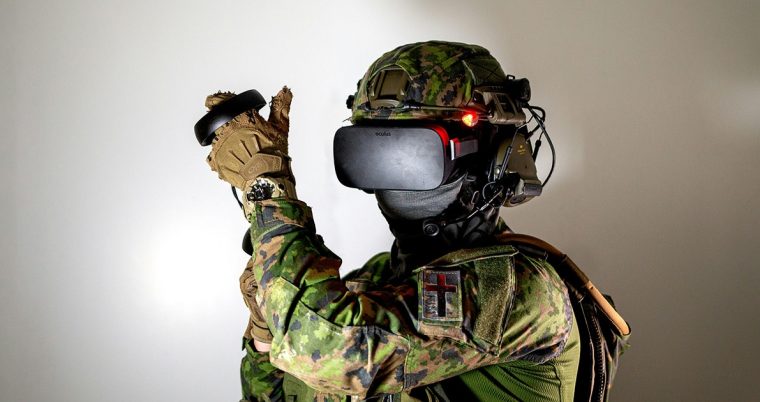
Visiongain has published a new report entitled Defence AR/VR & Simulation Market Report 2025-2035 (Including Impact of U.S. Trade Tariffs): Forecasts by Immersion Level (Fully Immersive Systems, Collaborative Multi-User Environments), by Solution Type (Software, Services, Hardware), by End-user (Military Forces, Homeland Security, Defence Contractors/OEMs, Training & Research Institutions), by Technology (Augmented Reality (AR), Virtual Reality (VR), Mixed Reality (MR), Extended Reality (XR), Other), by Application (Training & Simulation, Mission Rehearsal, Battlefield Visualisation & Situational Awareness, Equipment Maintenance & Repair, Medical & Combat Care Simulation, Design & Prototyping of Defence Systems) AND Regional and Leading National Market Analysis PLUS Analysis of Leading Companies.
The global defence AR/VR & simulation market is estimated at US$10,500.8 million in 2025 and is projected to grow at a CAGR of 5.8% during the forecast period 2025-2035.
Impact of US Trade Tariffs on the Global Defense AR/VR & Simulation Market
U.S. tariffs on imported defence technologies, including AR/VR and simulation equipment, have created significant disruptions in global supply chains, impacting both manufacturers and end-users. These tariffs affect the cost structure of imported components, leading to increased prices for defence training solutions. Consequently, defence organizations worldwide have had to reassess procurement strategies, balance domestic production versus imports, and explore alternative suppliers to maintain operational readiness. While the tariffs introduce short-term challenges, they also create incentives for local manufacturers to innovate and scale production, potentially reshaping the global AR/VR and simulation market over the coming decade.
In a V-shaped recovery scenario, the impact of U.S. tariffs is expected to be sharp but short-lived. Initially, global AR/VR and simulation equipment prices rise, delaying procurement and slowing market growth. However, once trade negotiations stabilize or domestic alternatives are scaled up, the market rebounds quickly, driven by pent-up demand from defence agencies seeking advanced simulation capabilities. This rapid recovery may also encourage increased investment in R&D, helping suppliers innovate and improve cost efficiency.
Shift from Live Training to Synthetic and Distributed Virtual Environments
Defence organizations are accelerating the shift from expensive live-flight or field exercises toward synthetic training that offers scale, repeatability and safe rehearsal of rare events. Game-engine based platforms now support entire combined-arms scenarios with thousands of entities running realistic AI, sensor models, and weapon effects; procurement decisions increasingly favour solutions that connect live, virtual and constructive (LVC) domains so units can train jointly across geographies without moving hardware. This not only reduces cost per training hour but enables continuous readiness cycles and more frequent rehearsal of complex coalition tasks.
Vendors and primes have invested heavily to make those environments credible and certifiable for qualification tasks. Open-architecture solutions that integrate with national training management systems and doctrinal databases are winning larger, longer contracts—many now tied to multi-year service and refresh models rather than one-off purchases. The result is a structural move in defence budgets: more spend on software subscriptions, content pipelines, and distributed synthetic ranges, which sustains recurring revenue for simulation firms and intensifies competition on fidelity, integration and ease of content creation.
How will this Report Benefit you?
Visiongain’s 431-page report provides 128 tables and 212 charts/graphs. Our new study is suitable for anyone requiring commercial, in-depth analyses for the global defence AR/VR & simulation market, along with detailed segment analysis in the market. Our new study will help you evaluate the overall global and regional market for global defence AR/VR & simulation. Get financial analysis of the overall market and different segments including immersion level, solution type, end-user, technology, and application, and capture higher market share. We believe that there are strong opportunities in this fast-growing global defence AR/VR & simulation market. See how to use the existing and upcoming opportunities in this market to gain revenue benefits in the near future. Moreover, the report will help you to improve your strategic decision-making, allowing you to frame growth strategies, reinforce the analysis of other market players, and maximise the productivity of the company.
What are the Current Market Drivers?
High-Fidelity Visuals and Immersive Hardware Becoming Affordable and Ruggedized
Advances in display technology, GPU compute, and headset ergonomics have materially widened the set of military use cases for AR/VR. High-resolution headsets and wide-FOV displays that previously were experimental are now being demonstrated in pilot programs for cockpit training, vehicle crew augmentation, and dismounted rehearsal, and vendors have begun hardening commercial displays for military environmental and EMI standards. The falling per-unit cost of capable XR hardware—paired with commodity GPUs and optimized edge compute—makes it feasible for larger training cohorts to experience immersion without prohibitive capital outlay.
Hardware evolution is complimented by specialist integrations: head-worn HUDs for vehicle crews, helmet-mounted displays for pilots, and AR overlays for maintenance technicians. This portfolio effect lowers the marginal cost of mixed-reality training across many force elements because the same core display and tracking technologies can be adapted for multiple roles, increasing platform utilization and improving procurement ROI. Defence buyers therefore see clearer business cases for larger rollouts across training schools and front-line units.
AI, Digital Twin and Scenario Generation Powering Realism at Scale
AI is being used to populate and manage highly complex, believable training worlds: procedurally generated terrains, automated non-player combatants with realistic behavior, and intelligent after-action review that highlights cognitive and tactical errors. Defence organizations want training that responds dynamically to trainee decisions, and modern AI tools are enabling scenario branching and rapid content generation so instructors can present varied, unpredictable challenges without manual scenario scripting. This yields better learning retention and prepares units for emergent threats at lower marginal cost.
Concurrently, digital-twin technology is connecting live platforms, logistics feeds and sensor streams to the virtual environment so that training reflects current force posture and system availability. This “live-to-synthetic” feedback loop improves readiness planning and shortens the path from training assessment to capability improvement. Defence customers prize platforms that can mirror their exact equipment sets and rules of engagement, creating preference for suppliers who can rapidly ingest fleet data and maintain high-fidelity models at scale.
Where are the Market Opportunities?
Coalition and Multinational Synthetic Ranges for Interoperability Training
There is strong near-term opportunity in building federated synthetic ranges that let allied forces train together across national boundaries. These environments enable coalition doctrine rehearsal, joint ISR coordination drills, and combined logistics exercises without the political and financial cost of massed live exercises. Vendors that can deliver secure, accredited federation layers and content that respect national rules of engagement and data sovereignty will be preferred partners for NATO and allied training transformation programs.
Such platforms also open recurring revenue potential through subscription content updates, scenario packs tuned to emerging theaters, and cross-service modules (air, land, maritime). As defence agencies seek more frequent, lower-cost collective training, synthetic ranges become procurement priorities—creating long-term service contracts for simulation houses and integration specialists.
Pilot and Aircrew Upskilling with High-Fidelity VR and Mixed Reality
Aircrew training presents an attractive, well-funded market for immersive solutions that reduce flight hours while improving competence. High-fidelity flight simulators and mixed-reality cockpit trainers now demonstrate credible improvements in procedural training, emergency handling, and sensors-fused mission rehearsal. Defence primes and training services companies that bundle simulators with sustainment, live-to-synthetic coupling and instructor tooling can capture multi-year contracts to supply whole-program training—an area that has historically supported very large, stable budgets.
The same technical base also supports naval bridge simulators and remote sensor operator training for unmanned systems, extending addressable market beyond pilots to mission systems operators. The modular nature of modern simulation stacks reduces incremental cost of adding new platforms and missions, which accelerates cross-sell and deepens client relationships.
Competitive Landscape
The major players operating in the global defence AR/VR & simulation market are Anduril Industries, BAE Systems, Bohemia Interactive Simulations, CAE Inc., Elbit Systems Ltd, HTC Corporation, Kongsberg Defence & Aerospace, Lenovo Group Limited, Lockheed Martin Corporation, Microsoft Corporation, Raytheon Technologies (RTX), RealWear, Inc., Thales SA, TRU Simulation + Training Inc., Varjo Technologies Oy. These major players operating in this market have adopted various strategies comprising M&A, collaborations, investment in R&D, regional business expansion, partnerships, and new product launch.
Recent Developments
- 08-Oct-25, Varjo introduced the refreshed XR-4 Series, optimized for advanced simulation systems. Designed for mission-ready training across air, land, and sea domains. The new XR-4 supports cockpit trainers, vehicle simulators, and ground systems. Compact and portable for global deployment.
- 23-Sep-25, CAE awarded a contract by SNC to deliver a next-gen training system for U.S. Air Force aircrews and maintainers using high-fidelity devices and VR tools.
- 16-Sep-25, Lockheed Martin will upgrade Republic of Korea Air Force’s F-16 Block 52 flight simulators to the advanced F-16V configuration. The six-year contract includes enhanced equipment and software to deliver high-fidelity, realistic pilot training environments.
- 10-Sep-25, CAE and WestJet signed a 15-year agreement to establish the Alberta Training Centre of Excellence, opening in 2028, with eight full-flight simulators and cabin trainers in partnership with Mount Royal University.
- 26-Aug-25, CSTPL (CAE + InterGlobe) announced a 44,000 sq ft pilot training centre with capacity for six full-flight simulators, operations starting Q1 2026 with Airbus A320 simulators.
- 25-Aug-25, BISim awarded a 5-year enterprise license to deliver the Digital Virtual Trainer (DVT) for the Canadian Department of National Defence, providing immersive, scalable, synthetic training for mission readiness.
Notes for Editors
If you are interested in a more detailed overview of this report, please send an e-mail to contactus@visiongain.com or call +44 207 336 6100.
About Visiongain
Visiongain is one of the fastest-growing and most innovative independent media companies in Europe. Based in London, UK, Visiongain produces a host of business-to-business reports focusing on the automotive, aviation, chemicals, cyber, defence, energy, food & drink, materials, packaging, pharmaceutical and utilities sectors.
Visiongain publishes reports produced by analysts who are qualified experts in their field. Visiongain has firmly established itself as the first port of call for the business professional who needs independent, high-quality, original material to rely and depend on.


