Electric Vehicles (EV) Market
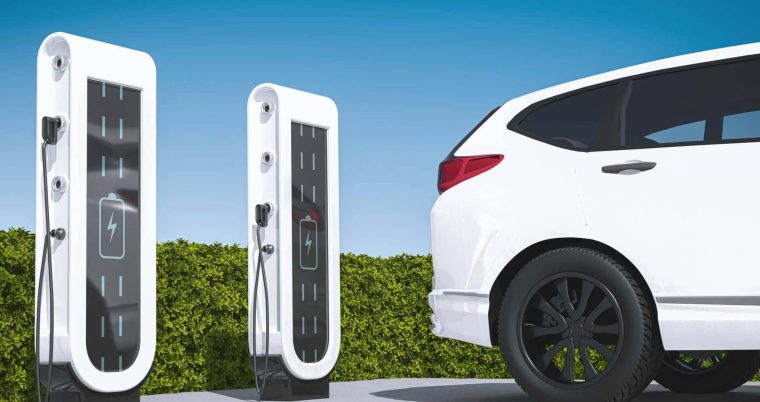
Visiongain has published a new report entitled Electric Vehicles (EV) Market Report 2025-2035 (Including Impact of U.S. Trade Tariffs): Forecasts by Propulsion Type (Battery Electric Vehicles (BEVs), Plug-in Hybrid Electric Vehicles (PHEVs)), by Charging Type (DC Charging, Wireless Charging, AC Charging), by Battery Type (Lithium-ion, Solid-State, Nickel-Metal Hydride (NiMH), Lead-Acid), by End-use (Personal Use, Public Transport, Commercial Delivery Fleets, Ride-Hailing Services, Other), by Vehicle Type (Passenger Cars, Scooters, Three-Wheelers, Buses, Motorcycles, Vehicle Types) AND Regional and Leading National Market Analysis PLUS Analysis of Leading Companies.
The global electric vehicles (EV) market is estimated at US$413.1 billion in 2025 and is projected to grow at a CAGR of 7.2% during the forecast period 2025-2035.
Impact of US Trade Tariffs on the Global Electric Vehicles (EV) Market
The imposition of tariffs by the United States on imported electric vehicles and their components has introduced significant uncertainties and disruptions within the global EV market. These tariffs aim to protect domestic manufacturing and encourage local production but have also affected supply chains, pricing, and international trade dynamics. The consequences of such trade policies are complex and can influence market growth trajectories differently depending on the duration and severity of the tariff measures, as well as how global manufacturers respond through adjustments in production, sourcing, and investment strategies.
Tariff Impact: V-shaped Recovery
In a V-shaped recovery scenario, the EV market experiences a sharp downturn immediately following tariff imposition but rapidly rebounds as manufacturers and suppliers adapt. Companies might relocate production closer to the U.S. or restructure supply chains to minimize tariff exposure, while consumers regain confidence as prices stabilize. The overall market impact is temporary, with growth quickly returning to pre-tariff levels due to strong underlying demand and rapid policy or industry adjustments.
Tariff Impact: U-shaped Recovery
Under a U-shaped recovery, the initial negative impact of tariffs leads to a prolonged period of slower growth or stagnation before recovery begins. During this phase, supply chain realignment and production shifts take longer to implement, and higher costs may suppress consumer demand for an extended time. Eventually, as the market adjusts and new trade agreements or manufacturing bases emerge, growth resumes but only after a sustained dip, resulting in a more gradual return to previous growth trajectories.
Tariff Impact: L-shaped Recovery
In the case of an L-shaped recovery, tariffs trigger a sharp and lasting decline in the global EV market. Prolonged trade tensions, persistent high costs, and entrenched supply chain disruptions lead to subdued investment and demand over a long period. This scenario reflects a structural change where market growth remains flat or minimal for years, significantly delaying the global transition to electric vehicles. Manufacturers may face difficulties in scaling production, and consumers may postpone EV purchases due to elevated prices, weakening the overall market momentum.
Rapid Advancements in Battery Technology
The core of an EV’s value proposition lies in its battery, and significant technological breakthroughs have addressed some of the most prominent consumer anxieties. The cost of lithium-ion batteries has plummeted over the past decade, making EVs more affordable and moving them closer to price parity with internal combustion engine (ICE) vehicles. Simultaneously, energy density has increased, leading to longer driving ranges. Leading manufacturers like CATL and LG Energy Solution are at the forefront of this innovation, with a focus on developing next-generation chemistries, including solid-state batteries, which promise even greater range, faster charging, and enhanced safety. The improved performance of these batteries, with ranges now often exceeding 400 km on a single charge for many mass-market models, has significantly reduced “range anxiety” for consumers.
How will this Report Benefit you?
Visiongain’s 440-page report provides 127 tables and 220 charts/graphs. Our new study is suitable for anyone requiring commercial, in-depth analyses for the electric vehicles (EV) market, along with detailed segment analysis in the market. Our new study will help you evaluate the overall global and regional market for electric vehicles (EV). Get financial analysis of the overall market and different segments including propulsion type, charging type, battery type, end-use, and vehicle type, and capture higher market share. We believe that there are strong opportunities in these fast-growing electric vehicles (EV) market. See how to use the existing and upcoming opportunities in this market to gain revenue benefits in the near future. Moreover, the report will help you to improve your strategic decision-making, allowing you to frame growth strategies, reinforce the analysis of other market players, and maximise the productivity of the company.
What are the Current Market Drivers?
Expansion of the Charging Infrastructure
A robust and accessible charging network is a prerequisite for widespread EV adoption. Governments and private enterprises are investing heavily in building out this critical infrastructure. In China, the ratio of public charging points to EVs is one of the highest in the world, a key factor in its market dominance. Companies like ChargePoint and EVgo are rapidly expanding their networks in North America and Europe, offering a mix of Level 2 and DC fast chargers. Automakers are also playing a significant role; Tesla’s proprietary Supercharger network, now being opened to other brands, has been a major draw for its customers, and a growing number of companies, including a consortium of major automakers, are collaborating on new networks to ensure interoperability and a seamless charging experience for all drivers.
Shifting Consumer Perception and Total Cost of Ownership
For many years, EVs were seen as a compromise on range and performance. However, this perception has fundamentally changed. The acceleration and torque of electric powertrains often surpass their ICE counterparts, a fact demonstrated by vehicles like the Porsche Taycan and Lucid Air. Furthermore, the total cost of ownership (TCO) for an EV is becoming increasingly competitive. While the initial purchase price may still be higher, lower running costs—from cheaper “fuel” in the form of electricity and reduced maintenance due to fewer moving parts—make EVs an economically viable choice over the vehicle’s lifespan. Companies like Tesla have even streamlined the service experience with over-the-air software updates, further reducing the need for physical service appointments.
Where are the Market Opportunities?
The Rise of the Commercial and Fleet EV Market
The electrification of commercial fleets presents a massive opportunity. Companies are increasingly adopting EVs to reduce operational costs and meet sustainability goals. From delivery vans to long-haul trucks, the commercial segment is poised for significant growth. Companies like Amazon and FedEx are already deploying electric delivery vehicles, and startups like Rivian and legacy players like Ford are developing electric vans and trucks specifically for this market. This segment offers a predictable demand curve and a clear economic case for electrification, which will drive innovation in both vehicle design and charging solutions.
Battery Second-Life and Recycling Market
As millions of EV batteries reach the end of their automotive life, a new market for battery second-life applications and recycling is emerging. Batteries that are no longer suitable for vehicles can be repurposed for stationary energy storage, providing grid-level support or powering homes and businesses. After this second life, the valuable raw materials can be recycled, creating a circular economy. Companies like Redwood Materials are building recycling plants to recover critical minerals, which will reduce the reliance on new mining and create a more sustainable and secure supply chain in the long term.
Competitive Landscape
The major players operating in the electric vehicles (EV) market are BAIC Group, BMW Group, BYD Co. Ltd , Chery International, Ford Motors Company, Guangzhou Automobile Group Co., Ltd, Honda Motor Co., Ltd, Mitsubishi Motors, Nissan Motor Co., Ltd, SAIC Motor Corporation Limited, Tata Motors Limited, Tesla, Inc., Toyota Industries Corporation, Volkswagen AG, Zhejiang Geely Holding Group (ZGH), These major players operating in this market have adopted various strategies comprising M&A, collaborations, investment in R&D, regional business expansion, partnerships, and new product launch.
Recent Developments
- 22-Jul-25, Mitsubishi terminated its joint venture with Shenyang Aerospace Mitsubishi Motors Engine Manufacturing, marking its exit from engine operations in China.
- 15-Jul-25, BMW and Momenta to co-develop advanced driver assistance systems (ADAS) tailored to the Chinese market, starting with Neue Klasse.
- 15-Jul-25, Geely Auto to acquire all outstanding Zeekr shares not already held, with shareholders able to choose cash or Geely Auto shares as payment. Move supports “Return to One Geely” strategy.
- 14-Jul-25, BMW M Team secured 5th place in WEC 6-hour São Paulo race. Late overtaking move by Sheldon van der Linde highlighted strong performance.
- 02-Jul-25, Mitsubishi announced the launch of the all-new Grandis compact SUV in Europe, to be manufactured at Renault’s Valladolid plant in Spain. Sequential rollout to follow.
- 01-Jul-25, Volkswagen Group Charging GmbH (Elli) has expanded its charging network to 900,000 public points across 28 European countries, including 80,000 HPC stations. The milestone coincides with the launch of a world tour in the ID. Buzz Pro by Guinness World Record holder Rainer Zietlow to promote seamless e-mobility.
- 23-Jun-25, Ford’s BlueOval Battery Park Michigan is progressing, producing C-sample lithium iron phosphate (LFP) battery cells. These will be used in upcoming EVs; clean-room transition and commissioning underway.
- 18-Jun-25, BAIC and CATL signed an agreement to deepen collaboration in new energy technologies including battery innovation and electric chassis development. Joint work includes the CIIC skateboard chassis platform.
Notes for Editors
If you are interested in a more detailed overview of this report, please send an e-mail to contactus@visiongain.com or call +44 207 336 6100.
About Visiongain
Visiongain is one of the fastest-growing and most innovative independent media companies in Europe. Based in London, UK, Visiongain produces a host of business-to-business reports focusing on the automotive, aviation, chemicals, cyber, defence, energy, food & drink, materials, packaging, pharmaceutical and utilities sectors.
Visiongain publishes reports produced by analysts who are qualified experts in their field. Visiongain has firmly established itself as the first port of call for the business professional who needs independent, high-quality, original material to rely and depend on.
