In-Vehicle Digital Experience Market
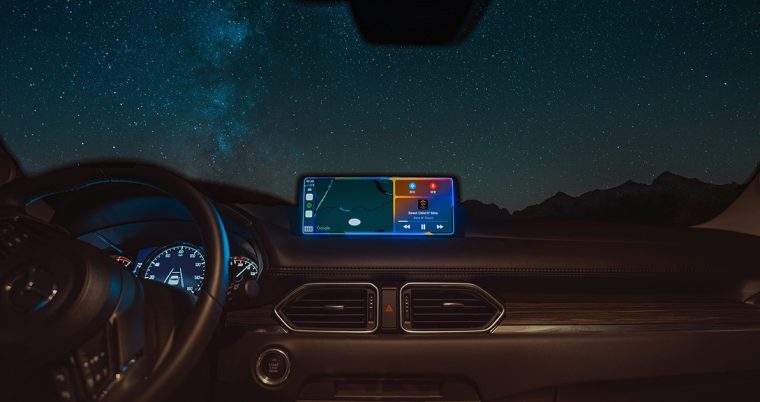
Visiongain has published a new report entitled In-Vehicle Digital Experience Market Report 2026-2036 (Including Impact of U.S. Trade Tariffs): Forecasts by Monetisation Model (One-time Model, Subscription Model), by Customer Type (OEMs, Fleets & Mobility Providers, Aftermarket), by HMI Modality (Touch & Gesture, Voice & Multimodal, AR/HUD & Instrument Cluster Visualisations, Cabin Sensing), by Solution Layer (Hardware, Software Platforms, Cloud & Edge Services, Content & Apps, Integration & Managed Services), by Experience Domain (Infotainment & Media, Navigation & Location, Voice & Conversational AI, Energy & EV Services, Personalisation & Profiles, Other) AND Regional and Leading National Market Analysis PLUS Analysis of Leading Companies.
The global in-vehicle digital experience market is estimated at US$28.87 billion in 2026 and is projected to grow at a CAGR of 9.9% during the forecast period 2026-2036.
Impact of US Trade Tariffs on the Global In-Vehicle Digital Experience Market
The imposition of U.S. tariffs on automotive imports, electronic components, and digital technology hardware has had far-reaching implications for the global in-vehicle digital experience market. As the IVDE ecosystem relies heavily on semiconductors, infotainment modules, sensors, and software-integrated electronics, tariffs disrupt both production costs and supply chain stability. The tariffs particularly impact cross-border technology sourcing between the U.S., China, and Southeast Asia regions critical to automotive electronics manufacturing.
Higher import costs have prompted automakers and Tier-1 suppliers to localize production, diversify sourcing networks, and adopt cost-optimized software-defined architectures to mitigate tariff-induced price volatility. However, while the short-term effects include reduced hardware availability and increased input costs, the medium to long term could see a restructuring of digital automotive supply chains, spurring innovation in regional R&D hubs and the gradual decoupling of U.S.-China technology dependencies. The following scenarios V-shaped, U-shaped, and L-shaped recoveries illustrate the potential market trajectories under varying durations and intensities of tariff enforcement.
Platform Wars—Embedded “Google Built-In” vs Next-Gen CarPlay and OEM OSs
The cockpit is now a platform war between embedded ecosystems, phone projection, and OEM-led operating systems. Google’s “built-in” stack (Android Automotive OS with Google apps) keeps expanding across volume models, with new GM interiors showcasing deep Google integration, larger app catalogs, and hands-free driver-assist tie-ins—all without relying on phone mirroring. This lets OEMs control data, commerce, and the UX layer while still tapping Google Maps, YouTube/Prime Video, and Gemini-powered voice features rolling out across Android Auto and Automotive OS.
Apple has countered with its long-teased, now-shipping CarPlay Ultra, which extends beyond the center screen to clusters and HVAC, giving luxury OEMs a polished, brandable skin on an iPhone-anchored experience. Aston Martin led the rollout in May 2025, with other brands preparing, even as some premium marques recalibrate timelines. The split is strategic: certain OEMs—GM most visibly—are phasing out Apple CarPlay/Android Auto in favor of embedded stacks they can monetize and update on their own cadence, while others leverage CarPlay Ultra’s breadth to delight Apple-centric buyers without ceding too much brand expression.
How will this Report Benefit you?
Visiongain’s 443-page report provides 172 tables and 211 charts/graphs. Our new study is suitable for anyone requiring commercial, in-depth analyses for the in-vehicle digital experience market, along with detailed segment analysis in the market. Our new study will help you evaluate the overall global and regional market for in-vehicle digital experience. Get financial analysis of the overall market and different segments including monetization model, customer type, HMI modality, solution layer, and experience domain and capture higher market share. We believe that there are strong opportunities in this fast-growing in-vehicle digital experience market. See how to use the existing and upcoming opportunities in this market to gain revenue benefits in the near future. Moreover, the report will help you to improve your strategic decision-making, allowing you to frame growth strategies, reinforce the analysis of other market players, and maximise the productivity of the company.
What are the Current Market Drivers?
Safety and Compliance Are Hardwiring Driver Monitoring and Cybersecurity into UX
Regulators are pushing advanced safety and cybersecurity deeper into the digital experience. The U.S. finalized a major NCAP roadmap update in late-2024 and continues research on driver-monitoring systems that detect distraction and impairment—nudging cockpit cameras, attention metrics, and graduated take-over prompts into mainstream trims. These mandates don’t just add hardware; they reshape HMI, alert strategies, and content policies, influencing how aggressively OEMs can surface video, games, and messaging apps while a car is in motion.
Globally, UNECE R155/R156 have made cyber and software-update management formal type-approval requirements in many markets, forcing OEMs to deploy certified cybersecurity and update processes across the vehicle lifecycle. That has a practical UX impact: secure identity, permission and update flows are becoming visible touchpoints, while constraints on apps, data access, and third-party integrations are being codified. As these regulations mature, “secure by design” and “updatable by design” are not slogans—they are procurement gates that favor platform suppliers with audited tooling and end-to-end telemetry.
Entertainment-First Charging and Parked-Car Use Cases
As EV adoption rises, idle time at chargers is a design target. Automakers are adding native streaming and casual to mid-core gaming, shifting the value story from “car as transport” to “car as third space.” Volvo was among the first to push Prime Video and YouTube into Google-built-in fleets, while BMW keeps expanding an AirConsole catalog that now includes recognizable IP like UNO and Millionaire, emphasizing social, controller-on-phone play when parked. The business model goes beyond novelty: watch-time, bundled subscriptions, and partner revenue share create new monetization paths, and happier charging sessions reduce range anxiety and churn. (Volvo Cars)
Google and OEMs are iterating on game catalogs and policies, pruning weaker applets while enabling more capable titles that respect parked-only constraints. This curation, coupled with larger, faster displays and better audio, is normalizing premium entertainment packages in mid-segment EVs. The near-term payoff is differentiation at showroom walk-arounds; the longer-term prize is recurring revenue via content stores and upgraded connectivity tiers that power these experiences.
Where are the Market Opportunities?
AI-Native Cockpits with Multimodal Voice, Vision, and Context
Generative AI is moving in-car from novelty to core interaction layer. Google is rolling Gemini into Android Auto and Automotive OS, improving long-form comprehension, context handoff, and proactive suggestions; similar capabilities will come from proprietary assistants and regional AIs. The operational win is reducing eyes-off-road moments by handling complex tasks with natural conversation, from “plan a day trip with three charging stops and a kid-friendly lunch” to “summarize my last three messages and suggest a reply.” Vendors that fuse voice, gaze, and touch into latency-tight assistants will differentiate in safety and satisfaction metrics.
For OEMs, AI-native UX unlocks premium tiers. Think co-pilot subscriptions that include on-device language models for privacy, cloud escalation for planning, and domain-specific skills for EV routing, service diagnostics, and commerce. Tier-ones and platform players that package assistant SDKs, safety guardrails, and offline fallback will become indispensable partners as automakers productize AI without losing brand voice.
Charging-Time Entertainment and “Third Space” Monetization
Charging dwell time is a monetizable moment. Native streaming and curated game catalogs are now legitimate differentiators, and the usage data feeds content licensing, ad products, and connectivity upsells. BMW’s scaling of AirConsole titles and Volvo’s early embrace of Prime Video/YouTube show that parked-time experiences can become reasons to choose a brand, especially in urban markets where private screens compete for attention. This creates room for bundled plans, family profiles, parental controls, and loyalty tie-ins that make the car an extension of a user’s media life.
The next step is context-aware content: short-form video or games optimized for 20–30 minute fast-charge sessions, synchronized with vehicle SOC and route progress. OEMs and platform providers can share revenue with publishers while maintaining safety gating, creating a flywheel between hardware adoption and content ecosystems.
Competitive Landscape
The major players operating in the in-vehicle digital experience market are Amazon Web Services, Inc, Alphabet Inc., Microsoft Corporation, NVIDIA Corporation, Mitsubishi Electric Corporation, Apple Inc., Bosch Global Software Technologies, Harman International, Panasonic Automotive Systems, Aptiv PLC, Elektrobit, Qualcomm Incorporated, Renesas Electronics Corporation, Clarion Co., Ltd, Pioneer Corporation. These major players operating in this market have adopted various strategies comprising M&A, collaborations, investment in R&D, regional business expansion, partnerships, and new product launch.
Recent Developments
- 30-Oct-25, NVIDIA and Hyundai Motor Group are collaborating to build an AI Factory powered by NVIDIA Blackwell architecture to accelerate innovation across autonomous driving, smart factories, and robotics. Hyundai will deploy NVIDIA DRIVE AGX Thor for next-gen safety and in-vehicle intelligence. They’re also using NVIDIA Omniverse, Cosmos, and NeMo software for AI development, digital twins, and LLM training.
- 22-Oct-25, Aeroporti di Roma introduced an AWS-powered AI Virtual Assistant to enhance passenger experience at Fiumicino Airport, offering real-time flight updates, baggage status, and personalized recommendations via WhatsApp and the ADR website.
- 22-Oct-25, General Motors announced the rollout of Google’s Gemini AI assistant across its vehicles starting 2026, alongside future hands-free, eyes-off driver assistance systems as part of its “GM Forward” initiative.
- 22-Oct-25, Renesas launched the RA8M2 and RA8D2 MCU groups based on a 1 GHz Arm® Cortex®-M85 processor with optional Cortex®-M33 cores. The MCUs deliver 7300 Coremarks performance and include high-end graphics and MRAM memory for automotive, industrial, and IoT systems. The RA8D2 targets graphical cockpit displays, while the RA8M2 is optimized for general-purpose and AI workloads in SDV applications.
- 17-Sep-25, Launched RA0L1 MCUs based on Arm® Cortex®-M23, adding capacitive touch functionality for low-power, cost-efficient user interfaces in smart appliances, automotive displays, and control panels.
Notes for Editors
If you are interested in a more detailed overview of this report, please send an e-mail to contactus@visiongain.com or call +44 207 336 6100.
About Visiongain
Visiongain is one of the fastest-growing and most innovative independent media companies in Europe. Based in London, UK, Visiongain produces a host of business-to-business reports focusing on the automotive, aviation, chemicals, cyber, defence, energy, food & drink, materials, packaging, pharmaceutical and utilities sectors.
Visiongain publishes reports produced by analysts who are qualified experts in their field. Visiongain has firmly established itself as the first port of call for the business professional who needs independent, high-quality, original material to rely and depend on.


