Nuclear Power Plant Market
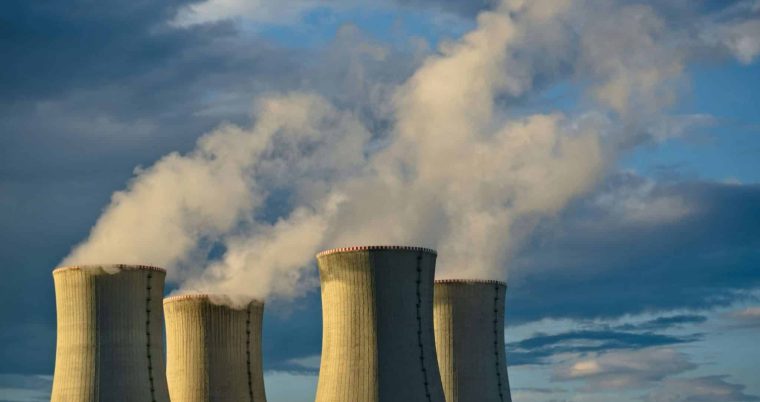
Visiongain has published a new report entitled Nuclear Power Plant Market Report 2025-2035 (Including Impact of U.S. Trade Tariffs): Forecasts by Plant Type (Thermal Nuclear Reactor, Fast Neutron Reactor), by Capacity (1000–2,000 MW, Above 2,000 MW, Below 1000 MW), by End-user (Utilities, Industrial, Government & Research Agencies, Other), by Component (Nuclear Reactor, Steam Generator, Instrumentation & Control Systems, Turbines, Other), by Reactor Type (Pressurised Water Reactor (PWR), Boiling Water Reactor (BWR), Pressurised Heavy Water Reactor (PHWR), Gas-Cooled Reactor (GCR), Liquid Metal Fast Breeder Reactor (LMFBR), Other Reactor Types) AND Regional and Leading National Market Analysis PLUS Analysis of Leading Companies.
The global nuclear power plant market is estimated at US$16.72 billion in 2025 and is projected to grow at a CAGR of 4.2% during the forecast period 2025-2035.
Impact of US Trade Tariffs on the Global Nuclear Power Plant Market
The imposition of U.S. tariffs on nuclear technology components, raw materials such as steel and aluminium, and related industrial equipment is expected to create ripple effects across the global nuclear power plant market. As one of the leading developers and exporters of nuclear technology, U.S. policy decisions can significantly influence international project timelines, costs, and strategic planning. The tariffs particularly impact countries reliant on U.S. nuclear expertise, suppliers, and hardware. While the long-term outlook for nuclear power remains positive due to climate commitments and energy diversification goals, the near- to medium-term trajectory will vary depending on how quickly markets adapt to changing trade dynamics. Three potential recovery paths — V-shaped, U-shaped, and L-shaped — offer different implications for global market recovery.
Energy Security and Shifting Geopolitical Priorities
The global geopolitical landscape has increasingly underscored the need for energy security, especially in light of the Russia-Ukraine conflict, which disrupted gas supplies and accelerated Europe’s diversification from fossil fuel dependence. Nuclear energy, with its low fuel volume requirements and long-term operation cycles, has emerged as a strategic alternative. The United Kingdom’s energy security strategy explicitly prioritizes nuclear expansion, aiming for up to 24 GW of nuclear capacity by 2050, including new projects like Sizewell C. Similarly, Poland has signed agreements with Westinghouse to construct its first nuclear power plant, highlighting a shift toward nuclear as a means of reducing dependence on imported energy and fossil fuels. This shift in geopolitical strategy is not only reviving dormant nuclear ambitions but also accelerating new investments and regulatory fast-tracking.
Nuclear Waste Management and Long-Term Storage
Despite advancements in reactor safety and efficiency, the issue of radioactive waste disposal continues to be a major unresolved technical and environmental challenge. High-level waste remains hazardous for thousands of years, requiring sophisticated containment strategies and long-term political and social commitment. While countries like Finland have made progress—constructing the world’s first deep geological repository at Onkalo, expected to begin operations in 2025—most nations still rely on temporary storage solutions at reactor sites. In the United States, for example, the long-planned Yucca Mountain repository remains stalled due to legal and political opposition. This lack of a universal or scalable waste solution undermines public confidence and complicates policy decisions around future deployments. Moreover, waste management adds to the lifecycle cost of nuclear energy, further affecting its comparative competitiveness with other low-carbon sources.
How will this Report Benefit you?
Visiongain’s 418-page report provides 125 tables and 202 charts/graphs. Our new study is suitable for anyone requiring commercial, in-depth analyses for the nuclear power plant market, along with detailed segment analysis in the market. Our new study will help you evaluate the overall global and regional market for nuclear power plant. Get financial analysis of the overall market and different segments including plant type, capacity, end-user, component, and reactor type, and capture higher market share. We believe that there are strong opportunities in this fast-growing nuclear power plant market. See how to use the existing and upcoming opportunities in this market to gain revenue benefits in the near future. Moreover, the report will help you to improve your strategic decision-making, allowing you to frame growth strategies, reinforce the analysis of other market players, and maximise the productivity of the company.
What are the Current Market Drivers?
Decarbonization and National Sustainability Commitments
Global commitments to carbon neutrality are driving unprecedented investment in nuclear as a zero-carbon baseload power source. Unlike intermittent renewables, nuclear power offers constant generation without carbon emissions, making it integral to national climate strategies. The European Union’s inclusion of nuclear in its Green Taxonomy in 2022 was a landmark move, enabling sustainable investment funds to include nuclear energy projects. France, historically dependent on nuclear power, has committed to building at least six new EPR reactors by 2035 to meet its climate goals. Likewise, Canada is investing heavily in SMR research and deployment to meet its Net-Zero Emissions by 2050 target, with Ontario Power Generation (OPG) collaborating with GE Hitachi to deploy an SMR at the Darlington site by the early 2030s. These initiatives are strengthening the role of nuclear in decarbonized energy mixes worldwide.
Public Perception Shift and Energy Awareness
Over the past decade, public attitudes toward nuclear energy have gradually shifted, particularly among younger, environmentally conscious demographics who recognize nuclear’s role in combating climate change. Influenced by credible advocacy from figures like Bill Gates (through TerraPower) and a broader understanding of nuclear’s low carbon footprint, public discourse is becoming more nuanced. In countries like Japan, where public resistance was strong post-Fukushima, recent surveys suggest a growing openness to restarting dormant reactors to address energy shortfalls and climate goals. Similarly, Germany’s 2023 debate over extending the life of its remaining nuclear plants due to energy price volatility revealed a significant shift in public and political sentiment. Changing perceptions are easing political barriers and encouraging reinvestment in nuclear infrastructure.
Where are the Market Opportunities?
Nuclear-Powered Hydrogen Production (Pink Hydrogen)
The integration of nuclear energy into the hydrogen economy presents a high-growth opportunity, particularly in the production of low-carbon “pink hydrogen”. Unlike green hydrogen, which relies on variable renewables, nuclear provides consistent baseload electricity and high-temperature steam—ideal for efficient electrolysis. Several countries are advancing pilot projects to link nuclear with hydrogen production. Rosatom is developing a hydrogen production facility using its nuclear reactors in Russia’s Kola Peninsula, while EDF in France is evaluating similar integrations through its NUWARD SMR program. In the U.S., Idaho National Laboratory is testing hydrogen production using energy from an operating nuclear power plant. As global demand for clean hydrogen accelerates—particularly in hard-to-decarbonize sectors like steel, chemicals, and transport—nuclear’s role in the hydrogen value chain could unlock substantial new revenue streams.
Deployment of Floating and Micro Nuclear Reactors
Floating and micro nuclear reactors (MNRs) are emerging as a niche yet commercially viable solution for remote, island, military, or disaster-prone regions. Their compact size, low manpower requirements, and scalability make them ideal for locations where traditional grids or infrastructure are lacking. Rosatom’s Akademik Lomonosov, the world’s first floating nuclear power plant, is already operational and supplying power in northern Russia. In the United States, Oklo Inc. and X-energy are designing advanced microreactors that can be deployed for off-grid operations, including military bases and space applications. These innovations not only open new commercial markets but also attract interest from defense and logistics sectors seeking energy independence in hostile or remote environments.
Competitive Landscape
The major players operating in the nuclear power plant market are Atomstroyexport JSC (ASE), Bharat Heavy Electricals Limited (BHEL), BWX Technologies, Inc. (BWXT), Électricité de France (EDF), Framatome, GE Hitachi Nuclear Energy, Larsen & Toubro Limited, Mitsubishi Heavy Industries, Ltd, MTAR Technologies, NuScale Power, LLC, Orano SA, Terrestrial Energy Inc, Toshiba Energy Systems & Solutions Corporation, Westinghouse Electric Corporation, X Energy, These major players operating in this market have adopted various strategies comprising M&A, collaborations, investment in R&D, regional business expansion, partnerships, and new product launch.
Recent Developments
- 15-May-25, Signed MoUs with seven Bulgarian companies (e.g., El Kontrol, Zekalabs, Bon Marine) to support the two-unit AP1000® project at Kozloduy NPP and future global deployments.
- 21-May-25, Signed MoU with Pabineau and Eel River Bar First Nations to explore deployment of AP300™ Small Modular Reactors at the Port of Belledune in partnership with New Brunswick Power and local developers; includes assessment of Long Duration Energy Storage.
- 21-May-25, 10th global E2 Center. Offers immersive training on SMR operation via 12-module control room simulator. Supports workforce and community education.
Notes for Editors
If you are interested in a more detailed overview of this report, please send an e-mail to contactus@visiongain.com or call +44 207 336 6100.
About Visiongain
Visiongain is one of the fastest-growing and most innovative independent media companies in Europe. Based in London, UK, Visiongain produces a host of business-to-business reports focusing on the automotive, aviation, chemicals, cyber, defence, energy, food & drink, materials, packaging, pharmaceutical and utilities sectors.
Visiongain publishes reports produced by analysts who are qualified experts in their field. Visiongain has firmly established itself as the first port of call for the business professional who needs independent, high-quality, original material to rely and depend on.


