Liver Fibrosis and NASH: Entering a Critical Execution Phase
Why Liver Fibrosis and NASH Now Matter Strategically
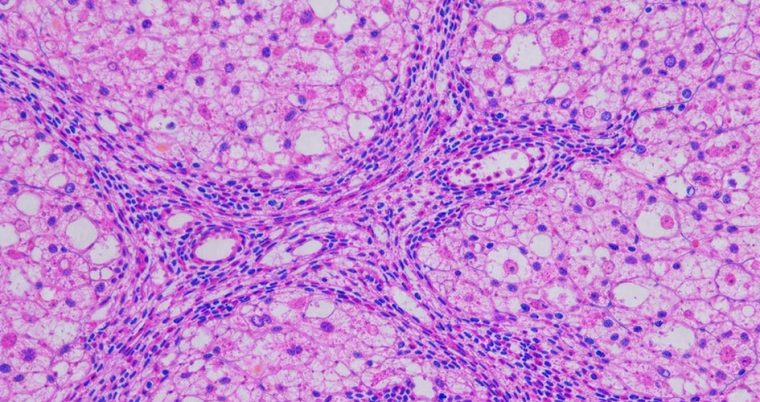
Liver fibrosis and non-alcoholic steatohepatitis represent one of the most significant unmet needs in modern medicine. Liver fibrosis results from chronic hepatic injury linked to viral hepatitis, alcohol-related liver disease, and metabolic dysfunction. NASH is a severe form of fatty liver disease and a primary driver of fibrosis progression.
Together, these conditions underpin a rapidly expanding global disease burden with serious long-term consequences. Multiple studies project the global prevalence of NASH to reach approximately 300 to 350 million people by 2030, highlighting the scale of the addressable patient population. Fibrosis stage is now widely recognised as the strongest predictor of outcomes, including cirrhosis, liver failure, and hepatocellular carcinoma.
For biopharma leaders and investors, liver fibrosis and NASH sit at the intersection of metabolic disease, chronic care, and high-value speciality therapeutics. The coming decade is expected to be defined by first-mover approvals, combination strategies, and consolidation around the most credible late-stage assets.
Visiongain Insight: Liver fibrosis and NASH have moved beyond niche hepatology indications to become strategically material markets. Scale, disease complexity, and late-stage pipeline maturity are aligning to create a rare convergence of clinical urgency and commercial opportunity.
Disease Burden and the Therapeutic Inflection Point
Despite the growing disease burden, clinical management continues to rely mainly on lifestyle modification, with limited durability and low adherence. No widely approved curative pharmacological therapies currently exist, leaving millions of patients undertreated and reinforcing the need for disease-modifying options.
Beyond hepatology, NASH is increasingly recognised as a systemic condition associated with elevated cardiovascular risk, renal complications, and broader metabolic consequences. This reinforces the need for therapies that address both upstream metabolic dysfunction and downstream fibrotic progression.
This unmet need is driving intensified pharmaceutical innovation. Rising prevalence of obesity, type 2 diabetes, and metabolic syndrome is expanding the patient pool, while advances in disease understanding have shifted development priorities to endpoints most closely linked to long-term outcomes. Multiple Phase II and Phase III programmes are now in late-stage development.
Regulators, including the FDA and EMA, are adapting in parallel, prioritising accelerated development pathways and composite trial endpoints that combine fibrosis improvement with NASH resolution. According to Visiongain analysis, global revenue in the liver fibrosis and NASH or MASH drugs market is expected to exceed US$18.0 billion in 2025, with sustained growth anticipated through the early 2030s.
Visiongain Insight: The NASH and liver fibrosis market has reached an inflection point. Regulatory flexibility, late-stage clinical momentum, and the continued absence of disease-modifying options are accelerating competition for first approvals and strategic activity across pipelines and portfolios.
Pipeline Innovation: Advancing Novel Mechanisms in Liver Fibrosis and NASH
The liver fibrosis and NASH drug pipeline is among the most active in hepatology, reflecting the scale of unmet need and the absence of widely approved disease-modifying therapies. Innovation is now concentrated in late-stage clinical development, with programmes targeting both the metabolic drivers of NASH and the downstream fibrotic consequences of chronic liver injury.
This dual focus marks a strategic shift. Earlier development efforts prioritised metabolic correction, while current programmes increasingly emphasise fibrosis regression as a clinically meaningful endpoint, aligning more closely with regulatory and payer expectations.
Several novel mechanisms are shaping the competitive landscape:
- FXR agonists, including late-stage candidates such as Intercept’s obeticholic acid, regulate bile acid metabolism, lipid homeostasis, and inflammatory signalling, with regulatory outcomes highlighting the challenge of demonstrating consistent fibrosis improvement
- THR beta agonists, led by Madrigal’s resmetirom, improve lipid metabolism and reduce hepatic fat while minimising systemic effects, positioning them as potential first-in-class therapies
- CCR2 and CCR5 antagonists, advanced by Novartis and others, targeting immune cell recruitment and inflammatory pathways central to fibrogenesis
- Antifibrotic biologics inhibiting pathways such as TGF beta signalling and collagen deposition to slow or reverse fibrosis progression
Collectively, these approaches illustrate a pipeline that is becoming more diversified and clinically focused. Rather than relying on single-pathway intervention, developers are increasingly pursuing integrated strategies that reflect the multifactorial nature of NASH and fibrosis.
Pipeline innovation in liver fibrosis and NASH is now being tested on clinical relevance rather than scientific novelty, as late-stage programmes compete to establish durable therapeutic value.
Strategic Collaborations Driving Market Expansion
The liver fibrosis and NASH market is seeing a sharp increase in strategic collaborations, licensing agreements, and selective acquisitions, as companies seek to manage development risk and secure competitive positioning in a high-growth but complex therapeutic area. With pipelines increasingly concentrated in late-stage development, collaboration has become a core execution strategy rather than an opportunistic one.
This trend reflects the structural challenges of NASH drug development. Long clinical timelines, stringent regulatory requirements, and the need to address multiple disease pathways have made single-asset strategies less viable. Partnerships are therefore being used to combine complementary capabilities across metabolism, immunology, fibrosis, and commercial execution.
Several collaboration patterns are now evident:
- Large pharmaceutical companies, including Gilead Sciences, Novartis, and Bristol Myers Squibb, are pursuing licensing agreements and acquisitions to access late-stage or clinically de-risked assets
- Specialist and mid-sized biotechs, such as Madrigal Pharmaceuticals and Genfit, are entering partnerships to secure development funding, regulatory expertise, and global commercial reach
- Co-development and commercialisation agreements, including those pursued by Intercept Pharmaceuticals, are being used to navigate regulatory complexity and accelerate market access
Collectively, these collaborations signal a shift from deal-making driven by optionality to partnerships focused on execution and scale. As competition intensifies, access to credible late-stage assets and experienced partners is becoming a key determinant of long-term positioning in liver fibrosis and NASH.
Visiongain Insight: Strategic collaboration is now integral to success in liver fibrosis and NASH drug development. The convergence of late-stage clinical risk, regulatory complexity, and multifactorial disease biology is driving deeper partnerships and selective consolidation.
Market Drivers Reshaping the Liver Fibrosis and NASH Drugs Market
Several structural forces are converging to reshape the liver fibrosis and NASH drugs market, accelerating both clinical development and commercial interest.
- Rising disease burden: Global NASH prevalence is projected by multiple studies to reach hundreds of millions globally by 2030, driven by the continued rise in obesity, type 2 diabetes, and metabolic syndrome.
- Persistent unmet clinical need: Reliance on lifestyle modification and limited pharmacological options continues to leave a large proportion of patients undertreated, reinforcing demand for disease-modifying therapies.
- Late-stage pipeline momentum: Multiple Phase II and Phase III programmes are advancing across metabolic, immunological, and antifibrotic pathways, including FXR agonists, THR beta agonists, CCR2 and CCR5 antagonists, and antifibrotic biologics.
- Regulatory acceleration: Regulators, including the FDA and EMA, are prioritising accelerated development pathways and composite histological endpoints, supporting faster progression from late-stage trials to potential approval.
- Regional growth divergence: North America continues to lead in R&D activity and diagnosed prevalence, while Asia Pacific is emerging as the fastest-growing region due to the combined burden of viral hepatitis and metabolic disease.
- Strategic collaboration and consolidation: Partnerships, licensing deals, and selective acquisitions are accelerating portfolio expansion, enabling risk-sharing, and sharpening competitive positioning.
Visiongain Insight: Market momentum in liver fibrosis and NASH is being driven by a rare alignment of epidemiological scale, regulatory support, and late-stage clinical execution. With no curative therapies available, competition is shifting toward first-mover advantage and portfolio breadth. Strategic collaboration and selective consolidation are likely to determine which players capture a disproportionate share of a market expected to exceed US$18 billion in 2025.
Diagnostic and Biopharma Partnerships Are Reshaping Market Dynamics
Partnerships between pharmaceutical companies and diagnostic specialists are becoming a critical enabler of progress in liver fibrosis and NASH drug development. These collaborations are improving clinical trial efficiency, reducing reliance on invasive liver biopsies, and supporting earlier and more accurate patient identification.
Regulators, including the FDA, have increasingly emphasised the use of surrogate biomarkers and non-invasive endpoints, encouraging the integration of blood-based, imaging, and digital pathology tools into trial design. This shift is helping address long-standing execution challenges in patient recruitment, endpoint variability, and trial duration, while strengthening the evidentiary basis for regulatory review.
Several recent partnerships illustrate how diagnostics are moving to the centre of drug validation and market readiness:
- Novo Nordisk and Echosens are working to expand adoption of non-invasive diagnostic tools, with the stated aim of significantly increasing diagnosis rates
- Rubió Metabolomics (formerly OWL Metabolomics) and Sagimet are leveraging metabolomics platforms to support patient stratification and endpoint assessment in Phase IIb clinical trials
- PathAI and GSK are deploying AI-enabled pathology to improve histological assessment and reduce variability in fibrosis evaluation, including in late-stage programmes such as the HORIZON study
Collectively, these collaborations reflect a broader shift toward diagnostics-led execution, where improved disease detection, patient stratification, and endpoint confidence are increasingly central to clinical and commercial success in NASH and liver fibrosis.
Visiongain Insight: Diagnostic partnerships are emerging as a strategic differentiator in liver fibrosis and NASH drug development. By improving trial efficiency, regulatory confidence, and physician awareness, diagnostics are no longer supportive tools but core enablers of value creation. As the market matures, companies that integrate diagnostic strategy early are likely to gain advantage in both regulatory outcomes and commercial adoption.
Market Outlook: From Prolonged Development to Execution
The liver fibrosis and NASH market is approaching a long-anticipated transition from extended clinical development into a phase defined by execution, regulatory decisions, and competitive differentiation. After years of scientific uncertainty and regulatory hesitation, late-stage pipelines are now sufficiently mature to support the emergence of the first scalable therapeutic options.
As this transition unfolds, market outcomes will be shaped less by individual mechanisms and more by execution capability across several interdependent dimensions:
- Clinical and regulatory execution: Trial design, endpoint selection, and the use of surrogate and non-invasive diagnostics will increasingly determine regulatory outcomes and time to market.
- Combination strategy and portfolio depth: Given the multifactorial nature of NASH, combination regimens addressing both metabolic dysfunction and fibrotic progression are likely to define future standards of care.
- Diagnostics and patient identification: Persistently low diagnosis rates and reliance on invasive biopsies remain structural constraints. Early integration of diagnostics will be critical to trial efficiency, physician adoption, and post-approval uptake.
- Commercial and reimbursement readiness: Pricing and access will be shaped by payer scrutiny around long-term outcomes, increasing the importance of real-world evidence and early market access planning.
- Capital allocation and consolidation: As credible late-stage assets become scarcer, selective partnerships, licensing agreements, and targeted acquisitions are expected to play a greater role in accelerating execution and managing risk.
Regional strategies will also diverge, reflecting differences in disease drivers, healthcare infrastructure, and reimbursement frameworks across North America, Europe, and Asia Pacific.
Visiongain Insight: The next phase of the liver fibrosis and NASH market will reward execution discipline rather than discovery alone. Competitive advantage is likely to accrue to companies that align clinical strategy, diagnostics, regulatory engagement, and commercial planning early, enabling faster transition from approval to adoption as standards of care begin to crystallise.
Our market forecasts, competitive analysis and sector reports provide the clarity needed to make decisive, future-proof strategic choices.
Explore our latest strategic market reports:
- Liver Fibrosis & NASH/MASH Drugs Market Report 2025-2035
- Precision Medicine Market Report 2025-2035
- Geographic Atrophy Market Report 2025-2035
- Cell & Gene Therapy Cold Chain Logistics Market Report 2025-2035
- Viral Vectors & Plasmid DNA Manufacturing Market Report 2025-2035
- Biopharmaceuticals Contract Manufacturing Market Report 2025-2035
Press & Media Enquiries
For commentary, data requests or interview enquiries, please contact: press@visiongain.com


