Advanced Air Mobility (AAM) Market
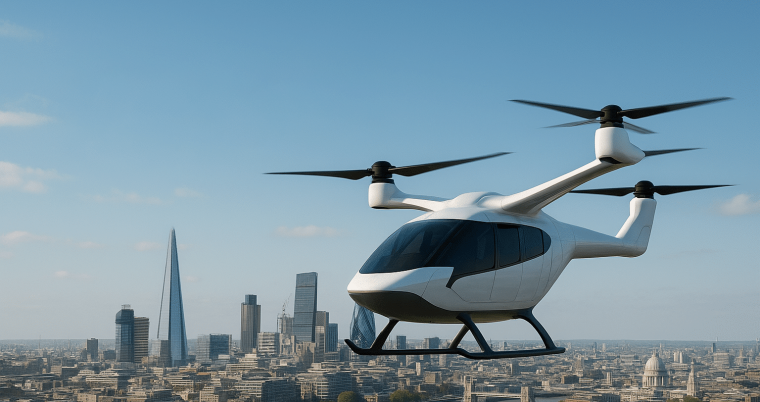
Visiongain has published a new report entitled Advanced Air Mobility (AAM) Market Report 2025–2035 (Including Impact of U.S. Trade Tariffs): Forecasts by Range (Urban Air Mobility, Regional Air Mobility), by Mode of Operation (Piloted, Autonomous, Remote Operated), by Platform (Unmanned Aerial Vehicles (UAVs), eVTOL Aircraft, Fixed-Wing Aircraft, Hybrid Aircraft), by Application (Passenger Transport, Cargo Transport, Emergency Medical Services, Military & Defence, Other), by Component (Airframe, Avionics, Propulsion System, Battery System, Sensors & Software, Ground Infrastructure) AND Regional and Leading National Market Analysis PLUS Analysis of Leading Companies.
The global advanced air mobility market is estimated at US$1,762.8 million in 2025 and is projected to grow at a CAGR of 24.1% during the forecast period 2025-2035.
Impact of US Trade Tariffs on the Global Advanced Air Mobility Market
The imposition of U.S. tariffs on key components such as batteries, electric motors, composite materials, and avionics systems is poised to have significant ramifications for the global advanced air mobility (AAM) market. As the U.S. is a major hub for advanced air mobility innovation and deployment, higher import costs on critical components—particularly from countries like China—could disrupt supply chains, elevate manufacturing costs, and delay project timelines. Startups and mid-sized OEMs are particularly vulnerable, as their cost structures are tightly bound to global sourcing. These tariffs could push manufacturers to reconfigure their supply chains, relocate production, or seek alternative suppliers, potentially shifting the balance of global competition. While intended to bolster domestic production, the tariffs may also slow down adoption and infrastructure development if cost barriers are not offset by subsidies or policy support. At the same time, countries not impacted by such trade restrictions—especially in Asia-Pacific and Europe—could benefit by attracting new investment and accelerating advanced air mobility deployment.
Technological Advancements in Electric Propulsion and Battery Systems
The evolution of battery technology and lightweight electric propulsion systems has accelerated the feasibility of AAM. Lithium-ion battery energy density improvements and ongoing developments in solid-state batteries are enabling longer flight ranges and shorter charging cycles, which are critical for the commercial viability of eVTOL aircraft. For instance, Lilium is leveraging its proprietary ducted fan electric propulsion system to improve efficiency and range, while Vertical Aerospace is partnering with Rolls-Royce to integrate advanced electric powertrains into its aircraft. These technological breakthroughs are directly fuelling the expansion of AAM by reducing operational costs and enhancing safety and performance standards.
How will this Report Benefit you?
Visiongain’s 406-page report provides 121 tables and 193 charts/graphs. Our new study is suitable for anyone requiring commercial, in-depth analyses for the advanced air mobility market, along with detailed segment analysis in the market. Our new study will help you evaluate the overall global and regional market for advanced air mobility. Get financial analysis of the overall market and different segments including range, mode of operation, platform, application and component, and capture higher market share. We believe that there are strong opportunities in this fast-growing advanced air mobility market. See how to use the existing and upcoming opportunities in this market to gain revenue benefits in the near future. Moreover, the report will help you to improve your strategic decision-making, allowing you to frame growth strategies, reinforce the analysis of other market players, and maximise the productivity of the company.
What are the Current Market Drivers?
Government Support and Regulatory Advancements
Regulatory frameworks are evolving rapidly to facilitate the safe integration of AAM into national airspaces. Governments and aviation authorities such as the U.S. Federal Aviation Administration (FAA), the European Union Aviation Safety Agency (EASA), and regulators in countries like Japan and South Korea are actively working on certification pathways, air traffic management systems, and safety protocols for AAM vehicles. The FAA recently granted Archer Aviation’s Midnight eVTOL aircraft a Special Airworthiness Certificate for flight testing, marking a major regulatory milestone. Meanwhile, South Korea is launching an Urban Air Mobility (UAM) roadmap with significant government funding to enable commercial operations by 2025. These supportive policies and regulatory advancements are accelerating industry readiness and boosting investor confidence.
Rising Investments and Strategic Partnerships
The AAM sector is witnessing a surge in investments from both private and public stakeholders, highlighting strong confidence in its long-term growth potential. Companies such as Eve Air Mobility, backed by Embraer, and Beta Technologies, supported by Amazon and UPS, are securing major funding rounds and forming strategic alliances to accelerate commercialization. Automotive giants like Hyundai and Toyota are also entering the space, with Hyundai’s Supernal subsidiary unveiling its latest eVTOL design at CES 2024. These collaborations not only provide capital but also combine expertise from aviation, automotive, and energy sectors, ensuring the rapid scaling of AAM infrastructure and technology deployment.
Where are the Market Opportunities?
Urban Air Mobility Services Can Alleviate Congestion In Megacities.
The most immediate opportunity for the AAM sector lies in urban air mobility services that can alleviate congestion in megacities. With rapid urbanization, cities such as Los Angeles, Dubai, and Singapore are actively exploring air taxi services to complement existing transport networks. Volocopter’s planned commercial launch in Paris ahead of the 2024 Olympics represents a milestone, signalling strong potential for air taxis in cities with strained infrastructure. Companies that can establish first-mover advantage in these markets will likely capture significant long-term demand.
Cargo and logistics applications present another major opportunity for AAM.
Beyond passenger transport, eVTOLs and autonomous aerial vehicles can streamline last-mile and middle-mile logistics. Companies like Elroy Air and Sabrewing Aircraft Company are designing cargo drones capable of carrying loads of several hundred kilograms over regional distances. Amazon and UPS have also expressed interest in integrating aerial logistics into their supply chains. This opens a commercial pathway that bypasses the slower adoption hurdles of passenger flights, while simultaneously reducing emissions in freight transport.
Rise of Sustainable Aviation Initiatives Creates an Overarching Opportunity for AAM Players
With global governments and corporations committed to net-zero carbon targets, eVTOLs powered by electricity or hydrogen are positioned as critical enablers of sustainable mobility. Partnerships such as Hyundai’s Supernal collaboration with Rolls-Royce to develop hydrogen fuel cell-powered aircraft highlight the long-term shift toward green aviation. By aligning with sustainability agendas, AAM providers can attract regulatory support, investment, and customer adoption on a global scale.
Competitive Landscape
The major players operating in the advanced air mobility market are Airbus SE, Aurora Flight Sciences, Beta Technologies, Eve GmbH, Guangzhou EHang Intelligent Technology Co. Ltd., Joby Aviation, Lilium GmbH, Overair, Plane Company, TATA Advanced Systems, Textron Aviation Inc., The Boeing Company, Vertical Aerospace Group Ltd., Volocopter GmbH, Workhorse Group, Inc., These major players operating in this market have adopted various strategies comprising M&A, collaborations, investment in R&D, regional business expansion, partnerships, and new product launch.
Recent Developments
- 03-Jun-25, Eve Air Mobility secured a non-repayable grant from Brazil’s FINEP for up to $15.8M, part of a total $33.8M project. The grant will accelerate innovation in autonomous systems, hybrid-electric propulsion, SAF testing, and urban ATM systems. It marks Eve’s first such grant, highlighting its leadership in sustainable AAM solutions.
- 27-May-25, VX4 successfully completed piloted wingborne flight in open airspace; over 30,000 in-flight parameters recorded. A major milestone toward certification; piloted transition flight expected in 2H 2025.
- 21-Mar-25, The U.S. Air Force selected Boeing to design, build, and deliver its next-generation fighter aircraft under the Next Generation Air Dominance (NGAD) program. This contract aims to establish a new global standard for sixth-generation fighter capabilities.
- 13-Mar-25, Eve and South Korea’s UI Helicopter signed an MoU to jointly develop technical, ecosystem, and infrastructure capabilities required for AAM in South Korea. The partnership will help engage government and industry stakeholders to facilitate future eVTOL operations.
Notes for Editors
If you are interested in a more detailed overview of this report, please send an e-mail to contactus@visiongain.com or call +44 207 336 6100.
About Visiongain
Visiongain is one of the fastest-growing and most innovative independent media companies in Europe. Based in London, UK, Visiongain produces a host of business-to-business reports focusing on the automotive, aviation, chemicals, cyber, defence, energy, food & drink, materials, packaging, pharmaceutical and utilities sectors.
Visiongain publishes reports produced by analysts who are qualified experts in their field. Visiongain has firmly established itself as the first port of call for the business professional who needs independent, high-quality, original material to rely and depend on.


