How the Middle East Is Exposing Defence Production Limits
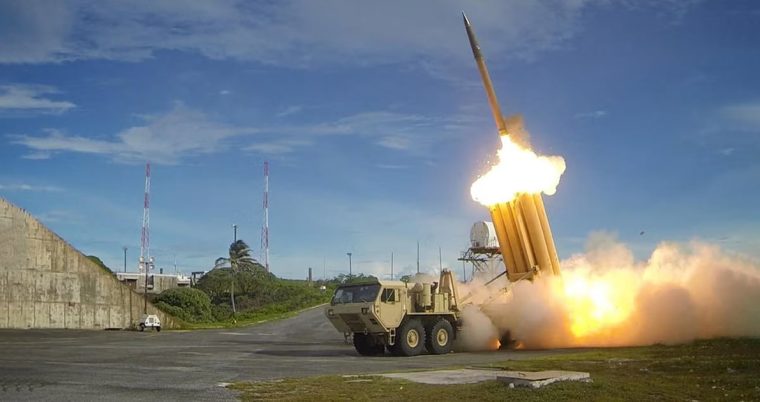
Recent events in the Middle East are directly affecting defence planning across several allied markets. Beyond the immediate operational consequences, the conflict is exposing deeper questions around stockpile depth, production capacity and the resilience of dispersed force deployments.
For governments and industry alike, the implications extend well beyond replenishment. Defence spending is expected to increase across both established programmes and emerging technologies, while renewed attention is being placed on the industrial base required to sustain high-intensity operations over extended periods.
Download Free Sample Report (incl. forecasts, market data, and methodology):
Visiongain Top Takeaways
- Missile and drone attacks are exposing critical gaps in interceptor stockpiles and production capacity.
- THAAD and Patriot demand is likely to accelerate investment in interceptor manufacturing and multi-year contracts.
- The United States is already expanding missile defence production through the Defence Production Act.
- Sustained missile campaigns are shifting defence priorities from capability development to industrial capacity.
- Manufacturing depth, not technology, may become the main constraint in future missile defence strategy.
Market Activity
United Kingdom: Leonardo Secures New Medium Helicopter Contract
The UK government has awarded the £1 billion New Medium Helicopter contract to Leonardo UK after a prolonged delay that had placed the company’s Yeovil facility at risk of closure.
The contract covers the supply of 23 medium-lift helicopters for the UK Armed Forces. The aircraft are expected to operate alongside uncrewed systems as manned-uncrewed teaming becomes more central to future air operations.
According to the government announcement, the agreement will make Yeovil the global centre for Leonardo’s military helicopter production and exports while positioning the UK as a leader in uncrewed and autonomous rotorcraft technologies.
The announcement stated:
“The upgraded deal makes Yeovil the global centre for Leonardo’s military helicopter production and exports, and sets up the UK as a leader for uncrewed and autonomous systems, a key frontier technology in the government’s Defence Industrial Strategy.”
The contract also carries significant export potential. Government estimates suggest that international orders for Leonardo helicopters built in Yeovil could generate more than £15 billion in exports over the next decade. Officials estimate that around 20 countries currently have requirements for new medium-lift helicopters.
The award reinforces the government’s emphasis on sustaining sovereign aerospace manufacturing capability while expanding export potential. It also secures Leonardo’s Yeovil facility in Somerset, sustaining approximately 3,300 jobs.
The programme supports further development of autonomous rotary-wing capability. The Ministry of Defence is investing in Proteus, the UK’s first autonomous rotary-wing uncrewed air system developed by Leonardo in partnership with the Royal Navy. Proteus completed its first flight earlier this year.
Leonardo added:
“The MoD has also positioned the UK as leader for uncrewed and autonomous rotorcraft technology, confirming further investment in Proteus, the UK’s first autonomous rotary wing uncrewed air system. Proteus has been developed with the Royal Navy and undertook its first flight earlier this year. Proteus and NMH represent a major investment into the UK’s industrial base, a key pillar of delivery for the Defence Industrial Strategy.”
The integration of autonomous capability may also enable future variants of the platform to operate in optionally crewed configurations, reflecting the broader shift toward autonomous capability across military aviation.
Visiongain Insight: The New Medium Helicopter award illustrates how platform procurement is increasingly being used to reinforce domestic industrial capacity alongside operational capability. By anchoring production, autonomy development, and export potential within the Yeovil facility, the programme strengthens the UK’s sovereign rotorcraft ecosystem while positioning Leonardo to compete in a global medium-lift helicopter market expected to expand over the coming decade.
Market Outlook
This week’s outlook is shaped less by individual contract announcements and more by the industrial implications of the rapidly evolving situation in the Middle East conflict.
One of the most visible pressures is interceptor stockpile depth, particularly for systems such as THAAD and Patriot. Previous procurement approaches maintained production lines while limiting sustained investment in capacity. Recent operational demands suggest that strategy underestimated the scale and duration of modern missile campaigns.
The United States has already begun addressing this constraint through the Defence Production Act. A notable step was the February award to L3Harris Technologies to expand production of solid rocket boost motors and Liquid Divert and Attitude Control Systems for interceptor programmes.
The company delivered its 1,000th solid rocket boost motor and 1,000th LDACS unit for the programme in 2024, ahead of schedule. The milestone is notable at a time when US interceptor production timelines and industrial capacity are facing increasing scrutiny. The new production effort is intended to increase output to approximately 400 units annually.
Although interceptor stockpile levels remain classified, recent operational activity has generated significant open-source indicators. Observed burn rates, combined with the shift of strategic focus away from longer-term deterrence priorities toward immediate operational demands, are expected to accelerate investment in interceptor production capacity for both THAAD and Patriot systems.
Visiongain expects several developments if current conditions persist, particularly as dispersed deployments and sustained missile salvo volumes place increasing pressure on interceptor inventories:
- Expansion of interceptor manufacturing capacity
- Greater use of multi-year procurement contracts
- Further application of the Defence Production Act to propulsion and key subsystems
Operational conditions may also influence tactical dynamics. The ability to suppress Iranian air defence networks will shape the extent to which Israel and the United States can shift from stand-off strike methods to greater use of lower-cost munitions.
Iranian success with passive surveillance and electro-optical systems in the Yemen campaign is also likely to stimulate renewed interest in EO/IR-guided surface-to-air loitering munitions such as the SA-67/SA-65/358 missiles.
Over the longer term, ballistic missile defence spending is expected to rise significantly beyond immediate stockpile replenishment. Investment is likely to expand across sensors, command networks and the wider interception architecture.
US production constraints may also create opportunities for allied suppliers. South Korea’s missile defence systems, including L-SAM and M-SAM Cheolmae II, are expected to receive increased international attention as governments seek to diversify interceptor supply.
Visiongain Insight: The current conflict is exposing a constraint that has been building for more than a decade. Missile defence capability has advanced rapidly, but interceptor production capacity has not kept pace. As burn rates and deployment footprints expand, governments are shifting focus from sustaining production lines to expanding them. For industry, the next phase of missile defence competition will be defined as much by manufacturing depth and supply chain resilience as by interceptor performance.
Related Market Reports
Visiongain’s market reports provide the data and forward-looking analysis needed to assess funding priorities, capability development and execution risk across defence markets. Research is evidence-based and analyst-led, supporting informed decision-making across procurement, industrial planning, and long-term strategy.
- Undersea Defence Infrastructure & Security Market Report 2026-2036
- Hypersonic Missile Defence Systems Market Report 2026-2036
- Military Simulation, Modelling and Virtual Training Market Report 2026-2036
- Advanced Materials in Aerospace and Defence Market Report 2026-2036
- U.S. DoD & Space Force Budget Market Report 2026-2036
- Loitering Munitions Market Report 2025-2035
- Military Cyber Security Market Report 2025-2035
Press & Media Enquiries
For commentary, data requests or interview enquiries, please contact: press@visiongain.com