Autonomous Underwater Vehicle (AUV) Market Set for 8.7% CAGR as Offshore Energy and Defence Demand Scale
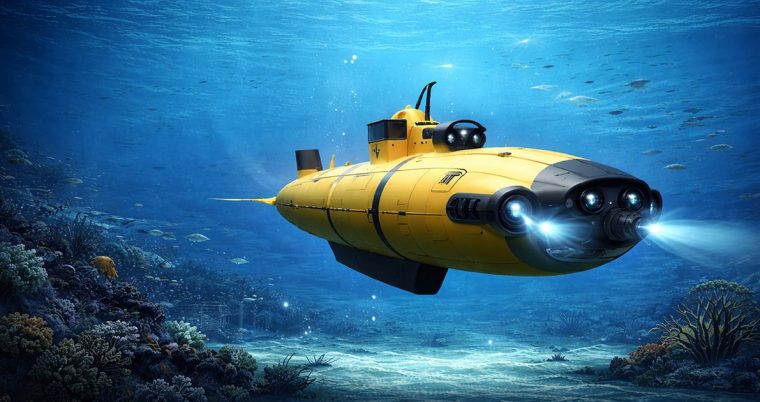
Visiongain has published a new report entitled Autonomous Underwater Vehicle (AUV) Market Report 2026-2036 (Including Impact of U.S. Trade Tariffs), providing forecasts by operational depth, business model, end-user, system type and sensor suite, alongside regional and leading national market analysis.
The global autonomous underwater vehicle (AUV) market is estimated at US$2,574.1 million in 2026 and is forecast to grow at a CAGR of 8.7% from 2026 to 2036.
Impact of US Trade Tariffs on the Global Autonomous Underwater Vehicle (AUV) Market
United States tariffs on advanced manufacturing inputs, electronic components, sensors, batteries, and specialised materials have introduced cost and supply-chain pressures across the global autonomous underwater vehicle market. Autonomous underwater vehicles rely on globally sourced components, including precision navigation systems, sonar payloads, power electronics, and composite housings, many of which are affected by trade measures and counter-tariffs. These policies have increased procurement costs for original equipment manufacturers and system integrators, disrupted supplier relationships, and extended production lead times. The overall market impact varies by region and end user, depending on exposure to United States supply chains and the ability to localise manufacturing or diversify sourcing.
Offshore Energy & O&M Demand: Inspection-Heavy Wind & Subsea Projects Are Creating Continuous, High-Frequency Service Work
The explosive roll-out of offshore wind and continuing subsea oil & gas campaigns are shifting AUV purchases from one-off science buys into high-frequency operational tooling: operators now need repeatable inspection, repair-planning and pre-installation seabed mapping which favor long-endurance survey AUVs, modular payloads and on-demand contract fleets; this commercial cadence fuels recurring revenue for AUV manufacturers and for service providers that package AUVs with data analytics, and it’s one reason the commercial fleet owners/operators are investing in larger robotic motherships and Armada-style remote operations to support persistent survey pipelines. Recent commercial framework deals and Armada expansion announcements by robotic fleet operators illustrate that the market is moving from project-by-project to subscription/contract survey models.
What are the Current Market Drivers?
Step-change in Endurance & Autonomy: Long-Endurance Missions and Shore-Based Operations Are Rewriting Use Cases
Technical advances in navigation, mission autonomy and energy configuration are unlocking missions that were previously impractical, multi-week, shore-launched sorties, persistent mapping and long transits between ports, which expands the market from coastal science into true deep-water commercial and military roles; Kongsberg’s HUGIN Endurance record multi-week autonomous sortie (and its configurable battery/payload volume) is a concrete demonstration that endurance and shore-based autonomy are now commercially viable, enabling lower life-cycle cost operations, fewer support vessels, and consequently a new pricing and service model for long-range surveys and persistent presence missions.
Commercialization of Data & Fleet-scale Robotics: AUV-as-a-Service and Robotic Motherships Scale Production-Grade Revenue
AUVs are no longer only hardware: the highest value is emerging in turnkey, repeatable robotic data services, fleets deployed from autonomous or optionally-crewed motherships, standardized capture pipelines, and SLA-driven delivery of processed subsea intelligence, which shifts revenue from capital goods (one-time AUV sale) to OPEX-style, recurring contracts and large fleet orders for remote operations centers, communications and data analytics; Ocean Infinity’s Armada concept and its commercial agreements and fleet expansion illustrate how clients buy outcomes (seabed maps, pipeline integrity KPI) rather than single vehicles, and this changes go-to-market, contract structure and scaling economics for the entire supply chain.
Where are the Market Opportunities?
Scale AUV-as-a-Service: Monetize Repeatable Outcomes with Fleet-Ops & SLA-Backed Contracts
There is a large market opportunity in converting one-off survey buyers into multi-year, SLA-backed customers via fleet operations (robotic motherships, shore-based operations centers and outcome billing): companies that can guarantee KPI delivery (e.g., X km² per day, Y% data completeness) will capture recurring revenues, higher lifetime customer value, and economies of scale that squeeze out single-vehicle suppliers; Ocean Infinity’s Armada and recent framework agreements demonstrate investor appetite for large, contracted robotic fleets — firms that can build reliable ops centers and data-delivery chains will command premium multiples in the downstream services market.
Hybrid AUV/ROV Intervention: Win the High-Margin Intervention & Repair Use Cases
The ability to combine untethered long-range mapping with rapid tethered intervention (hybrid AUV/ROV platforms that can transition from autonomous survey to tool-equipped intervention) is a major commercial opening because it lets operators both locate and fix problems with fewer platform changes, reducing total project cost; vendors who perfect robust hybrid docking, modular manipulators and certification for intervention work will access higher-margin IRM (inspection, repair & maintenance) projects and premium long-term service contracts (example: hybrid concepts being prototyped and discussed in industry fora). (Hybrid resident/ dockable concepts are increasingly in project roadmaps.).
Competitive Landscape
The top players operating in the autonomous underwater vehicle (AUV) market include Atlas Elektronik GmbH, Cellula Robotics, Forum Energy Technologies, Fugro N.V., General Dynamics Corporation, Kongsberg Gruppen ASA, L3Harris Technologies, Inc, Lockheed Martin Corporation, Ocean Alpha, Ocean Infinity, Oceaneering International, Inc, Saab AB, Subsea7 S.A., TechnipFMC plc, Teledyne Technologies Incorporated. The organisations in this market have adopted various strategies comprising M&A, collaborations, investment in R&D, regional business expansion, partnerships, and new product launches.
Recent Developments
- 18-Dec-25, TKMS signed a strategic teaming agreement with Marmen to support production of selected 212CD submarine segments in Canada for the Royal Canadian Navy. The agreement integrates Canadian high-precision manufacturing into TKMS’s submarine supply chain and strengthens Québec’s role in Canada’s defence and maritime industrial base.
- 03-Dec-25, General Dynamics NASSCO signed a tri-party memorandum of agreement with DSEC Co. Ltd. and Samsung Heavy Industries. The partnership focuses on advanced ship design and manufacturing automation for United States commercial, naval, and government shipbuilding programmes, including future logistics and auxiliary vessels.
- 26-Nov-25, The Swedish government’s offer of Saab’s A26 submarines was selected by the Polish government to replace its existing Kilo-class submarines. While no contract has yet been signed, the selection represents a major step toward future procurement and expanded naval cooperation.
- 20-Nov-25, The Brazilian Navy conducted its first operational test of an autonomous surface vessel during CPES hydrographic activities in Vitória Channel. The SL40 USV from OceanAlpha performed multibeam bathymetric surveys, delivering high-resolution seabed mapping through remote monitoring and calibrated hydro-oceanographic data collection.
- 17-Nov-25, Technip Energies Loading Systems secured a contract to supply three fully electric marine loading arms for phase two of Norway’s Northern Lights carbon dioxide transport and storage project. The solution eliminates hydraulic systems and supports expansion of terminal capacity to more than five million tonnes of carbon dioxide per year by 2028.
About Visiongain
Established in 1998, Visiongain is an independent publisher of analyst-led market intelligence, delivering data-driven research, forecasts, and strategic insight across global industries and emerging markets. Visiongain supports evidence-based decision-making for investment, procurement, and long-term strategic planning.
Media Contact
press@visiongain.com
+44 (0)20 7336 6100
www.visiongain.com


