Defence at Pace: Naval Readiness Tests Industrial Capacity
1 May 2026.
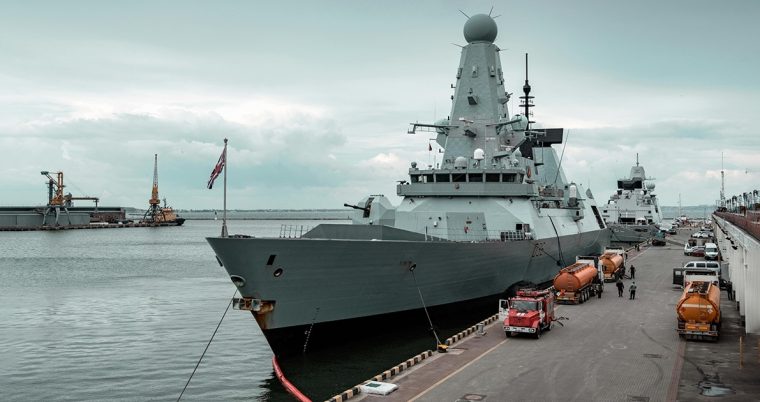
This week’s developments highlight a shift in how defence capability is being prepared and delivered. Supply chain resilience, naval strategy and procurement reform are converging around a single objective: operational readiness.
As demand scenarios move closer to sustained, high-intensity conditions, the focus is shifting from long-term planning to execution under pressure. The ability to scale production, integrate new technologies and sustain delivery at pace is becoming central to defence strategy.
This is reinforcing a structurally stronger demand environment across defence markets, with investment expected to remain elevated as governments prioritise readiness and resilience.
Explore Visiongain’s undersea and maritime intelligence hub: Visiongain Market Watch: Undersea & Maritime
Visiongain Top Takeaways
- Defence supply chains are being tested against sustained, high-intensity demand, not peacetime assumptions.
- Government and industry collaboration is becoming central to readiness and delivery.
- Naval strategy is shifting towards hybrid fleets integrating crewed and autonomous systems.
- Procurement timelines are compressing, with faster decision-to-delivery cycles emerging.
- Cost, scalability and mass are becoming as critical as performance in force design.
- Renewed focus on naval capability is reinforcing long-term investment across allied markets.
Market Activity
United Kingdom: Testing Supply Chains Under War Conditions
The UK Ministry of Defence has conducted a major wargaming exercise to test defence supply chains under the conditions of sustained, large-scale conflict.
The exercise brought together leading defence companies, including Boeing, KNDS, MBDA, Rheinmetall and Tekever, alongside senior Ministry of Defence leadership. Participants worked through a scenario requiring a sustained surge in demand for critical equipment to be maintained over an extended period, examining where constraints may emerge and what actions government and industry can take to minimise risk.
This reflects a broader shift towards testing defence supply chains against sustained, high-tempo demand scenarios rather than peacetime assumptions. It also highlights the growing focus on execution risk, as governments move from planning to delivery under operational pressure.
Minister for Defence Readiness and Industry, Luke Pollard MP, said:
“Defence needs to be able to move fast to respond to an increasingly unpredictable and dangerous world. This means not just having the right capabilities, but ensuring our supply chains are resilient, responsive and able to sustain operations over time. Activities like this wargame are essential to strengthening that readiness.”
National Armaments Director Rupert Pearce added:
“MOD is prioritising more meaningful collaboration with companies of all sizes to meet the challenge of supporting our Armed Forces with the kit and equipment they need. Supply chain wargaming plays a critical role by bringing MOD and industry together to test assumptions, identify opportunities to improve readiness and ensure that our plans can be delivered in practice.”
Visiongain Insight: Supply chain readiness is becoming a core measure of defence capability. The ability to identify bottlenecks before conflict, sustain demand over time and coordinate industry response will increasingly determine how quickly governments can convert intent into operational output.
United Kingdom: Royal Navy Strategy and the Hybrid Fleet
In a speech setting out the future direction of the Royal Navy, the First Sea Lord, General Sir Gwyn Jenkins, outlined the concept of a “Hybrid Navy”, combining crewed, uncrewed and autonomous systems.
He told an audience at RUSI:
“Our warfighting preparations are built around five key areas, but today I am going to focus on the visible, beating heart of the plan: the Hybrid Navy. As the name suggests, it is a vision for a fleet transformed: a mix of crewed, uncrewed and autonomous platforms. It includes our traditional air, surface, and subsurface platforms working with and alongside drones and other advanced weapon systems, giving us the additional capabilities, mass, and scalability we need to meet our 2029 objectives. I need to be clear here: this paradigm shift is not about replacing existing capabilities. It is about increasing the mass, survivability and lethality of our force. It is only through blending the conventional and the new that we will achieve this. At the same time, I am determined that we reduce the cost per unit to achieve the scale we need, because the reality is that there is no scenario in which we will have unlimited resources. We must end the mentality that what we need is ever more expensive and larger platforms.”
The speech emphasised modernisation, mass and lethality as central to future naval capability. This signals a shift from platform-centric naval power towards scalable, distributed force structures.
He added:
“To be credible, our warships must be able to fight and survive. As warfare continues down this path, they will not be able to do either without uncrewed support.”
The Strategic Defence Review also signals a shift towards significantly faster procurement, with decision-to-delivery timelines reduced to as little as three months for certain systems. At the same time, the emphasis on reducing unit cost and accelerating procurement reflects a move towards scalable capability, where mass and affordability are becoming as critical as performance.
“Our Hybrid Navy will be geared towards the North Atlantic and High North, reflecting the priorities of the SDR but also, more fundamentally, our geography. This is where our long-term focus must remain, where Russian surface and sub-surface activity continues to pose a persistent challenge, both for the protection of our critical national infrastructure and the continuous at sea deterrent. You will all doubtless have watched the Defence Secretary’s announcement earlier this month, about how the Royal Navy exposed and disrupted Russian submarine activity in our own backyard while the world’s gaze was fixed on the Middle East.”
Visiongain Insight: Naval strategy is shifting from platform-centric design to scalable force structures. The integration of uncrewed systems is enabling greater mass, lower unit cost and faster deployment, repositioning naval power around output and sustainability rather than platform size alone.
Australia: Training and Counter-UAS Capability
CAE has been awarded a five-year Training Systems Technical Support contract with the Commonwealth of Australia to deliver technical sustainment of naval warfare training systems, alongside engineering expertise to support training requirements.
The agreement ensures that training systems for Royal Australian Navy surface vessels, including bridge simulators and combat centres, remain operational and integrated across numerous simulators to support multi-domain training operations. The contract comes into effect on 1 July 2026, with options for extension.
These developments reflect a broader focus on operational readiness, where training capability and counter-UAS systems are becoming as critical as frontline platforms.
Also in Australia, MyDefence A/S, in partnership with HighCom Limited and its subsidiary HighCom Technology, has secured a Counter Small Uncrewed Aerial System contract with the Australian Department of Defence.
The contract, valued at A$9.81 million including GST, follows an evaluation programme conducted by the Australian Defence Force and marks a shift towards operational deployment of counter-drone capability. MyDefence will deliver advanced C-UAS technology, while HighCom Technology will provide delivery and support services.
Visiongain Insight: Training and counter-UAS capability are becoming core enablers of operational effectiveness. As low-cost aerial threats scale, advantage will depend not only on platforms, but on the ability to train, detect and respond consistently across the force.
Market Outlook
Recent developments across AUKUS, UDT and ongoing geopolitical tensions are reinforcing demand for naval capability, with industry expecting this to translate into sustained investment.
A key challenge will be the speed at which funding can be translated into operational output. This is particularly relevant for disruptive technologies and rapid upgrades, in a domain historically shaped by long-term shipbuilding strategies and extended procurement cycles. The constraint is increasingly not intent, but execution, as industrial capacity and supply chains are tested by the pace of demand.
The shift towards hybrid fleets, increased use of autonomous systems and faster procurement timelines suggests a move away from traditional acquisition models. Delivering this transition at pace will depend on changes across funding structures, industrial capacity and programme execution, alongside a greater focus on cost, scalability and the ability to deliver capability at volume.
Suppliers able to scale production, secure supply chains and deliver at pace are likely to capture a disproportionate share of future contracts.
Visiongain Insight: Defence markets are entering a phase where demand, funding and political intent are aligned, but delivery is constrained. Competitive advantage will depend on the ability to scale production, integrate new technologies and sustain output over time. The shift is from capability development to capability delivery, where execution, not ambition, determines outcomes.
From Visiongain
Visiongain’s market reports provide detailed forecasting and analysis to assess how these structural shifts will translate into long-term demand, investment priorities and competitive positioning.
- Naval USV/UUV Market Report 2026-2036
- Distributed Fibre Optic Sensing (DFOS) Market Report 2026-2036
- Small Drones Market Report 2026-2036
- Undersea Defence Infrastructure & Security Market Report 2026-2036
- Hypersonic Missile Defence Systems Market Report 2026-2036
- Military Artificial Intelligence (AI) Systems Market Report 2026-2036
Press & Media Enquiries
For commentary, data requests or interview enquiries, please contact: press@visiongain.com