Solar PV Backsheet Market
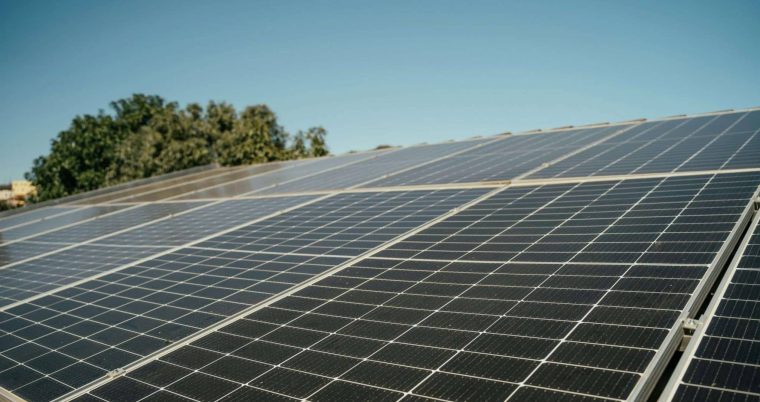
Visiongain has published a new report entitled Solar PV Backsheet Market Report 2025-2035 (Including Impact of U.S. Trade Tariffs): Forecasts by Type (Fluoropolymer, Non-Fluoropolymer), by Structure (Mono-Film, Barrier-Film, Duo-Film), by Installation (Ground-Mounted, Floating Power Plant, Roof-Mounted, Other), by Application (Utility, Industrial, Commercial, Residential, Other), by Material (Tedlar/PET/Tedlar, PET/PET/PET, Kynar/PET/Kynar, Co-Extruded Backsheets, Tedlar/PET/EVA, Other) AND Regional and Leading National Market Analysis PLUS Analysis of Leading Companies.
The global solar PV backsheet market is estimated at US$4,735.5 million in 2025 and is projected to grow at a CAGR of 6.3% during the forecast period 2025-2035.
Impact of US Trade Tariffs on the Global Solar PV Backsheet Market
Visiongain predicts a V-shaped recovery scenario, as the global solar PV backsheet market experiences a sharp but short-lived disruption following the imposition of U.S. tariffs.
Visiongain’s lead analyst says, “Initial supply shocks and price spikes will cause delays and cost increases for solar installations in mid-2025. However, this will be followed with rapid adaptation by global manufacturers, shifting production to untargeted countries such as Indonesia and India, and reshoring operations to the U.S., which is set to rebalance supply chains by early 2026″
Increased domestic manufacturing incentives under the Inflation Reduction Act and the scaling of alternative suppliers enable market normalisation, with demand and pricing stabilising quickly. As a result, the backsheet market is predicted by Visiongain to rebound strongly within 12–18 months, regaining pre-tariff momentum.
Evolving Global and Regional Regulatory Standards
The solar PV back sheet market is being increasingly influenced by the tightening of international and regional regulations related to safety, environmental compliance, and performance standards. To gain certification, backsheets must now meet higher electrical insulation, flame retardancy, and weathering resistance standards.
For instance, IEC 61730 and UL 1703 have seen revisions emphasising long-term reliability, which has compelled manufacturers to invest in higher-grade materials. Additionally, environmental regulations in the European Union and Japan promote fluorine-free and recyclable materials, pushing the market towards non-toxic, sustainable alternatives.
Krempel GmbH, a Germany-based manufacturer, has responded to these regulatory shifts by developing PV backsheet materials that meet stringent European RoHS and REACH standards while maintaining excellent field durability. Such regulatory developments are not only changing product design but also driving differentiation and innovation across the supplier base.
How will this Report Benefit you?
Visiongain’s 411-page report provides 124 tables and 205 charts/graphs. Our new study is suitable for anyone requiring commercial, in-depth analyses for the solar PV backsheet market and detailed segment analysis. Our new study will help you evaluate the overall global and regional market for solar PV backsheet. We believe there are strong opportunities in this fast-growing solar PV backsheet market. See how to use the existing and upcoming opportunities in this market to gain revenue benefits in the near future.
What are the Current Market Drivers?
Surge in Utility-Scale Solar Installations Globally
The rapid rise of utility-scale solar PV projects, especially in emerging economies, is a significant driver for the backsheet market. These large installations often demand high-performance backsheet that can withstand extreme climates, including high UV exposure, wind loads, humidity, and temperature fluctuations.
Countries such as India, China, Saudi Arabia, and Brazil are aggressively expanding their solar capacity. For example, India’s Jawaharlal Nehru National Solar Mission and China’s ongoing investments under its 14th Five-Year Plan are boosting demand for durable, cost-efficient backsheet suitable for megawatt-scale farms.
Jolywood, known for its transparent backsheet used in bifacial modules, and Hangzhou First Applied Materials, one of the world’s largest backsheet producers, are capitalizing on this trend by scaling production and expanding export capacities to cater to the growing utility-scale market. As the global solar landscape increasingly tilts toward larger projects, the need for backsheet offering both performance and economy continues to grow.
Rising Adoption of Bifacial and Transparent Modules
Bifacial modules—capable of capturing solar energy from both the front and rear sides—are reshaping the backsheet market. These modules typically use transparent backsheet or dual-glass structures instead of conventional opaque ones, creating new demand patterns. This has prompted traditional backsheet manufacturers to pivot their product portfolios. DuPont, which pioneered fluoropolymer backsheets with Tedlar®, has introduced transparent variants to serve bifacial applications. Coveme has also developed transparent PET backsheets to cater to this demand, offering a lighter, more cost-effective alternative to glass-glass bifacial modules.
Although transparent backsheets are currently a smaller segment, their growth trajectory is strong due to advantages such as lighter weight, easier installation, and better mechanical protection compared to glass-glass modules. This evolution is prompting material innovation and specialization among backsheet providers.
Where are the Market Opportunities?
Rising Global Demand for Utility-Scale Solar Projects
One of the most significant growth opportunities for the solar PV backsheet market lies in the continued expansion of utility-scale solar power projects worldwide. As countries aim to meet their climate goals under the Paris Agreement, large-scale solar farms are being commissioned across Asia, the Middle East, Africa, and Latin America. For example, India’s PM-KUSUM scheme, Saudi Arabia’s NEOM project, and Brazil’s National Energy Plan 2050 all emphasise gigawatt-scale solar deployment, which in turn boosts demand for reliable, durable backsheets capable of withstanding long-term environmental stress.
Manufacturers like Hangzhou First Applied Materials and Cybrid Technologies are scaling up production capacity to cater to utility-scale demand by offering cost-effective yet high-performance backsheets that meet stricter technical specifications. This opportunity is particularly attractive because utility-scale projects typically use standardized module designs, enabling bulk procurement of backsheets and long-term supply contracts—driving volume growth and manufacturing efficiency.
Growing Adoption of Transparent Backsheets for Bifacial Modules
With the rapid rise of bifacial solar modules, which generate electricity from both sides of the panel, the demand for transparent backsheets is increasing steadily. While many bifacial modules use glass on both sides, transparent backsheets offer lighter weight, easier handling, and lower manufacturing cost, especially for rooftop and commercial installations. Companies like DuPont, with its Clear Tedlar® backsheet, and Coveme, which offers transparent PET-based backsheets, are leading the way in this segment. These backsheets maintain optical clarity while providing the electrical insulation and UV resistance required for bifacial module performance. According to industry projections, bifacial modules could account for more than 40% of global solar installations by 2028, creating a parallel growth curve for transparent backsheets. For manufacturers, this represents a critical product diversification opportunity with strong differentiation potential.
Competitive Landscape
The major players operating in the solar PV backsheet market are 3M Company, Arkema S.A., Canadian Solar, COVEME S.p.A., Cybrid Technologies Inc., DuPont de Nemours, Inc., Isovolta AG, Jolywood (Suzhou) Sunwatt Co., Ltd., Krempel GmbH , Madico Inc., Mitsubishi Chemical America, Inc., Taiflex Scientific Co. Ltd, Targray Technology International Inc., Toyo Aluminium K.K., Trina Solar. These major players operating in this market have adopted various strategies comprising M&A, collaborations, investment in R&D, regional business expansion, partnerships, and new product launch.
Recent Developments
- 01-Apr-25, Canadian Solar partnered with Flow Power to implement innovative anti-hail solar panels in Australia. The first deployment will be at the Coonawarra Energy Project in South Australia, featuring a solar farm paired with a DC-coupled Battery Energy Storage System (BESS), scheduled for delivery in 2025. This project introduces Canadian Solar’s specially developed anti-hail technology designed to protect solar panels in extreme weather conditions.
- 28-Mar-25, Mitsubishi Chemical Group Corporation announced a company split in relation to the transfer of Mitsubishi Tanabe Pharma Corporation. This strategic move aims to streamline operations and focus on core business areas, potentially impacting their materials division, including solar PV backsheet materials.
- 24-Mar-25, Collaborated with JFE Steel and Mitsubishi Gas Chemical to develop a carbon recycling supply chain at the Mizushima Complex. This initiative may contribute to more sustainable production processes for materials used in solar backsheet.
Notes for Editors
If you are interested in a more detailed overview of this report, please send an e-mail to contactus@visiongain.com or call +44 207 336 6100.
About Visiongain
Visiongain is one of the fastest-growing and most innovative independent media companies in Europe. Based in London, UK, Visiongain produces a host of business-to-business reports focusing on the automotive, aviation, chemicals, cyber, defence, energy, food & drink, materials, packaging, pharmaceutical and utilities sectors.
Visiongain publishes reports produced by analysts who are qualified experts in their field. Visiongain has firmly established itself as the first port of call for the business professional who needs independent, high-quality, original material to rely on.


