Special Mission Aircraft Market
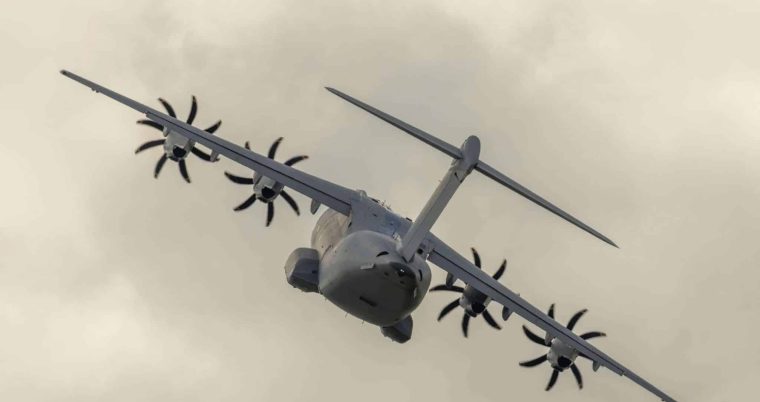
Visiongain’s report entitled Special Mission Aircraft Market Report 2025-2035 delves into the current drivers and forecasts across the next 10-year period. Our analysis shows that the global special mission aircraft market is US$15,155.2 million in 2025 and is projected to grow at a CAGR of 4.5% during the forecast period 2025-2035.
U.S. Tariffs: What’s the Impact on the Global Special Mission Aircraft Market?
Special mission aircraft (SMAs) – including ISR, surveillance and maritime patrol platforms – are critical force multipliers for defence and homeland security. They carry advanced sensors (e.g. synthetic-aperture radar, moving-target indicators, EO/IR cameras, COMINT systems and secure datalinks) to extend situational awareness and cover vast territories. Modern SMAs increasingly rely on composite airframes, high-end avionics and long-endurance engines. Under the 2025 Trump tariff regime, import duties on aircraft components, electronics and composite materials raise production costs. For example, U.S. tariffs on carbon-fibre composites have jumped to 25% on raw tow and 17.5% on prepregs, driving up the price of lightweight airframe parts. Tariffs on avionics (from semiconductors to integrated mission computers) similarly inflate costs. These trade measures squeeze the global supply chain, already strained by high-tech export controls, delaying production schedules and procurement.
Rising Geopolitical Tensions and Military Modernisation
Geopolitical instability, particularly in Eastern Europe, the Middle East, and the Indo-Pacific regions, has significantly increased demand for special mission aircraft used in surveillance, intelligence gathering, and reconnaissance (ISR). Nations are actively investing in fleet modernisation to counter evolving threats, asymmetric warfare, and regional power competitions. For example, in response to heightened tensions in Eastern Europe, NATO allies have ramped up ISR and maritime patrol capabilities, relying heavily on platforms like the Boeing P-8A Poseidon, which is used by the U.S., U.K., Australia, and India for anti-submarine and surveillance missions. Similarly, the U.S. Air Force’s RC-135 Rivet Joint, operated by L3Harris Technologies, continues to play a central role in electronic intelligence (ELINT) missions, particularly in contested regions like the South China Sea.
Lengthy Procurement and Integration Timelines
Due to the complexity of mission-specific configurations, procurement cycles for special mission aircraft are often prolonged, involving lengthy design, approval, testing, and certification phases. These delays can be further exacerbated by changing government priorities, export control regulations, or coordination between multiple stakeholders, especially in joint or international programs. A notable example is the development of the Saab GlobalEye AEW&C, which integrates advanced radar and surveillance systems onto a Bombardier Global 6000 airframe. Despite its cutting-edge capability, development and delivery schedules have stretched over several years, impacting customer deployment timelines. Such prolonged lead times reduce market responsiveness and may cause potential customers to turn to off-the-shelf or multi-role platforms with faster availability.
How will this Report Benefit you?
Visiongain’s 459-page report provides 125 tables and 226 charts/graphs. Our new study is suitable for anyone requiring commercial, in-depth analysis of the special mission aircraft market and detailed segment analysis of the market. Our new study will help you evaluate Special Mission Aircraft’s overall global and regional market scope. Get financial analysis of the overall market and different segments, including point of sale, platform type, end-user, payload type, and company size and capture a higher market share. We believe there are strong opportunities in this fast-growing special mission aircraft market.
What are the Current Market Drivers?
Growth in Humanitarian, Disaster Relief, and Environmental Monitoring Missions
Beyond military and security roles, special mission aircraft are being increasingly utilised for humanitarian aid, disaster relief, and environmental monitoring. These aircraft are vital in delivering aid, performing aerial assessments, and managing emergency responses in disaster-prone areas. The Beechcraft King Air 350, for example, is frequently modified for aerial survey and disaster response roles due to its operational flexibility and ability to land on short, unprepared runways. Additionally, organisations like NASA and NOAA deploy modified aircraft such as the Gulfstream IV-SP and Lockheed WP-3D Orion for hurricane tracking, climate monitoring, and atmospheric research, highlighting the growing role of these platforms in non-military operations.
Increasing Demand for Multi-Role and Modular Aircraft Platforms
Operators seek aircraft that can be quickly reconfigured for multiple mission profiles, including ISR, electronic warfare, search and rescue (SAR), and communications relay. Budget constraints, fleet optimisation strategies, and the need for operational flexibility in both military and civil domains drive the demand for multi-role and modular platforms. A prime example is the Bombardier Global 6500/7500 series, which can be modified for roles such as SIGINT, VIP transport, and battlefield management. Similarly, Embraer’s C-390 Millennium, while primarily a tactical airlifter, is being marketed for roles including aerial refuelling, firefighting, and humanitarian missions. This versatility significantly enhances mission readiness and reduces lifecycle costs.
Where are the Market Opportunities?
Integration of Artificial Intelligence and Autonomous Mission Capabilities
There is an increasing demand for AI-enabled mission systems and semi-autonomous capabilities on special mission aircraft to reduce operator workload and improve mission efficiency. Advanced onboard systems capable of automatic target recognition, predictive maintenance, and autonomous navigation are being integrated into next-generation platforms. For example, General Atomics and Northrop Grumman are leading efforts to combine manned and unmanned assets for ISR missions, with the RQ-4 Global Hawk being a prominent case. Companies that specialise in AI, machine learning, and sensor fusion technologies stand to benefit by collaborating with aircraft integrators to offer cutting-edge mission systems that redefine traditional operations.
Growing Demand for Multi-Domain Interoperability and Network-Centric Warfare
Modern combat and surveillance environments demand seamless communication and data sharing across air, land, sea, cyber, and space domains. This requirement has generated new opportunities for special mission aircraft that can serve as airborne command and control nodes, communication relays, and data integration platforms. For instance, the E-11A BACN (Battlefield Airborne Communications Node) aircraft, operated by the U.S. Air Force, bridges communication gaps between different forces and platforms. As nations invest in integrated battlefield networks and joint force operations, there is rising demand for aircraft with enhanced C4ISR capabilities. This opens avenues for defence contractors and avionics companies to design scalable, interoperable systems that support multi-domain mission execution.
Competitive Landscape
The major players operating in the special mission aircraft market are AeroVironment, Inc., Airbus SE, BAE Systems PLC, Bombardier Inc., Elbit Systems Ltd., Israel Aerospace Industries Ltd., L3Harris Technologies Inc., Leonardo S.p.A, Lockheed Martin Corporation, Northrop Grumman Corporation, Raytheon Technologies Corporation, Saab AB, Textron Aviation Inc., Thales Group, The Boeing Company. These major players operating in this market have adopted various strategies comprising M&A, investment in R&D, collaborations, partnerships, regional business expansion, and new product launch.
Recent Developments
- 04-Apr-25, Saab is optimistic about finalising a deal to supply Colombia with JAS 39 Gripen fighter jets, following Colombia’s selection of Saab’s aircraft to replace its aging fleet. The deal could include 16 to 24 aircraft and additional services like training and maintenance.
- 03-Apr-25, L3Harris Technologies, in partnership with Air Tractor, delivered the first missionized OA-1K SkyRaider II aircraft to the U.S. Air Force Special Operations Command. This aircraft is designed to enhance special operations capabilities in line with the National Defence Strategy.
- 02-Apr-25, Lockheed Martin secured a $65.5 million modification contract to provide support for the F-35 jet program, reinforcing its role in sustaining advanced fighter capabilities for the U.S. military.
Notes for Editors
Covered in the Special Mission Aircraft Market Report 2025-2035 :
(Including Impact of U.S. Trade Tariffs): Forecasts by Point of Sale (OEM, Aftermarket Sale), by Platform Type (Rotary-Wing, UAVs, Fixed-Wing), by End-User (Defence & Military, Homeland Security, Commercial & Civil Operations, Other), by Payload Type (Sensors Suit, Communication Suite, Protection Suite, Combat Suite, Other), by Type (ISR Aircraft, AEW&C Aircraft, SAR Aircraft, MPA Aircraft, Refuelling Aircraft, Other) AND Regional and Leading National Market Analysis PLUS Analysis of Leading Companies.
If you would like a more detailed overview of this report, please email contactus@visiongain.com or call +44 207 336 6100.
About Visiongain
Visiongain is one of the most innovative independent media companies in Europe. Based in London, UK, Visiongain produces a host of business-to-business reports focusing on the automotive, aviation, chemicals, cyber, defence, energy, food and drink, materials, packaging, pharmaceutical, and utilities sectors.
Visiongain publishes reports produced by analysts who are highly qualified experts in their field. Visiongain has firmly established itself as the first port of call for the business professional who needs independent, high-quality, original material to rely on.


