Thermal Countermeasure Market
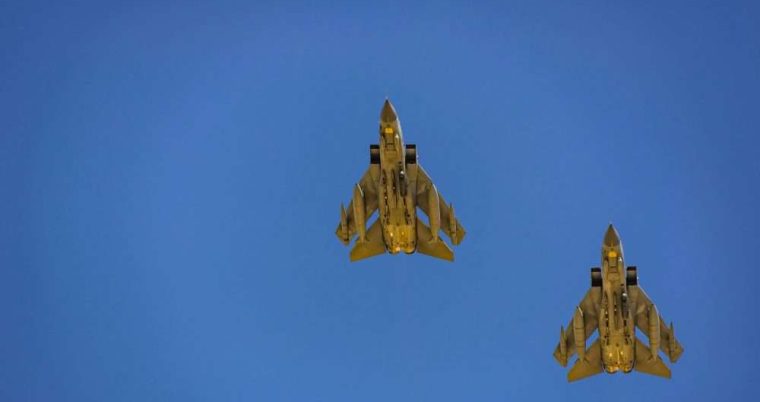
Visiongain has published a new report entitled Thermal Countermeasure Market Report 2024-2034: Forecasts by Product Type (Jammer, Flare Dispenser, Directed Infrared Countermeasure, IR Supressor, Others), by Platform (Fixed Wing, Rotary Wing, UAV), by Integration Type (Fuselage, Wing, Nose) AND Regional and Leading National Market Analysis PLUS Analysis of Leading Companies.
The global thermal countermeasure market is estimated to surpass US$13.5 in 2024 and is projected to grow at a CAGR of >6.0% during the forecast period 2024-2034.
Next-Generation Fighter Jets
The introduction of the next generation of fighter jets presents thermal countermeasures firms with substantial revenue prospects. These cutting-edge aircraft, with their cutting-edge equipment, need equally sophisticated countermeasures to ensure their survival and efficacy in combat situations. More accurate and stealth-focused thermal countermeasures are desperately needed as aerial warfare develops. A healthy market is created by this evolution for businesses that specialise in this particular technology.
Next Generation Air Dominance (NGAD) is a highly classified and secretive programme of the US Air Force (USAF) to increase lethality and ensure air superiority. The programme revolutionises the USAF’s modernisation plans by adopting a system-of-systems approach instead of a singular platform. A sixth-generation fighter aircraft will form the centrepiece of the network-connected NGAD family of systems. It will be complemented by multiple manned aircraft, loyal wingman-style unmanned aerial vehicles, and advanced command, control and communication systems. The modern sixth-generation fighter jet is expected to replace the F-22 Raptor fighter aircraft beginning in 2030.
How will this Report Benefit you?
Visiongain’s 250-page report provides 86 tables and 108 charts/graphs. Our new study is suitable for anyone requiring commercial, in-depth analyses for the thermal countermeasure market, along with detailed segment analysis in the market. Our new study will help you evaluate the overall global and regional market for Thermal Countermeasure. Get financial analysis of the overall market and different segments and capture higher market share. We believe that there are strong opportunities in this fast-growing thermal countermeasure market. See how to use the existing and upcoming opportunities in this market to gain revenue benefits in the near future. Moreover, the report will help you to improve your strategic decision-making, allowing you to frame growth strategies, reinforce the analysis of other market players, and maximise the productivity of the company.
What are the Current Market Drivers?
Nations across the world are investing heavily in upgrading their military capabilities, including their countermeasure systems. As a result, demand for thermal countermeasures is growing. Countries are adopting more sophisticated technologies to protect aircraft, vehicles, and installations from advanced missile systems, particularly those with infrared guidance. Countries facing geopolitical instability, terrorism, and regional conflicts are prioritizing the acquisition of advanced defense technologies. This drives the demand for thermal countermeasures to ensure readiness against missile threats.
The widespread availability of Man-Portable Air Defense Systems (MANPADS) and other advanced infrared-guided missiles, especially in conflict zones, has heightened the need for effective thermal countermeasures. These missiles are small, portable, and can be deployed against both military and civilian aircraft, making thermal countermeasures essential for protection. The growing use of drones in military operations has also increased the need for thermal countermeasures to protect these assets from missile attacks. As drones are increasingly used for reconnaissance, surveillance, and even combat, they have become vulnerable to heat-seeking missiles.
Where are the Market Opportunities?
Many countries, especially those facing regional conflicts or potential threats, are ramping up defense budgets. For example, nations in Asia-Pacific, the Middle East, and NATO members are investing in upgrading their defense capabilities, leading to higher demand for thermal countermeasures.
Many military forces are updating their aircraft and armored vehicles to incorporate newer, more effective countermeasure systems. For example, advanced systems for fighter jets like the F-35 or transport aircraft require sophisticated thermal decoy systems.
The development of more effective and intelligent flares to counter advanced missile threats is creating growth opportunities. New flares can provide better protection by adjusting their infrared signature to match the threat’s sensors more effectively. Apart from decoy flares, technologies such as infrared signature reduction or suppression systems on military assets (e.g., aircraft engine cooling systems or stealth coatings) present a growing segment.
There is a growing interest in providing thermal countermeasures for commercial aviation, especially to protect against potential terrorist missile attacks. This expansion into the civilian market opens new avenues for countermeasure providers. Thermal countermeasures are not only confined to military use but are being adapted for critical infrastructure protection and homeland security. These include safeguarding government facilities and high-value assets against missile attacks.
Competitive Landscape
The global thermal countermeasure market is competitive in nature as large number of well-established companies are operating in this industry. Some of the leading companies present in this industry are BAE Systems, Bharat Dynamics Limited, Chemring Group PLC, Elbit Systems Ltd., L3Harris Technologies, Inc., Leonardo S.p.A., MBDA, Northrop Grumman, Rheinmetall AG, and RUAG. Companies operating in this industry are adopting new product development, expansion, investment, and partnership to stay competitive in this industry and gain competitive advantage over other companies.
Recent Developments
In November 2023, Elbit Systems Ltd. was awarded a contract by Airbus Defense and Space to supply the Direct Infrared Counter Measures (DIRCM) and Infrared (IR) Missile Warning Systems for installation on the MRTT A330 refueling aircraft for Canada. The contract will be performed over a period of five years. Elbit Systems DIRCM laser protection systems have accumulated hundreds of thousands of flight hours on dozens of platforms and provide advanced defensive technology solutions for aircraft operating in modern battlefields.
Notes for Editors
If you are interested in a more detailed overview of this report, please send an e-mail to contactus@visiongain.com or call +44 207 336 6100.
About Visiongain
Visiongain is one of the fastest-growing and most innovative independent media companies in Europe. Based in London, UK, Visiongain produces a host of business-to-business reports focusing on the automotive, aviation, chemicals, cyber, defence, energy, food & drink, materials, packaging, pharmaceutical and utilities sectors.
Visiongain publishes reports produced by analysts who are qualified experts in their field. Visiongain has firmly established itself as the first port of call for the business professional who needs independent, high-quality, original material to rely and depend on.
