Precision Payloads: The Rise of Antibody Drug Conjugates in Modern Oncology
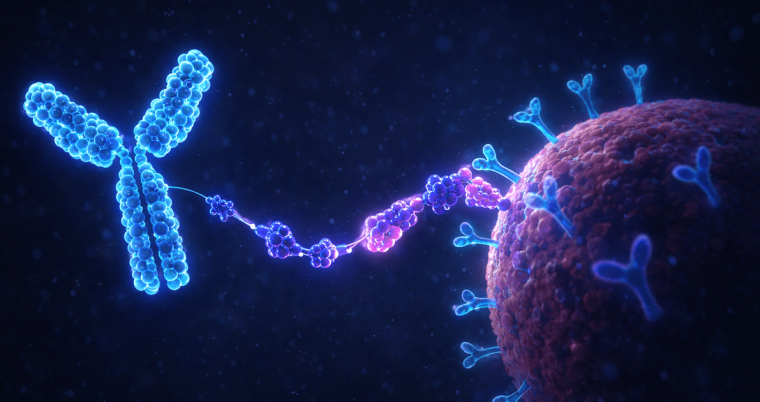
Antibody drug conjugates are emerging as one of the fastest-growing segments in oncology drug development. By combining antibody targeting with highly potent payloads, these therapies are opening new treatment possibilities across multiple cancer types.
Download Free Sample Report (incl. forecasts and methodology):
Visiongain Key Takeaways
- ADCs Are Entering the Oncology Mainstream: Once experimental, antibody drug conjugates are now delivering clinically validated targeted therapies.
- New Targets Are Expanding the Addressable Market: TROP2, B7-H3 and Claudin18.2 are opening significant new patient populations.
- Platform Chemistry Is Driving Competition: Linker technology, payload design and conjugation methods are key differentiators.
- Partnerships Are Accelerating ADC Development: Pharma-biotech collaborations are combining discovery innovation with global scale.
- A Rapidly Growing Oncology Segment: the ADC market is expected to grow at a CAGR of 14.9% by 2035.
Antibody Drug Conjugates Enter the Oncology Mainstream
Antibody Drug Conjugates (ADCs) combine the targeting precision of monoclonal antibodies with highly potent cytotoxic payloads delivered directly to tumour cells. This targeted approach enables therapies to destroy cancer cells while limiting damage to healthy tissue.
What was once considered an experimental approach is now delivering meaningful clinical results across breast, lung and several haematological cancers. Advances in linker chemistry, payload design and site-specific conjugation have improved drug stability, efficacy and safety, contributing to a steady increase in regulatory approvals.
Antibody Drug Conjugates (ADCs) combine the targeting precision of monoclonal antibodies with highly potent cytotoxic payloads delivered directly to tumour cells. This targeted approach enables therapies to destroy cancer cells while limiting damage to healthy tissue.
Biomarker-guided patient selection is strengthening the role of ADCs in precision medicine, enabling therapies to be matched more closely to the molecular characteristics of individual tumours.
At the same time, partnerships between pharmaceutical companies and biotechnology developers are accelerating both development and global commercialisation. As pipelines mature and approvals increase, ADCs are moving beyond niche applications to become an increasingly important component of modern cancer treatment strategies.
For industry leaders, the question is no longer whether ADCs will succeed, but rather how quickly the technology will reshape the oncology competitive landscape.
Visiongain analysis indicates that the global Antibody Drug Conjugates market is projected to grow at a CAGR of 14.9% by 2035, reflecting accelerating approvals, broader indications and sustained investment across the sector.
This growth is being reinforced by a rapidly evolving development pipeline.
Emerging ADC Pipelines: Powering the Next Phase of Precision Oncology
The antibody-drug conjugate pipeline is advancing rapidly, with several late-stage candidates poised to reshape oncology treatment.
HER2-targeting ADCs such as trastuzumab deruxtecan (Enhertu) are redefining treatment strategies in breast and gastric cancer as indications expand into HER2-low patient populations. At the same time, TROP2-targeting ADCs, including datopotamab deruxtecan, are progressing through late-stage trials for lung cancer and triple-negative breast cancer.
New targets are also emerging across difficult-to-treat solid tumours. B7-H3 ADCs are being explored for prostate and head and neck cancers, while Claudin18.2-directed ADCs are progressing in gastric and pancreatic cancer. Several of these programmes are being driven by Asian biotechnology companies, highlighting the region’s growing role in ADC innovation.
Beyond these targets, ADCs targeting HER3, EGFR exon 20 insertions, and KRAS mutant tumours are entering pivotal trials. These programmes are extending the therapeutic reach of ADCs into additional tumour types with significant unmet medical need.
Technical advances in payload engineering and conjugation methods are also supporting this pipeline progression, improving stability while reducing off-target toxicity. These developments are strengthening both clinical performance and commercial viability.
Many ADC programmes are also being evaluated in combination with immunotherapies and targeted treatments, potentially broadening their role across multiple oncology indications.
Taken together, the advancing pipeline positions ADCs as one of the most important technology platforms in the future of oncology treatment.
Visiongain Insight: The strength of the ADC pipeline reflects a clear industry shift toward precision oncology. Innovation in targets, chemistry and platform technologies is creating both clinical momentum and significant commercial opportunity.
Strategic Collaborations Accelerating ADC Commercialisation
Strategic partnerships have become a defining feature of the antibody drug conjugate market. Over the past two years, large licensing agreements and research alliances have accelerated both development and global commercialisation.
Merck KGaA’s US$1.4 billion collaboration with Caris Life Sciences illustrates how AI-driven target discovery is being integrated into ADC pipelines. Roche’s partnership with MediLink Therapeutics reflects the industry’s push to expand the use of promising assets such as YL211 into broader oncology indications.
Other companies, including Seagen, Mersana Therapeutics and Daiichi Sankyo, continue to form partnerships that combine biotechnology innovation with pharmaceutical development and commercial expertise. The success of programmes such as trastuzumab deruxtecan (Enhertu), developed through collaboration between Daiichi Sankyo and AstraZeneca, demonstrates how these alliances can rapidly broaden ADC use across new patient populations.
These collaborations are doing more than providing funding. They align technology platforms, clinical development networks and regulatory expertise to accelerate approvals and increase patient access.
Partnerships are also helping companies address the technical complexity of ADC manufacturing, which requires specialised capabilities across biologics production, payload chemistry and conjugation processes.
Biotechnology developers gain access to manufacturing scale and international distribution, while large pharmaceutical companies benefit from specialised discovery platforms and scientific agility.
The model is increasingly extending to platform technologies. In 2026, Earendil Labs’ US$885 million agreement with WuXi XDC for WuXiTecan 2 linker payload technology demonstrated that partnerships also support the development of next-generation and bispecific ADC programmes.
Taken together, these collaborations are creating a more integrated development environment in which ADC innovation can be scaled across global oncology markets.
Visiongain Insight: Strategic partnerships are becoming a central growth driver for the ADC sector, combining specialised innovation with the development scale required for global commercial success.
Market Outlook: A US$16 Billion Market Entering Its Next Growth Phase
The antibody-drug conjugate market is entering a new phase of growth that is likely to continue throughout the coming decade.
Indication growth remains the most important commercial driver. Targets such as TROP2, B7-H3, Claudin18.2 and KRAS mutant tumours are opening new patient populations across lung, gastric, pancreatic and prostate cancers. As clinical evidence grows, ADCs are being positioned earlier in treatment pathways and across a wide range of tumour types.
At the same time, linker technology has evolved from a technical detail into a key source of competitive differentiation. Companies with proprietary linker payload platforms are increasingly licensing these technologies across multiple global development programmes, turning platform chemistry into a strategic asset.
The structure of the industry is also evolving. Large pharmaceutical companies are partnering more frequently with biotechnology developers to combine discovery expertise with global development and commercial scale. Competition for platform partnerships and licensing agreements is intensifying as companies seek access to differentiated ADC technologies.
Artificial intelligence is also beginning to influence ADC development. AI-driven target discovery and biomarker analysis are helping researchers identify promising candidates more quickly and prioritise development programmes. Merck KGaA’s US$1.4 billion collaboration with Caris Life Sciences illustrates how AI is becoming embedded within oncology drug discovery.
Regional dynamics are also shifting. Asia-Pacific is moving beyond its role as a high-growth adoption market and is emerging as an important source of ADC innovation, particularly in Claudin18.2 programmes and next-generation platform technologies.
Looking ahead, bispecific ADCs may represent the next stage of platform evolution. By targeting multiple tumour markers simultaneously, these therapies aim to improve selectivity and help address resistance mechanisms that limit the effectiveness of some current treatments.
Leading programmes from companies including Daiichi Sankyo, AstraZeneca, Roche and Seagen are helping define the competitive landscape as the technology matures.
Visiongain Insight: Companies securing proprietary linker technologies, targeting new molecular pathways and integrating AI-driven discovery will be best positioned to capture long-term value as the ADC market expands.
Download Sample Reports:
Related Market Reports
Detailed market forecasts, competitive analysis, and sector reports help you make clear, future-proof strategic choices across R&D, manufacturing, supply chain, and commercial execution.
Explore the latest strategic market reports:
- Ophthalmic Drugs Market Report 2026-2036
- Anti-obesity Drugs Market Report 2026-2036
- Longevity Market Report 2026-2036
- Alzheimer’s Therapeutics Market Report 2026-2036
- Rheumatoid Arthritis Drugs Market Report 2026-2036
- Antibody Drug Conjugates Market Report 2025-2035
Press & Media Enquiries
For commentary, data requests or interview enquiries, please contact: press@visiongain.com


