Defence at Scale: Production Constraints Reshaping Global Capability Delivery
24 April 2026.
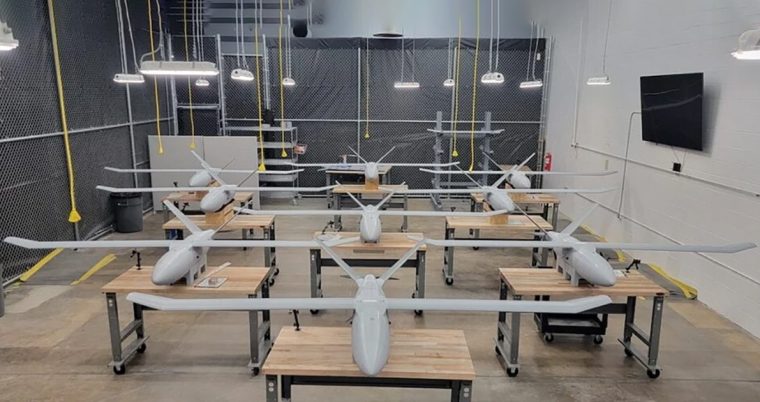
Defence demand is rising, but delivery is becoming the defining constraint.
Defence markets are entering a phase where demand, funding and political intent are aligned, but delivery is increasingly constrained. The challenge is no longer generating demand, but converting it into operational capability.
Recent developments across Ukraine, NATO programmes and US budget planning highlight a structural shift. The limiting factor is no longer access to funding or technological capability. It is the ability to produce at scale, secure supply chains and deliver systems at the pace required by sustained operations.
This shift is reshaping procurement strategies, supplier positioning and industrial policy. Governments are moving beyond headline spending commitments towards long-term capacity building, while suppliers are being assessed not only on innovation but on their ability to execute.
Visiongain Top Takeaways
- Operational demand is exceeding production capacity across drones, munitions and air defence systems
- Supply chain constraints and sub-tier bottlenecks are emerging as the primary limitation to scaling output
- Procurement is increasingly focused on speed, volume and proven capability
- Industrial strategy is shifting towards domestic production, long-term contracts and risk-sharing models
- Sustained conflict is likely to place pressure on long-term defence spending growth
Ukraine: Drone Warfare Driving Volume Demand
The UK has announced its largest ever drone package for Ukraine, committing to deliver at least 120,000 drones this year. The announcement followed the 34th meeting of the Ukraine Defence Contact Group in Berlin, co-chaired with counterparts including Germany, Ukraine and NATO leadership.
The announcement stated:
“The new package, the largest of its kind ever supplied by the UK, will include thousands of long-range strike drones, intelligence and reconnaissance drones, logistics drones and maritime capabilities, which are all battle-proven on Ukraine’s frontline. Deliveries of these new drones to Ukraine have already started this month.”
Drones are playing a central role across both offensive and defensive operations. In March 2026, approximately 6,500 one-way attack drones were launched by Russia against Ukraine, marking a significant increase on the previous month.
The majority of this investment will be directed towards UK-based companies, including Tekever, Windracers and Malloy Aeronautics, supporting domestic industrial capacity and job creation.
Defence Secretary John Healey MP said:
“This big boost of battle-proven drones will give Ukrainian forces the capability they need to defend their people and fight back against Russian aggression.
With eyes on the Middle East in recent weeks, Putin wants us to be distracted, but Ukrainians continue to fight with huge courage and nothing will distract us from continuing to stand with them for as long as it takes to secure peace.”
The package forms part of the UK’s broader £3 billion military support commitment to Ukraine this year, alongside ERA funding, and includes hundreds of thousands of artillery rounds and thousands of air defence missiles.
This also builds on a recently agreed UK-Ukraine defence partnership aimed at strengthening global capability against the proliferation of low-cost, high-technology military systems.
This aligns with wider market expansion. Visiongain forecasts the global small drones market to grow at a CAGR of 11.1%, from US$4.8 billion in 2026 to US$13.7 billion by 2036, driven by sustained operational demand and procurement scaling.
Visiongain Insight: Drone warfare is shifting demand towards volume production rather than platform superiority. Suppliers able to scale manufacturing and deliver at pace will capture disproportionate value as procurement moves towards high-frequency replenishment.
Supply Chain Expansion: New Entrants and Capability Validation
Morrow Batteries ASA has entered the defence sector with its first contract to supply battery cells to a German defence manufacturer, following a 12-month testing programme.
The cells were tested against established international manufacturers, with results confirming that Norwegian-produced batteries meet performance and reliability requirements for security-critical applications, matching established international suppliers.
This points to a broader shift towards expanding sub-tier supply chains, as governments and primes look to reduce bottlenecks and secure critical components.
Visiongain Insight: Supply chain resilience is expanding beyond traditional defence primes. Sub-tier suppliers and new entrants are becoming increasingly strategic as governments seek to reduce dependency and secure critical components.
European Defence Cooperation: Programme Alignment Under Pressure
France and Germany continue to face challenges aligning timelines for the Future Combat Air System programme. Mediators were expected to deliver conclusions by 18 April but requested an additional 10 days.
French Defence Minister Catherine Vautrin stated:
“They were due to deliver their conclusions, to be precise, on 18 April. They requested an additional 10 days.”
With no resolution reached following mediation efforts, the decision now rests with German Chancellor Friedrich Merz and French President Emmanuel Macron.
This reflects broader tensions within multinational defence programmes, where industrial interests, timelines and strategic priorities must be aligned across multiple stakeholders.
Visiongain Insight: Collaborative defence programmes remain strategically important but operationally complex. Delays in alignment highlight the challenges of coordinating industrial policy and capability development across national boundaries.
Industrial Positioning: Rheinmetall Expands Loitering Munition Capability
Rheinmetall has signed a major framework agreement with the Bundeswehr to supply FV-014 loitering munitions, following a restructuring of the original procurement process.
They were not initially selected in the programme, but the procurement process was revised to include the company, reflecting its growing strategic importance within European defence supply chains.
Deliveries are scheduled to begin in the first half of 2027, following qualification in the second quarter of 2026. The agreement includes options for a five-figure number of systems.
The FV-014 integrates intelligence, surveillance and reconnaissance with strike capability, offering a range of up to 100 kilometres and a 4 kg warhead. Rheinmetall has confirmed that production is fully based within the European Union.
This positions the company to benefit from increasing demand for autonomous strike and reconnaissance systems.
Visiongain Insight: Combat-proven and multi-role systems are gaining procurement advantage. Suppliers able to integrate ISR and strike capabilities within scalable platforms are likely to see sustained demand.
Innovation Acceleration: NATO DIANA and Subsea Capability
HonuWorx has been awarded an R&D contract under NATO DIANA’s Rapid Adoption Service on behalf of Defence Research and Development Canada. This marks the first contract awarded through the programme on behalf of an Allied nation, signalling the transition from pilot activity to operational adoption.
The award follows HonuWorx’s participation in NATO DIANA’s Critical Infrastructure and Logistics Challenge, where the company worked with end users and technical experts to refine its subsea inspection and intervention capabilities.
The contract follows DRDC’s decision to engage DIANA to identify an innovator capable of addressing a specific Canadian capability requirement.
Lee Wilson, CEO of HonuWorx, said:
“Autonomous subsea systems are evolving from data collection platforms toward the delivery of real capability, with the potential to change how sensitive seabed operations are conducted. This work focuses on extending that capability into deeper environments while meeting specific operational requirements, and represents a further step toward operational deployment.”
Brian May, Section Head for Scientific and Engineering Trials at DRDC’s Atlantic Research Centre, added:
“HonuWorx’s proposed system, initially envisioned to support the offshore oil industry, holds the potential to allow Canadian defence research to effectively and efficiently operate and maintain future, deepwater power and data infrastructure and support the testing of emerging deep-sea technologies.”
The Rapid Adoption Service enables NATO Allies to co-develop, prototype and deploy technologies at speed. Through its opt-in framework, DIANA can award contracts on behalf of member states, reducing administrative barriers and accelerating the transition from concept to production.
Jyoti Hirani-Driver, Acting Managing Director of NATO DIANA, said:
“The Rapid Adoption Service is designed to help Allies move faster from identified capability need to real-world solutions. This contract with Defence Research and Development Canada and HonuWorx shows how Allied nations can quickly and collaboratively leverage DIANA to turn innovation into operational capability.”
Visiongain Insight: Innovation cycles in defence are shortening. Mechanisms that accelerate the transition from concept to deployment are becoming critical to maintaining operational advantage.
United States: Scaling Investment and Industrial Capacity
The FY27 Department of the Air Force budget request signals a significant increase in defence investment, described as “a once-in-a-generation investment” aimed at balancing current readiness with future capability.
The procurement budget increases by 60% to $73.3 billion. Key allocations include:
- $7.4 billion for 38 F-35 fighters
- $1.1 billion for Collaborative Combat Aircraft
- $3.0 billion for 24 F-15EX fighters
- $3.9 billion for 15 KC-46A tankers
- $1.7 billion for Joint Advanced Tactical Missiles and $2.1 billion for AMRAAM, supporting readiness and deterrence, particularly in the Indo-Pacific region
- $2.9 billion to accelerate the B-21 Raider
- $4.5 billion for the Sentinel nuclear programme
- $6.8 billion for missile warning systems
- $6.7 billion for satellite communications
The statement emphasised:
“The overall O&M portfolio has seen a 23% increase, featuring $24.8 billion for Weapon System Sustainment and $9.9 billion allocated to the flying hour programme at its maximum executable level, adding 1.1 million flying hours. Additionally, there is a generational investment of $13.6 billion for Facility Sustainment, Restoration, and Modernization and $4.3 billion for Enterprise IT.”
The US Army budget reinforces this focus, prioritising air and missile defence and next-generation systems, with significant investment in:
- Patriot Advanced Capability 3 Missile Segment Enhancement, supporting large-scale missile production and sustainment
- Terminal High Altitude Area Defense, including interceptor production and system upgrades
- Lower Tier Air and Missile Defense Sensor, supporting initial production and deployment
- Counter Small Unmanned Aerial Systems, expanding mobile and fixed defence capability
- Indirect Fire Protection Capability, including launchers and interceptor systems
- Next Generation Command and Control, modernising data, transport and infrastructure layers
Taken together, these allocations highlight a broader constraint emerging across defence markets.
Visiongain Insight: The scale of investment is increasing, but funding alone will not resolve capability gaps. The effectiveness of this investment will depend on the ability to expand production capacity and address supply chain bottlenecks.
Market Outlook: From Investment to Execution
Defence markets are entering a phase of sustained funding growth, supported by strong political backing and persistent operational demand. The key question is not only how much will be spent, but where investment will be prioritised and how quickly it can be deployed.
However, the critical issue is no longer whether funding will be committed. It is how effectively that investment can be translated into delivered capability and the speed at which funding moves through the defence industrial base.
Production bottlenecks, particularly at the component and sub-system level such as interceptors, sensors and propulsion systems, remain the primary constraint. Addressing these will require long-term procurement commitments, sustained investment in manufacturing capacity and greater coordination across supply chains, with risk increasingly shared between governments and industry.
The ability to deliver at scale and at pace is becoming the defining factor in competitive positioning. This shifts the focus for decision-makers from securing budget to ensuring delivery, with greater emphasis on supplier selection, production scalability and execution risk.
Visiongain Insight: Defence demand is no longer the question. The market is now being shaped by execution risk: which governments can move funding into contracts, which suppliers can convert orders into output, and which industrial bases can scale before demand rises further. Competitive advantage is shifting from innovation to delivery.
From Visiongain
Visiongain’s defence market reports provide detailed forecasting and analysis across the systems, supply chains and capabilities shaping current demand.
- Small Drones Market Report 2026-2036
- Hypersonic Missile Defence Systems Market Report 2026-2036
- Advanced Materials in Aerospace and Defence Market Report 2026-2036
- Military Artificial Intelligence (AI) Systems Market Report 2026-2036
- Undersea Defence Infrastructure & Security Market Report 2026-2036
Press & Media Enquiries
For commentary, data requests or interview enquiries, please contact: press@visiongain.com


