Biologic Success Starts with Drug Delivery
5 August 2026.
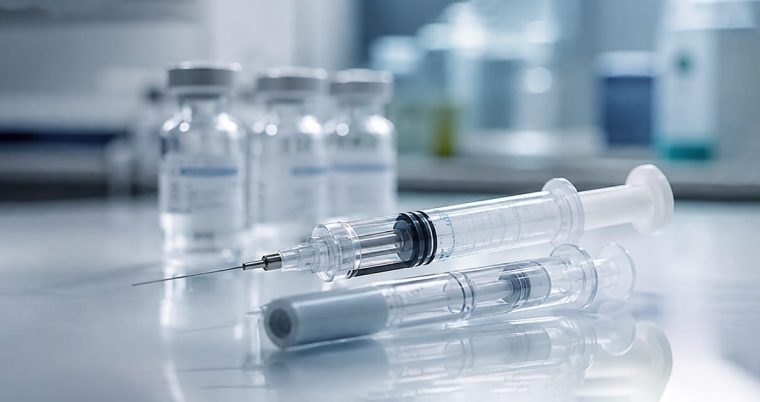
Drug delivery in injectable biologics is now about more than packaging. The choice between a vial, pre-filled syringe and autoinjector can shape where a medicine is administered, how patients receive it and how effectively it competes.
Pre-filled syringes show how far this change has progressed. Once treated largely as a packaging format, they now affect development timelines, manufacturing strategy, lifecycle planning and the move towards self-administration.
Visiongain values the global pre-filled syringes market at US$9.21bn in 2026 and forecasts it to reach US$22.18bn by 2036, representing a compound annual growth rate of 9.2%.
Visiongain Top Takeaways
- Late device decisions put launches at risk: Compatibility, performance and usability need to be addressed before filing, not during launch preparation.
- Self-administration can reshape a therapy’s economics: Moving treatment out of clinics can reduce treatment burden and strengthen lifecycle strategy.
- Material choice will remain product-specific: Polymer will gain where it solves a defined technical problem, while glass retains broad market relevance.
- Qualified fill-finish capacity can constrain launches: Nominal capacity matters less than access to the right line, format and manufacturing slot.
- Device suppliers must offer more than components: Technical evidence, regulatory support and manufacturing capability are becoming central to winning development programmes.
Device Decisions Move Earlier
Leaving device selection until late development is becoming increasingly risky in injectable-biologic programmes.
Concentrated or highly viscous formulations can place greater demands on syringes, cartridges and injection devices. The system must protect the medicine, deliver the intended dose and remain manageable for the user.
A poor fit can undermine stability, complicate manufacturing, extend testing requirements and reduce the feasibility of self-administration. What begins as a delivery decision can quickly become a formulation, regulatory and launch issue.
Regulators expect sponsors to address device performance, container integrity and use-related risk during combination-product development. Compatibility, injection force and usability therefore need to be considered well before filing.
Material selection brings its own trade-offs. Glass remains the established option for many products, supported by its regulatory history and mature filling infrastructure.
Polymer systems are gaining ground where break resistance, lower siliconisation or design flexibility addresses a specific technical need. Neither material is risk-free, so the right choice depends on the formulation, delivery device and manufacturing process.
Switching becomes more difficult as development advances. Once stability studies, clinical supplies and filling processes are built around one presentation, a change can trigger further technical, regulatory and manufacturing work.
Visiongain Insight: Device optionality narrows over time. An early decision can preserve development and commercial flexibility; a late change can become a programme-level issue rather than a packaging adjustment.
Self-Administration Changes the Commercial Model
A new delivery format can change who administers a medicine and where treatment takes place.
In April 2025, the FDA approved argenx’s Vyvgart Hytrulo pre-filled syringe for self-injection by trained patients or caregivers. The product was already available as a healthcare professional-administered subcutaneous injection; the new presentation moved administration into the home.
Suitable patients may benefit from less travel, shorter treatment times and fewer clinic appointments. The new format also gave argenx another point of differentiation in the competitive FcRn market.
The approval shows why device changes should not be treated as simple packaging upgrades. A new presentation can reduce treatment burden, support lifecycle management and strengthen an established therapy without changing its active medicine.
Approval alone, however, does not guarantee adoption.
The device must suit the intended patients and caregivers. Poor dexterity, impaired eyesight or limited strength can affect whether a full dose is administered correctly.
Training requirements also affect the economics. Extensive onboarding or continuing assistance can offset some of the benefit of home administration.
Safety design matters as well. Passive needle protection can reduce reliance on user behaviour, but added components may increase device size, validation requirements and manufacturing cost.
The winning format is not necessarily the most technically advanced. It is the one that can be used safely, manufactured reliably and supported without creating another layer of burden for patients or healthcare systems.
Visiongain Insight: The support model is part of the device economics. A technically viable home-use product may deliver less value if training, follow-up or disposal requirements remain complex.
Qualified Capacity Is Becoming a Constraint
A pre-filled syringe strategy is only as credible as the qualified capacity available to manufacture it.
Ready-to-use formats require aseptic filling, inspection, assembly and packaging. High-viscosity biologics can narrow filling and inspection tolerances further, increasing the value of partners with established sterile-injectables expertise.
Sponsors outsource this work not only to avoid capital expenditure, but to gain technical capability, validated processes and faster access to commercial production.
Available capacity is not necessarily usable capacity.
A facility may advertise sterile capacity without having the correct equipment, inspection capability, presentation format or manufacturing slot for a particular product. Product compatibility, changeover requirements and validation can narrow the options further.
A sponsor may therefore find capacity in the market without securing a qualified line that can handle its formulation, presentation and timetable.
The same distinction between bulk supply and usable capacity becomes even clearer in vaccines.
Drug-substance capacity does not guarantee deployable doses. Manufacturers also need components, qualified fill-finish lines, quality release and a distribution system capable of preserving product integrity.
Visiongain values the global vaccine sales market at US$76.40bn in 2026 and forecasts it to reach US$141.40bn by 2036, representing a compound annual growth rate of 6.3%.
COVID-19 demonstrated how shortages in filling, packaging, components or distribution can delay rollout even when bulk vaccine is available.
Visiongain Insight: Published capacity figures can overstate what is commercially available. The real constraint is product-qualified capacity in the right format and at the right point in the launch schedule.
Competitive Landscape
Competition in pre-filled drug delivery is moving from component supply towards integrated systems, evidence and manufacturing capability.
SCHOTT Pharma and SHL Medical provide one of the clearest recent examples. In January 2026, SCHOTT confirmed that its TOPPAC polymer cartridges had been verified for compatibility with SHL’s large-volume Maggie autoinjector platform.
The collaboration is intended to reduce some of the container-device integration work for sponsors developing higher-volume self-injection products. It also reflects a wider move towards compatible systems that can enter pharmaceutical programmes earlier.
BD is competing through scale and portfolio breadth, extending from glass and polymer pre-fillable syringes into components, safety systems and large-volume self-injection platforms.
Stevanato Group is building across containment, analytical testing, assembly technology and delivery devices. Gerresheimer is expanding through proprietary autoinjectors, on-body delivery systems and contract development and manufacturing.
Terumo is moving further into drug-product manufacturing. Its 2025 acquisition of the Leverkusen facility formerly owned by WuXi Biologics added fill-finish services for vials and polymer pre-filled syringes, including device assembly.
Larger suppliers are extending into adjacent testing, development and manufacturing services, while specialists can still defend valuable positions where formulation sensitivity, dose volume or device complexity creates a higher technical barrier.
Suppliers are trying to secure a role during development rather than at the point of component selection. Those that provide compatible systems, technical evidence or qualified manufacturing can become harder to replace and capture more value than those limited to standard components.
Market Outlook and Strategic Implications
Market growth alone will not determine who benefits. Value will accrue to delivery formats and suppliers that solve a defined clinical, technical or operational problem.
The greatest opportunities will come from delivery formats that solve a defined problem. That may mean protecting a sensitive formulation, reducing preparation, enabling reliable self-administration or easing pressure on clinical services.
Pharmaceutical and biotech companies need to make these decisions earlier.
Compatibility, usability and manufacturing feasibility should be addressed alongside formulation development. Leaving the device until launch planning can restrict the available presentation and add regulatory or manufacturing work.
Delivery can also support lifecycle strategy. A shift from professional administration to self-injection may reduce treatment burden and strengthen an established product, provided the format suits the intended users and care setting.
Standard barrels and components remain important, but they are more exposed to price competition. Higher-value positions are likely to sit in specialised containment, proprietary delivery platforms, technical evidence and product-qualified manufacturing.
Visiongain Insight: Drug delivery now creates both commercial advantage and development risk. Pharma companies retain more strategic options when delivery is addressed early, while suppliers capture more value when they solve formulation, usability and manufacturing problems rather than simply provide components.
Related Research
Drug-delivery decisions are becoming harder to reverse and more expensive to get wrong.
Visiongain’s healthcare, pharma and biotech research helps decision-makers understand where demand is growing, where manufacturing constraints may emerge and how competitive strategies are evolving across injectable drug delivery and vaccines.
- Pre-Filled Syringes Market Report 2026–2036
- Vaccine Contract Manufacturing Market Report 2026–2036
- Vaccine Sales Market Report 2026–2036
Press & Media Enquiries
For commentary, data requests or interview enquiries, please contact: press@visiongain.com