Britain’s Recce Strike Drone Fleet Takes Shape
25 September 2026.
Welcome to Market Watch: Aerospace, Defence & Security
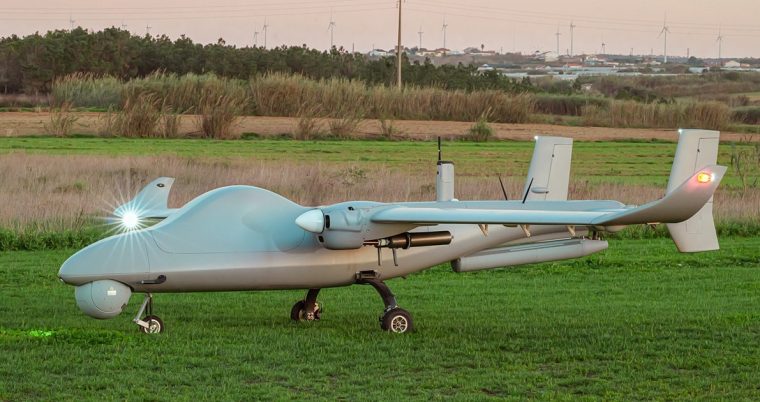
Britain is reshaping battlefield reconnaissance around a mixed drone fleet, from long-endurance ISR to smaller systems operating closer to the frontline.
The Army has placed a contract worth up to £400 million for TEKEVER’s AR5, which will replace Watchkeeper, while three separate contracts worth £16 million are delivering 1,025 smaller ISR drones.
Both sit within the Army’s Recce Strike model, designed to move battlefield information more quickly into targeting and long-range fires.
Buying the aircraft is only part of the problem. Making them work together as one system will be harder.
Coming next week: Visiongain will be reporting from DroneX 2026 at ExCeL London, 29–30 September, with news and analysis from the show floor on drone procurement, autonomy and emerging military capabilities.
Visiongain Top Takeaways
- These are not stand-alone drone purchases. Both form part of the Army’s Recce Strike model, linking battlefield surveillance more closely to targeting and long-range fires.
- TEKEVER’s AR5 will replace Watchkeeper, with an initial order for six aircraft and up to 24 planned by 2029. The wider CORVUS contract is worth up to £400 million over ten years.
- Three contracts worth £16 million are delivering 1,025 smaller ISR drones, giving frontline units a more widely distributed reconnaissance capability.
- The Army is also trying to buy faster. Project Rapstone aims to move new equipment from industry to frontline units within 24 months.
From Frontline Awareness to Persistent Surveillance
AR5 will provide persistent intelligence, surveillance and reconnaissance at greater range. It can carry up to 50kg of cameras and sensors and will replace Watchkeeper, in service since 2014.
AR5 also brings operational experience from Ukraine. TEKEVER says the capability draws on more than 50,000 operational flight hours accumulated in Ukraine since 2022.
The £16 million small-UAV package addresses a different requirement. It comprises 245 FOXE-NATO drones from Evolve Dynamics, 670 Skydio X10 INTL systems supplied by Marlborough Communications, and 110 SONORA training drones from Brigantes Consulting and Harmattan AI, with deliveries nearing completion.
AR5 gives commanders persistence and sensor capacity at range, while the smaller UAVs put immediate reconnaissance closer to frontline units.
The Army is building the digital layer around them through Project Asgard, which brings sensor, satellite and intelligence feeds together to shorten the targeting chain. The value of these aircraft will depend on how effectively their data feeds into that wider system.
The Army Is Trying to Buy Drones Faster
Project Rapstone is the Army programme intended to get new equipment from industry to frontline units within 24 months. The 1,025-drone package forms part of that effort, with deliveries now nearing completion.
Separately, the 2026 Defence Investment Plan provided a further £50 million boost over 12 months to Rapstone for additional first-person-view and interceptor drones.
The timetable reflects a basic problem with small drones. Sensors, communications, software and countermeasures can change substantially during a conventional acquisition cycle, leaving forces with equipment designed against an earlier threat.
Faster buying does not solve everything. Each additional UAV type can bring new training, software, spares and maintenance requirements. The risk is that acquisition speeds up while support becomes harder.
AR5 Brings Core Production to Britain
TEKEVER will centre AR5 manufacturing for Project CORVUS at its Swindon facility, bringing core production of the aircraft to the UK for the first time.
The contract, worth up to £400 million over ten years, sits alongside OVERMATCH, TEKEVER’s five-year £400 million investment programme for UK drone production and advanced AI capabilities.
Swindon forms part of a broader UK footprint. TEKEVER also has engineering activity in Bristol and Southampton, training and testing in West Wales, and plans to work with a consortium of British SME suppliers. Its partnership with UK composites specialist iCOMAT has also been expanded to support AR5 manufacturing.
Ukraine has shown how quickly uncrewed systems can be lost, modified and replaced, putting pressure on production capacity, components and repair cycles. Moving core AR5 production to Britain should shorten part of that support chain and make upgrades easier to manage.
Domestic production does not remove every supply-chain dependency, but it brings more of the manufacturing and support base closer to the Army.
Market Outlook
A mixed UAV fleet creates demand well beyond the airframes. Sensors, datalinks, software, maintenance and support all have to work across platforms that may be updated at different rates.
Compatibility and through-life support therefore have to be considered before systems enter service. Suppliers that can fit into existing networks and update systems without imposing new support structures will be easier to scale across the force.
Rapstone will now have to show that faster acquisition can be maintained as fleets expand and demands for training, spares and software accumulate.
Visiongain Insight: Recce Strike will be judged by targeting speed, not drone numbers. More UAVs increase collection capacity, but the military gain comes only if their data can move quickly and reliably through command-and-control to the weapons that act on it.
From Visiongain
Visiongain’s market reports provide detailed forecasting and analysis to assess how changes in military requirements, procurement and technology will translate into long-term demand, investment priorities and competitive positioning.
Explore the Visiongain Drones & UAV Intelligence Hub for the latest analysis and market intelligence across unmanned systems.
- Small Drones Market Report
- Counter-UAV (C-UAV) Market Report
- Anti-Drone Market Report
- Military Radar System Market Report
Press & Media Enquiries
For commentary, data requests or interview enquiries, please contact: press@visiongain.com