Seabed / Fixed Undersea Systems Market to Reach US$16.36bn by 2036
4 June 2026.
Growing investments in seabed security, underwater intelligence networks, and critical subsea infrastructure monitoring are driving demand for fixed undersea systems worldwide
The underwater domain is rapidly becoming one of the most strategically important environments in modern defence and maritime security. As governments seek to protect critical infrastructure, strengthen underwater situational awareness, and enhance maritime intelligence capabilities, investment in fixed undersea systems is increasing significantly.
According to Visiongain’s latest market analysis, the global Seabed / Fixed Undersea Systems market is projected to grow from US$8.14 billion in 2026 to US$16.36 billion by 2036, representing a compound annual growth rate (CAGR) of 7.2% during the forecast period.
The market is being driven by growing concerns regarding the security of subsea communications cables, offshore energy infrastructure, underwater pipelines, and strategic maritime assets. At the same time, rising geopolitical competition and increasing submarine activity are encouraging governments to expand deployment of persistent underwater surveillance networks.
As the strategic value of the seabed continues to increase, fixed undersea systems are emerging as essential components of future maritime defence architectures.
Download Free Sample Report (incl. forecasts, market data, and methodology)
Market Drivers
Why the Seabed Is Becoming a Strategic Battlespace
For many years, maritime security discussions focused primarily on surface vessels, submarines, and coastal defence systems. Today, attention is increasingly shifting to what lies beneath the ocean floor. The seabed supports a vast network of infrastructure that is essential to global economic activity and national security. Telecommunications cables transmit the majority of international internet traffic, while offshore energy installations and pipelines play a critical role in energy supply chains.
At the same time, military organisations rely on underwater sensors, surveillance systems, and monitoring networks to maintain awareness across strategic maritime regions.
Growing concerns regarding sabotage, espionage, and hybrid warfare activities targeting these assets are driving investment in technologies capable of providing continuous underwater monitoring and threat detection.
This shift is creating substantial opportunities for providers of fixed seabed surveillance and security systems.
Persistent Underwater Surveillance Is Becoming a Defence Priority
One of the strongest growth drivers within the market is the increasing demand for persistent underwater surveillance. Traditional maritime monitoring often relies on ships, submarines, aircraft, and mobile autonomous systems. While these assets remain important, they cannot provide uninterrupted coverage of critical underwater areas.
Fixed undersea systems offer a different approach.
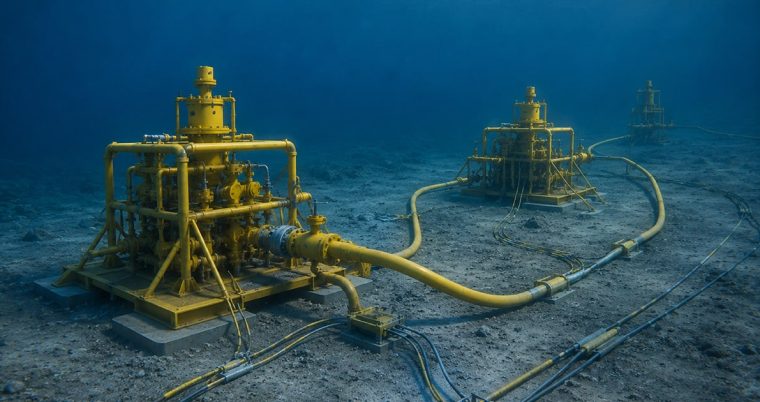
By deploying permanent sonar arrays, acoustic sensors, and seabed monitoring nodes, operators can maintain continuous awareness of underwater activity around strategic infrastructure and maritime assets. These systems are capable of detecting submarines, autonomous vehicles, divers, and other underwater threats while providing valuable intelligence for defence and security operations. As governments seek to strengthen underwater domain awareness, demand for persistent surveillance networks is expected to continue growing.
Technology and Innovation
Technological innovation is transforming the global seabed / fixed undersea systems market as advances in underwater sensing, autonomous monitoring, power management, and data analytics improve the effectiveness of long-duration undersea operations. Modern systems increasingly incorporate artificial intelligence, edge computing, fiber-optic sensing, and advanced acoustic technologies to enable real-time detection, classification, and tracking of underwater activity. Improvements in subsea communications and energy storage are extending operational endurance while reducing maintenance requirements. In addition, the integration of autonomous underwater vehicles (AUVs) with fixed seabed networks is creating more comprehensive and adaptive underwater surveillance architectures, enhancing maritime domain awareness and infrastructure protection capabilities.
Trade and Supply Chain Considerations
Impact of U.S. Trade Tariffs on the Global Seabed / Fixed Undersea Systems Market
U.S. trade tariffs and broader geopolitical trade measures are influencing the global seabed / fixed undersea systems market by affecting the cost and availability of critical components, including sensors, semiconductors, communications equipment, specialty metals, and subsea electronics. Manufacturers and system integrators are increasingly diversifying supplier networks and pursuing regional sourcing strategies to reduce exposure to tariff-related disruptions and export restrictions. Governments are also encouraging domestic production of strategic technologies to strengthen supply chain resilience and reduce dependence on foreign suppliers. While these efforts may increase short-term procurement costs, they are expected to improve long-term supply security for critical undersea infrastructure and defence programs.
Market Opportunities
Seabed Warfare Is Emerging as a New Operational Domain
Military planners are increasingly recognising the strategic importance of the seabed.
Future conflicts may involve efforts to monitor, protect, disrupt, or control underwater infrastructure and surveillance networks. This concept, often referred to as seabed warfare, is gaining attention across defence organisations worldwide.
Fixed undersea systems play a critical role in these emerging operational concepts by providing persistent awareness of underwater activity and supporting protection of strategically important assets. As seabed warfare capabilities continue to evolve, demand for advanced monitoring and detection systems is expected to increase significantly.
Expansion of Offshore Energy and Environmental Monitoring Programs
The expansion of offshore wind farms, oil and gas developments, carbon capture projects, and marine environmental monitoring initiatives is generating new demand for fixed undersea systems. These solutions enable continuous collection of operational and environmental data, supporting asset management, regulatory compliance, and risk reduction. As offshore infrastructure becomes more extensive and geographically dispersed, operators are increasingly adopting permanent undersea monitoring networks to improve operational efficiency and enhance situational awareness, creating long-term growth opportunities for market participants.
Competitive Landscape
The global market includes a combination of major defence contractors, sonar technology providers, underwater sensing specialists, and maritime systems integrators.
Leading participants include: Anduril Industries, ASELSAN, Atlas Elektronik, BAE Systems Plc, Curtiss-Wright, DSIT Solutions, Elbit Systems, Exail Technologies, FINCANTIERI S.p.A., General Dynamics, Hanwha Group, Huntington Ingalls Industries, Israel Aerospace Industries, Kraken Robotics, Kongsberg Gruppen, L3Harris Technologies, Leonardo S.p.A., Lockheed Martin, Naval Group, Oceaneering International, Inc., RTX Corporation, Saab AB, Teledyne Technologies, Thales Group, ThyssenKrupp Marine Systems (TKMS), Competition is increasingly focused on sonar performance, acoustic sensing capabilities, distributed surveillance architectures, artificial intelligence integration, and infrastructure protection technologies.
Recent Developments
- January 21, 2026: Integer Technologies LLC was awarded a $10,657,183 option contract modification by the U.S. Office of Naval Research. This contract scales up science and technology research to develop an operational decision-support software tool. The technology provides specialized mission planning and command metrics for intelligent autonomous systems actively executing seabed warfare, critical subsea pipeline monitoring, and fixed undersea missions.
- March 25, 2026: L3Harris Technologies received an Other Transaction Authority (OTA) contract from the Defense Innovation Unit (DIU) to deliver its operational TTLR system. The modular system allows submarines to launch and recover Iver4 900 autonomous underwater vehicles (AUVs) without surfacing, providing a major force multiplier for persistent seabed monitoring, data collection near fixed undersea nodes, and critical subsea infrastructure warfare.
- June 1, 2026: Geo-data specialist Fugro secured a two-year commercial environmental monitoring contract with EirGrid, Ireland’s state-owned electricity transmission operator. Fugro will deploy and maintain a fixed network of eight static, silent seabed monitoring stations equipped with underwater acoustic sensors along Ireland’s south coast. This marks the first commercial deployment of Fugro’s purpose-built mooring system to capture long-term marine activity around planned offshore wind transmission grid infrastructure.
- February 5, 2026: The U.S. Navy officially initiated its Networked Expeditionary Routing and Exchange for Undersea Systems (NEREUS) prototyping program. The project aims to expand existing acoustic hardware into a wider, scalable subsurface network. This architecture is engineered to establish reliable, multi-point routing nodes linking fixed seabed tracking arrays, mobile sensors, and uncrewed underwater vehicle swarms in support of Distributed Maritime Operations (DMO). .
Download Free Sample Report (incl. forecasts, market data, and methodology)
About Visiongain
Established in 1998, Visiongain is an independent publisher of analyst-led market intelligence, delivering data-driven research, forecasts, and strategic insight across global industries and emerging markets. Visiongain supports evidence-based decision-making for investment, procurement, and long-term strategic planning.
Media Contact
press@visiongain.com
+44 (0)20 7336 6100
www.visiongain.com