US Pharma’s Manufacturing Boom: Who Wins?
26 August 2026.
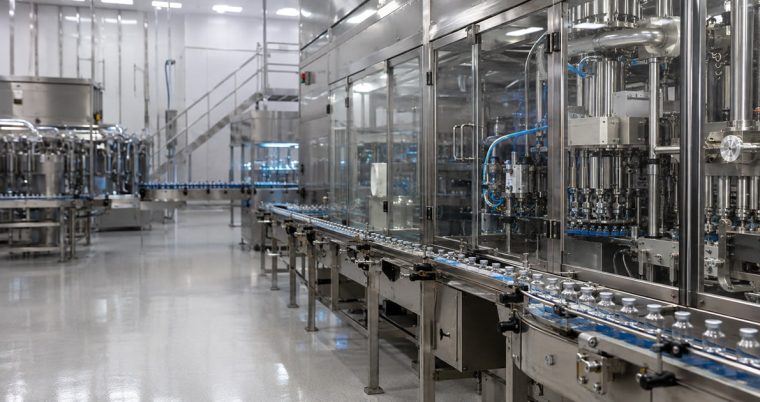
Billions of dollars are moving into US pharmaceutical manufacturing as drugmakers respond to trade pressure, supply-chain risk and a stronger policy push for domestic production.
Investment is spreading across APIs, biologics, fill-finish and drug-delivery devices, but the opportunity will not be shared equally across the manufacturing chain.
This week, Market Watch: Healthcare, Pharma & Biotech examines where capital is concentrating, which capabilities are becoming more strategically important and what the US manufacturing build-out means for suppliers and CDMOs.
Visiongain Top Takeaways
- US pharma manufacturing is attracting billions: The money is moving into specific parts of the value chain.
- APIs are back in focus: Supply dependence is turning domestic capacity into a strategic priority.
- Complex manufacturing has the edge: Biologics, sterile fill-finish and advanced therapies are drawing more investment.
- CDMOs still have room: Drugmakers are building in-house while continuing to secure specialist external capacity.
- The biggest opportunity is not simply reshoring: It lies in the parts of the supply chain that companies cannot afford to leave exposed.
US Policy Is Changing Where Pharma Builds
Roche’s latest US$750m Hillsboro expansion joins a run of large US manufacturing commitments against a policy backdrop that is changing the economics of where medicines are made.
FDA data show that only 11% of API manufacturers were based in the US in 2025, compared with 22% in China and 44% in India, while 53% of branded drug products and 69% of generics were manufactured outside the country.
The FDA’s PreCheck programme gives companies developing new US plants earlier regulatory engagement, with Eli Lilly, Regeneron, Fujifilm Biotechnologies and Kyowa Kirin among the seven companies selected for its first cohort in June. The Section 232 regime adds a direct financial incentive: from 29 September, covered patented pharmaceuticals and ingredients face a 100% headline tariff, with lower rates available under approved US onshoring plans, qualifying agreements and certain trade arrangements. Generics and biosimilars remain excluded from the current regime.
Labour and operating costs still matter, but tariff exposure, regulatory timelines and supply continuity now carry more weight in decisions about domestic versus imported production.
API Reshoring Will Be Selective
Closing the US API manufacturing gap will be harder than adding finished-dose capacity. New plants require substantial capital, skilled workers, validated processes and reliable supplies of key starting materials and chemical intermediates, which may themselves still come from overseas. Moving API production without addressing those upstream dependencies can shift rather than remove supply-chain risk.
Commodity APIs must compete with established production in India and China, while more complex manufacturing is less exposed to pure commodity price competition and places greater value on technical expertise, intellectual property and security of supply.
Novartis is taking that approach in North Carolina. Its new Morrisville site will include API production for solid-dose medicines and RNA therapeutics alongside finished-dose manufacturing, forming part of a US network designed to take medicines from active ingredient through final product.
Visiongain values the global Active Pharmaceutical Ingredients market at US$280.1bn in 2026 and forecasts it to reach US$529.7bn by 2036, at a CAGR of 6.6%. The US will represent only part of that growth, but domestic expansion is likely to concentrate where the economics and strategic value can support it.
Complex Manufacturing Is Drawing More Investment
Some of the largest US commitments are going into production that is difficult to replicate or needs to adapt as pipelines change. Bristol Myers Squibb’s US$2.3bn Houston campus will manufacture small molecules, biologics and antibody-drug conjugates, using a modular design that allows capacity to be reconfigured as demand develops. Johnson & Johnson is investing more than US$1bn in a new cell-therapy facility in Pennsylvania.
Novartis is building a five-site US radioligand therapy network, where manufacturing and distribution are closely linked by tight delivery timelines. These investments favour facilities that offer pipeline flexibility or capabilities where proximity to patients and markets affects delivery, rather than production volume alone.
Fill-Finish Is Becoming a Strategic Capacity Decision
Roche’s US$750m Hillsboro expansion extends the US manufacturing push into the final stages of delivery. The facility will add high- and low-volume filling for pre-filled syringes and autoinjectors across the Roche and Genentech portfolio, with commercial operations expected to begin in 2031.
Lilly is taking a faster, partnership-led route. Its US$750m investment with Resilience will expand production of the KwikPen used for diabetes and obesity medicines in Ohio, with full operations expected in early 2027.
Producing the active drug is only part of the equation. As more high-value medicines move into injectable and self-administered formats, sterile filling, device assembly and packaging can determine how quickly supply reaches the market. Drugmakers must therefore decide whether to build these capabilities internally or secure them through specialist partners.
More US Capacity Does Not Mean Less Outsourcing
The US build-out does not point to a simple retreat from outsourcing. Bristol Myers Squibb is planning its US$2.3bn Houston campus while also selling its Phoenix injectable facility to ROVI, which will continue manufacturing BMS products there under an initial five-year agreement.
GSK has taken a similar route in biologics, selling its Rockville, Maryland plant to Samsung Biologics while retaining supply from the site. Both deals allow pharma companies to reduce direct ownership of selected assets without giving up access to established, qualified production.
Drugmakers can own facilities where pipeline flexibility, proprietary capability or direct control justify the capital, while using CDMOs when established expertise and qualified production offer a faster or more efficient route. The changing asset base also creates acquisition opportunities for CDMOs able to operate facilities that pharma companies no longer need to own while maintaining continuity of supply.
Market Outlook
The next phase of the US manufacturing build-out will be judged less by new announcements than by how quickly promised facilities become commercially productive. Recruiting skilled workers, transferring processes, qualifying suppliers and validating production can take years before new capacity materially changes pharmaceutical supply.
Domestic production will not remove every vulnerability. Key starting materials may remain overseas, while concentrating production in fewer US sites can create different points of failure. The next test is how much qualified, economically viable capacity the current investment wave actually creates.
Visiongain Insight: The US manufacturing push is becoming less about bringing pharmaceutical production home wholesale and more about deciding which parts of the supply chain are too important to leave exposed. Capital should favour products and processes where disruption could delay a launch, restrict supply, or put significant revenue at risk, and where qualified capacity cannot be quickly replaced.
The strongest advantage will go to companies that control scarce expertise, validated production, and capabilities that remove a genuine constraint, rather than to those adding US manufacturing space alone.
From Visiongain: Contract Manufacturing & CDMOs Hub
Contract manufacturing is becoming more specialised and more closely tied to decisions about capacity, supply security and which capabilities drugmakers choose to retain in-house.
Visiongain’s Contract Manufacturing & CDMOs Hub brings together briefings, analysis, and market insights on the forces shaping the sector, from biologics and advanced therapies to contract manufacturing, capacity investment, supply chains, and CDMO strategy.
Explore the Contract Manufacturing & CDMOs Hub for strategic updates and related market reports.
Related reports include:
- Active Pharmaceutical Ingredients (API) Market Report 2026–2036
- Pharmaceutical Contract Manufacturing Market Report 2026-2036
- Cell & Gene Therapy Manufacturing Market Report 2026–2036
- Cell & Gene Therapy Market Report 2026–2036
- Vaccine Contract Manufacturing Market Report 2026-2036
Press & Media Enquiries
For commentary, data requests or interview enquiries, please contact: press@visiongain.com