Air Defence Demand Surges, Outpacing Production Capacity
3 April 2026.
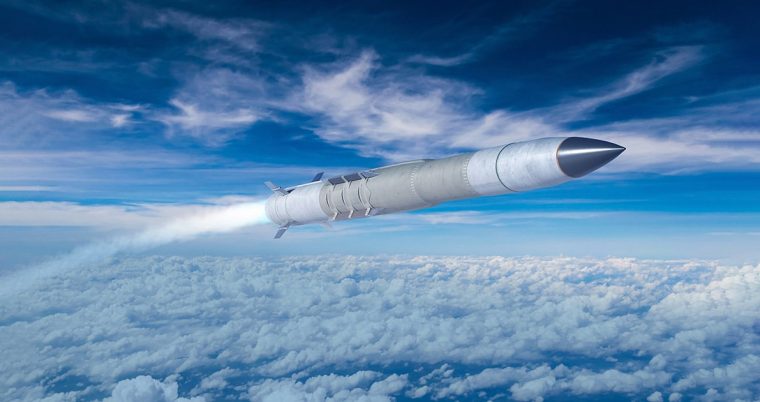
Conflict involving Iran is accelerating demand across counter-drone, surface-to-air and missile defence systems, exposing long-standing capacity constraints.
The use of interceptors, drones, and precision munitions is now outpacing supply, widening the gap between demand and available capacity. This is driving stockpile depletion and reshaping procurement around production constraints.
The impact is no longer limited to procurement. Alliances are under strain, supply chains are under pressure, and governments are moving to diversify suppliers and expand domestic production.
This article looks at how these pressures are reshaping supplier positioning, industrial strategy and investment across defence markets.
Visiongain Top Takeaways
- Demand for counter-drone, SHORAD and missile defence systems is accelerating across multiple regions, with sustained multi-year procurement cycles emerging.
- Stockpile depletion is reshaping procurement priorities, with replenishment timelines extending due to limited interceptor production capacity.
- Industrial bottlenecks, particularly in critical components, are now the primary constraint, rather than funding availability.
- Alliances and supply chains are under pressure, accelerating diversification and domestic production initiatives.
- Combat-proven systems are gaining traction, with procurement increasingly influenced by operational performance.
United States: Production Scaling and Supply Chain Control
RTX: F-35 Engine Production
RTX has received a $3.81 billion contract modification for F135 engines supporting Lot 18 and Lot 19 F-35 aircraft. The award reinforces the continued importance of long-cycle platform programmes as stable revenue drivers within the defence industrial base.
Missile Defence: PAC-3 Seeker Production Expansion
The US Department of Defense has announced a landmark seven-year framework with Boeing to expand production of PAC-3 MSE missile seekers, supporting Lockheed Martin’s effort to more than triple interceptor output. The agreement directly targets a critical bottleneck within the system.
Boeing is a key supplier for the PAC-3 missile, with the seeker enabling precision guidance. Expanding seeker production directly addresses one of the most critical bottlenecks limiting overall missile output.
The agreement reflects a broader shift in acquisition strategy, aligned with the Department’s Acquisition Transformation Strategy, with increased focus on direct engagement with sub-tier suppliers to mitigate chokepoints and meet operational demand.
“To build a true Arsenal of Freedom, we must strengthen every link in the chain. Speed, volume, and a resilient supply chain are paramount.” – Michael Duffey, Under Secretary of Defense for Acquisition and Sustainment
Counter-Drone: Emergency Sale to UAE
The US State Department has approved a potential $2.1 billion Foreign Military Sale to the UAE under the Arms Export Control Act emergency clause. The package includes 10 FS-LIDS counter-UAS systems and 240 Coyote Block 2 interceptors, reinforcing demand for layered counter-drone capability.
Visiongain Insight: The US is shifting from procurement to bottleneck control. Scaling output now depends on securing critical components and coordinating sub-tier suppliers, not simply increasing orders at prime contractor level. This is increasing the strategic importance of suppliers controlling key subsystems and materials.
Europe: Procurement Momentum and Strategic Cooperation
Saab: Giraffe Radar Gains Traction
Saab UK has secured a £24 million order from the UK Ministry of Defence for Giraffe 1X radar systems. The system has gained attention following operational use, positioning Saab as a near-term beneficiary of rising demand for short-range air defence and counter-drone capability.
Demand is expected to extend beyond this initial order, with potential for further expansion as procurement activity accelerates. Saab’s wider counter-UAS portfolio, including Nimbrix, is also aligned to growing demand for integrated short-range air defence solutions.
United Kingdom and France: Next-Generation Air-to-Air Missile
The United Kingdom and France have agreed to a 12-month joint study on a successor to the Meteor missile, one of the most advanced beyond-visual-range air-to-air systems currently in service.
The programme will assess future threats and define a technology roadmap for next-generation capability. The agreement reflects increasing emphasis on European-led development as defence cooperation deepens and strategic autonomy becomes a greater priority.
Luke Pollard MP, Minister for Defence Readiness and Industry, said:
“In a new era of threat, we are increasing co-operation with our friends and allies. This agreement is a significant step forward in delivering on our Lancaster House 2.0 commitments, demonstrating the strength of our UK-France defence partnership.
We are strengthening NATO’s capabilities and European security by working with France on the next generation of air-to-air missiles, exactly the kind of close collaboration needed to deter our adversaries in this new era of threat.”
Visiongain Insight: Procurement is shifting towards systems validated in operational conditions. At the same time, European governments are placing greater emphasis on controlling advanced capabilities domestically, linking procurement more closely to long-term industrial strategy and sovereignty.
Middle East: Demand Surge Testing Supply Capacity
UAE: Air Defence Procurement Expands
The UAE has received a third Cheongung II KM-SAM II air defence system from South Korea, following an earlier emergency airlift of interceptors. The system has gained traction as a cost-competitive ground-based air defence (GBAD) solution following recent operational use.
Production capacity remains constrained, with demand already exceeding supply and expected to increase further. Lead times are likely to extend as suppliers work to scale output.
UAE and Ukraine: Defence Cooperation and Export Positioning
In March 2026, Ukraine’s President Zelenskyy signed a 10-year defence cooperation agreement with the UAE focused on technology sharing and counter-drone expertise.
Ukraine is seeking to translate its operational experience across counter-UAS, missile defence and ground-based air defence into export opportunities. However, constraints in production capacity, industrial base investment and interceptor availability are likely to limit near-term scalability.
Visiongain Insight: Demand is outpacing industrial capacity, but the constraint is uneven. Suppliers able to scale production and secure critical components will capture a disproportionate share, while others remain constrained despite strong demand signals.
Market Outlook
The current conflict environment is accelerating demand across air and missile defence markets, exposing a structural gap between operational requirements and industrial capacity. In several segments, demand is expanding at a pace that existing production systems cannot match.
Supply chains remain under pressure, with constraints most visible at component and sub-system level. While the United States is moving to address these bottlenecks, scaling output across complex systems will take time.
European suppliers are gaining visibility in export markets, with systems tested under operational conditions attracting increased interest. This is strengthening their position as procurement broadens beyond traditional suppliers.
Beyond immediate demand, the political and operational fallout is likely to shape future capability development. This includes growing momentum behind European-led programmes in areas such as suppression and destruction of enemy air defences (SEAD/DEAD).
Visiongain Insight: The constraint is no longer funding; it is production. Competitive advantage is shifting towards companies that can secure supply chains, scale manufacturing, and deliver at volume. This increases backlog visibility while redistributing value to sub-tier suppliers and controlling critical components.
Related Visiongain Market Reports
Visiongain’s market reports provide the data and forecasting needed to assess funding priorities, capability development and execution risk across defence markets with confidence. Research is evidence-based and grounded in real-world market dynamics, supporting informed decision-making across procurement, industrial planning and strategy.
- Hypersonic Missile Defence Systems Market Report 2026-2036
- Military Artificial Intelligence (AI) Systems Market Report 2026-2036
- Small Drones Market Report 2026-2036
- Undersea Defence Infrastructure & Security Market Report 2026-2036
- Autonomous Underwater Vehicle (AUV) Market Report 2026-2036
- Military Simulation, Modelling and Virtual Training Market Report 2026-2036
Press & Media Enquiries
For commentary, data requests or interview enquiries, please contact: press@visiongain.com