Undersea Autonomy Moves From Trial to Delivery
12 June 2026.
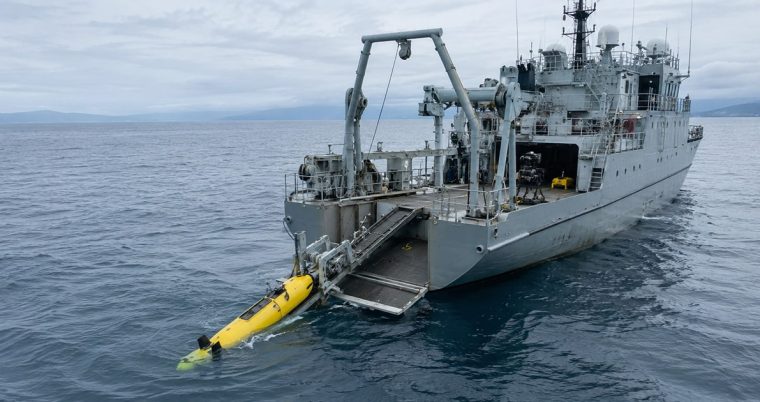
The contest for undersea advantage is no longer only about submarines. It is also about protecting the cables, sensors and seabed infrastructure that modern economies increasingly depend on.
As a result, AUKUS Pillar II carries greater strategic significance. The submarine pathway remains central to deterrence, but it is slow, costly and constrained by industrial capacity. Uncrewed undersea systems offer a faster route to surveillance, payload delivery and infrastructure protection, although they cannot replace crewed submarines in the most demanding missions.
Visiongain forecasts the global undersea defence intelligence market to more than double, from US$28.17bn in 2026 to US$58.64bn by 2036. The opportunity is clear. The harder question is whether governments and industry can turn trials and policy statements into deployable systems at scale.
Visiongain Top Takeaways
- AUKUS Pillar II is now a delivery test, not just a technology track.
- Undersea autonomy is moving from experimentation towards operational use.
- Submarine delivery remains exposed to cost, schedule and capacity risk.
- UUV payloads, ISR, AI and secure communications are becoming priority areas.
- The 2027 delivery target will be a credibility marker.
- KONGSBERG and DRASS are positioning for integrated undersea systems.
- Supplier advantage will depend on scale, integration and deployable capability.
KONGSBERG and DRASS Move to Bridge Crewed and Uncrewed Undersea Systems
Navies face a practical undersea problem: how to connect crewed platforms, autonomous vehicles, sensors and payloads in contested waters. The new KONGSBERG-DRASS partnership is aimed at that requirement.
The companies said the partnership will support “the exchange of technologies, systems, payloads, and operational architectures”, combining their industrial and technical strengths to develop advanced underwater solutions.
The industrial logic is straightforward. KONGSBERG brings expertise in navigation, autonomous underwater vehicles, sonar, sensors and systems integration. DRASS adds compact submarines, subsea platforms, optronic periscopes and payload integration.
Espen Henriksen, Senior Vice President Uncrewed Platforms at KONGSBERG, said the work would include “unmanned underwater vehicles (UUVs), maritime intelligence, surveillance, and reconnaissance (ISR) solutions, and manned-unmanned teaming (MUM-T).”
DRASS CEO Sergio Cappelletti said the jointly developed systems would create “an integration bridge” between DRASS’s compact submarines and manned underwater systems, and KONGSBERG’s unmanned surface vehicles and conventional UUVs.
The announcement reflects a wider shift in naval demand. AUKUS Pillar II is focused on payloads and enabling systems for UUVs, including seabed infrastructure protection, surveillance, reconnaissance, logistics, mine countermeasures, electronic warfare and contested littoral operations.
Visiongain forecasts the undersea networked systems market to grow from US$6.47bn in 2026 to US$13.36bn by 2036. The strongest suppliers will be those that make undersea assets interoperable, supportable and usable in contested waters.
The challenge remains hard. Underwater communications are difficult, endurance is constrained by power, and higher levels of autonomy remain limited by mission complexity. Navies want persistent undersea coverage and faster routes to deployable capability.
Visiongain Insight: This is less a vehicle story than an integration problem. UUVs will matter only if they can work with sensors, payloads, surface vessels, crewed platforms and command networks. Suppliers that solve those problems will have a stronger case than those adding another uncrewed platform to the inventory.
AUKUS Pillar II Becomes the Pressure Valve
AUKUS is under sharper scrutiny as Australia’s submarine pathway becomes more politically vulnerable. A community-led inquiry into the programme has reportedly been launched outside government, with a five-month review and a final report expected later in 2026.
The timing is not incidental. Australia is now expected to acquire three second-hand US Navy Virginia-class submarines, rather than the earlier plan built around two used boats and one new boat. Ministers have presented the shift as simpler and more cost-effective. Critics will see it differently: as another reminder that Pillar I depends on US submarine availability, UK and Australian shipyard expansion, nuclear skills, workforce depth and a long delivery timetable.
That gives Pillar II more strategic weight. AUKUS was sold on the promise of nuclear-powered submarine capability for Australia. But if the partners need visible progress before those boats arrive, uncrewed undersea systems offer the more plausible near-term route.
A UK-Australia statement issued after AUKMIN in London reaffirmed ministers’ commitment to AUKUS, Indo-Pacific and Euro-Atlantic security, interoperability and the combined defence industrial base. It also cited preparations for Submarine Rotational Force-West in 2027 and continuing progress on SSN-AUKUS, which is intended to support intelligence, surveillance, undersea warfare and strike missions across both regions.
Pillar II is the nearer-term test. Ministers welcomed the first AUKUS Pillar II Signature Project, focused on “cutting-edge payloads and enabling systems” for Uncrewed Undersea Vehicles, with first capabilities due in 2027. The mission set is broad: seabed infrastructure protection, surveillance, reconnaissance, logistics, mine countermeasures, electronic warfare and contested littoral operations.
The statement also pointed to early technical work. AUKUS-designed AI algorithms have been deployed aboard an Australian P-8A Maritime Patrol Aircraft to speed up processing of undersea data from AUKUS sonobuoys. Ministers also cited command-and-control testing for uncrewed systems at Exercise REPMUS.
Australia and the UK are deepening cooperation on Active Electronically Scanned Array radar technology. A government-to-government project arrangement will support collaboration on AESA capabilities supplied by Canberra-based CEA Technologies, with potential for co-development and co-production.
The statement followed the Australia-UK Ministerial Consultations in London, attended by Yvette Cooper and John Healey for the UK, and Richard Marles and Penny Wong for Australia.
Visiongain Insight: Pillar II cannot replace the submarine pathway, but it may become the nearer-term test of AUKUS credibility. Suppliers that solve integration, support and deployment problems will have a stronger case than those offering another impressive prototype.
Key Players to Watch
The supplier base around AUKUS Pillar II is likely to be wider than the submarine industrial base. Large primes will still matter where integration, certification and programme management are required, but near-term opportunities may also sit with companies providing payloads, autonomy, sensing, secure communications and launch-and-recovery support.
- Anduril Industries, US / Australia: Developer of Ghost Shark, Australia’s extra-large autonomous undersea vehicle programme, and a key player where autonomy, software and rapid prototyping meet naval demand.
- BAE Systems, UK / Australia: Central to SSN-AUKUS delivery and well placed in command, control, cyber-security and systems integration.
- C2 Robotics, Australia: Developer of Speartooth, a large uncrewed underwater vehicle relevant to Australia’s need for sovereign undersea capability.
- KONGSBERG and DRASS, International: Partnering on systems that bridge compact submarines, subsea platforms, UUVs and payload integration.
- Saab, UK / Sweden / Australia: Active in underwater robotics, sensors and naval mission systems, including Saab Seaeye capabilities.
- MSI Transducers, US: Selected for AUKUS Maritime Innovation Challenge funding for undersea payload and acoustic technology work.
- Decision Analysis Services Ltd., UK: Selected for the AUKUS Maritime Innovation Challenge, pointing to the role of specialist engineering and analysis firms in autonomy and teaming.
- SEA Ltd., UK: Selected for AUKUS undersea command, control and teaming work, an area likely to become harder as UUVs move towards fleet use.
- A-2i, UK: A micro-consultancy selected for AUKUS undersea autonomy and teaming research, showing how niche firms may influence parts of the capability stack.
- PentenAmio, Australia / UK: Relevant to the wider Pillar II technology base through electronic warfare, cyber-security and secure communications.
The common thread is not exposure to UUVs alone. It is exposure to the harder parts of fielding them: integration, autonomy, payloads, acoustic performance, secure data links, certification and support. Those factors are likely to separate lasting suppliers from companies riding current interest in uncrewed systems.
Market Outlook
The undersea market is moving on two procurement cycles.
The first is the submarine pathway: long, capital-intensive and still central to deterrence. It is also constrained by shipyard capacity, workforce shortages, nuclear skills, supply chains and cost pressure.
The second is the faster development of uncrewed systems, payloads, seabed sensors, networked architectures and support infrastructure. This is where near-term activity is more likely to accelerate.
Visiongain forecasts the Mothership / Launch & Recovery Support Systems market to grow from US$2.51bn in 2026 to US$4.76bn by 2036, a reminder that autonomous capability depends as much on launch, recovery, mission support and integration as on the vehicle itself.
Large primes will remain important where integration, platform delivery and programme management are required. Specialist suppliers may find openings in payloads, autonomy software, acoustic systems, secure communications, ISR processing and launch-and-recovery support.
Investors should be wary of broad claims around undersea autonomy. The decisive factors will be production readiness, integration with existing naval systems, exportability, security accreditation and performance in harsh operating conditions.
Visiongain Insight: Defence customers will pay for systems that solve operational problems, can be supported in service and can be delivered within credible timelines. Novelty alone will not be enough.
From Visiongain: Undersea & Maritime Intelligence Hub
Undersea capability is becoming central to naval strategy, critical infrastructure protection and allied deterrence.
Visiongain’s Undersea & Maritime Intelligence Hub brings together briefings, analysis and market insight on the technologies shaping this domain, from UUVs and autonomous platforms to seabed systems, networked infrastructure and maritime support capabilities.
Explore the Undersea & Maritime Intelligence Hub for strategic updates and related market reports.
New Visiongain Related Reports
- Undersea Defence Intelligence Market Report 2026-2036
- Undersea Networked Systems Market Report 2026-2036
- Uncrewed Underwater Vehicles Market Report 2026-2036
- Recovery & Support Systems Market Report 2026-2036
- Seabed Fixed Undersea Systems Market Report 2026-2036
- Uncrewed Surface Vehicles Market Report 2026-2036
Press & Media Enquiries
For commentary, data requests or interview enquiries, please contact: press@visiongain.com