UK Raises Its Combat Air Ambitions as Canada Joins GCAP
Canada has moved closer to the Global Combat Air Programme (GCAP), but not yet into it.
As GCAP’s first observer nation, Ottawa gains access to programme planning and industrial discussions without a decision-making role, funding commitment or agreed workshare. The move could widen GCAP’s future customer and funding base, but only if Canada progresses from political interest to paid participation.
Britain is meanwhile upgrading Typhoon, developing StormFighter and funding GCAP for service from 2035. The opportunity is substantial, but so is the strain. All three programmes draw on the same defence budget, engineering talent and test capacity. Any delay to StormFighter or GCAP could force the UK to spend more on Typhoon just as development costs rise.
Visiongain Top Takeaways
- Canada has joined GCAP as an observer, not a full partner.
- The UK has allocated £8.6 billion to GCAP over four years.
- Britain, Italy and Japan are jointly funding a £4.6 billion Edgewing contract.
- BAE Systems’ Brontanax demonstrator is expected to begin flight testing in 2027.
- Typhoon, StormFighter and GCAP will compete for funding, engineers and test capacity.
Market Activity
Canada Gains Access to GCAP
Canada is the first country admitted to GCAP as an Observer Nation. It will gain insight into governance, capability planning, security requirements and the programme’s industrial framework, but has made no public funding commitment or procurement decision.
GCAP brings together the UK, Italy and Japan to develop a sixth-generation combat aircraft for service from 2035. It is intended to operate alongside Typhoon, F-35 and uncrewed systems, supported by advanced sensors, mission software and secure data links.
The programme supports about 4,500 UK jobs across roughly 600 organisations. Canada’s involvement could eventually widen its financial, industrial and export base, but full participation would require agreement on funding, technology access and production workshare.
Observer status gives Ottawa a closer view of the programme before it decides whether deeper involvement would meet Canadian military requirements and support its domestic aerospace industry.
Prime Minister Andy Burnham said:
“Today, we are not just recommitting to our state-of-the-art GCAP fighter programme, but I am delighted to announce that Canada will join the programme as the first Observer Nation.”
Canada’s entry builds on established NATO and Five Eyes ties with the UK. Its longer-term significance will depend on whether Ottawa is prepared to commit funding or procurement volume in return for an industrial role.
Visiongain Insight: Canada has gained visibility, not authority. Observer status gives Ottawa access to GCAP’s planning and industrial structure, but no guaranteed commercial return. Its value to the programme will depend on whether political access becomes funded participation.
Edgewing Moves GCAP into Development
Britain, Italy and Japan have awarded Edgewing a jointly funded £4.6 billion contract covering the next phase of requirements definition, design and testing.
The 18-month award runs to the end of 2027. Edgewing, formed by BAE Systems, Leonardo and Japan Aircraft Industrial Enhancement, is GCAP’s trinational prime contractor and aircraft design authority.
Its work will direct spending across propulsion, sensors, mission systems, digital engineering and advanced manufacturing. It will also begin turning political commitments into shared technical specifications and commercial obligations.
The three governments must agree military requirements, intellectual-property rights, technology access, export policy and production workshare while protecting the planned 2035 entry into service.
Those decisions will become harder and more expensive to revisit as development advances. A change to the aircraft could also reopen negotiations over national workshare, sovereign technology and industrial leadership.
Visiongain Insight: GCAP now has a common design authority and a funded route into development. It is also beginning to lock in specifications, suppliers and national workshare. Later changes could affect both the aircraft and the industrial settlement behind it.
StormFighter Tests Britain’s Acquisition Model
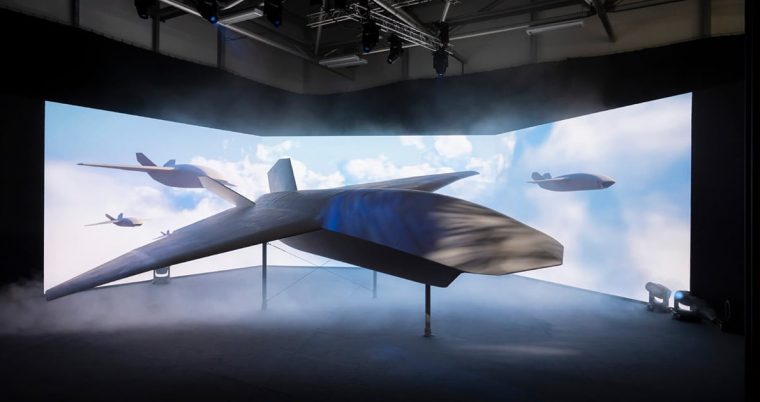
StormFighter is intended to pair Typhoon with uncrewed collaborative aircraft operating ahead of the crewed platform. Their roles could include sensing, weapons carriage and disruption.
Defence Secretary Wes Streeting said:
“These uncrewed autonomous fighter jets will provide us with eyes and ears, carry missiles and confuse the enemy. Five at a time and 500 miles ahead of the Typhoon pilots controlling them, crucially, at a fifth of the price of that aircraft.”
The Government has allocated an initial £300 million to the programme. BAE Systems’ Brontanax demonstrator is expected to begin flight testing in 2027, with ministers seeking an operational capability before 2030.
BAE is targeting 70 to 80 per cent of fighter capability at less than a quarter of the cost. That proposition remains unproven. Survivability, sensors, weapons and secure communications could erode the intended price advantage.
The distinction between the air vehicle and the full combat system matters. A relatively inexpensive aircraft may still require costly mission software, data links, weapons integration and ground infrastructure.
StormFighter is also intended to provide an operational bridge between Typhoon and GCAP. Its value will depend on whether it can generate credible evidence on how crewed aircraft, uncrewed systems, weapons and secure networks can operate as one force.
The Government wants defence procurement to tolerate more uncertainty in return for speed. Streeting said:
“Not every decision will come off, but that’s the price of moving at the pace of modern warfare, where delay and inaction pose the greater threat.”
Ministers cite a 42-day Typhoon weapons integration as evidence that acquisition can move faster. The comparison has limits. Modifying an established aircraft for a narrow operational requirement is less demanding than developing, testing and producing a new combat system.
A separate £708 million BAE Systems contract extension supports sovereign technologies across the wider Future Combat Air System. It is not dedicated StormFighter funding, but it should sustain the engineering, software and manufacturing base needed for both collaborative aircraft and GCAP.
Britain is also entering a competitive market. Boeing, General Atomics, Anduril and Airbus are among the companies developing rival collaborative aircraft. Export success will depend on price, integration with allied platforms and the ability to move beyond demonstration into dependable production.
Visiongain Insight: First flight is the easier milestone. The real test is whether StormFighter can progress through mission-system integration, operational testing and production without acquiring the cost and complexity of the crewed aircraft it is intended to complement.
Market Outlook
UK combat-air spending has substantial political and budget support. Current plans include £8.6 billion for GCAP, more than £1.1 billion for Typhoon, £2.2 billion for additional F-35s and an initial £300 million for Collaborative Combat Aircraft.
The most dependable near-term demand sits in Typhoon sustainment, GCAP development and technologies used across several platforms. These include mission systems, sensors, secure networks and engineering services.
StormFighter offers further growth, but its commercial scale is not yet established. The programme must progress from a funded demonstrator to operational testing and production before meaningful volume can be assumed.
Canada’s Observer status could widen GCAP’s funding and export base, although Ottawa has made no financial commitment. Any move towards full participation would need to be resolved without reopening requirements or disrupting the 2035 timetable.
Britain is financing four overlapping combat-air priorities: Typhoon modernisation, additional F-35 procurement, StormFighter development and GCAP. Each serves a different operational purpose, but all compete for defence funding, engineering talent and industrial capacity.
The programmes are also financially linked. Delays to StormFighter or GCAP would require the UK to keep Typhoon credible for longer, adding cost as investment in the next generation rises.