GCAP’s £4.6bn Contract Tests the Future of Military Aviation
10 July 2026.
Welcome to Market Watch: Aerospace, Defence & Security
GCAP is moving beyond the politics of future air power and becoming a test of allied industrial credibility.
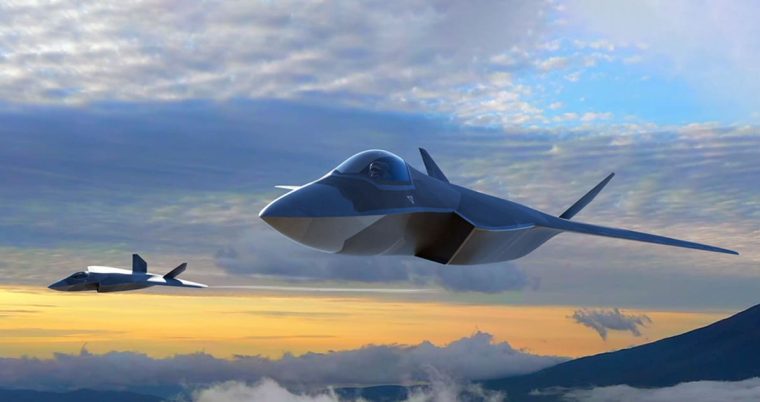
The GCAP Agency has awarded an 18-month, £4.6 billion contract to Edgewing, the joint venture formed by BAE Systems, Leonardo and Japan Aircraft Industrial Enhancement Co. Ltd. The contract, funded by the UK, Japan and Italy, will advance the next stage of the sixth-generation fighter programme, with the aircraft targeted to enter service from 2035.
The award gives GCAP clearer momentum after earlier questions over funding and as the Franco-German-Spanish FCAS programme faces renewed strain. The question now is whether a multinational fighter programme can hold together through cost pressure, industrial workshare disputes and changing air warfare requirements.
Visiongain Top Takeaways
- GCAP has moved closer to full design and development, with an 18-month, £4.6 billion Edgewing contract funded by the UK, Japan and Italy.
- The award follows an earlier £686 million bridge contract and gives the programme a clearer industrial path towards the planned 2035 in-service date.
- The three nations still need to align cost, workshare, export policy and technology transfer as the programme matures.
- GCAP will need to operate alongside Typhoon, F-35 and autonomous systems, making integration as important as aircraft performance.
- Supplier opportunity will build around mission systems, sensors, advanced propulsion, electronic warfare, secure data links, autonomy, data systems and digital engineering.
Edgewing Contract Moves GCAP Towards Full Design And Development
The GCAP Agency has awarded Edgewing an 18-month, £4.6 billion contract to advance the Global Combat Air Programme towards full design and development.
The contract, funded jointly by the UK, Japan and Italy, will run to 31 December 2027 and covers the completion of advanced concept and assessment work, as well as further detailed design and development. It follows an initial £686 million contract awarded to Edgewing in April 2026 as a bridge to the first full international contract.
Edgewing is the industry joint venture formed by BAE Systems, Leonardo and Japan Aircraft Industrial Enhancement Co. Ltd. to act as the trinational prime contractor and design authority for the GCAP aircraft.
The latest award follows the UK Defence Investment Plan, which confirmed that the UK will invest £8.6 billion in GCAP over the next four years. The aircraft is targeted to enter service from 2035.
Minister for Defence Readiness and Industry Luke Pollard MP said:
“The Global Combat Air Programme will give our pilots a cutting-edge stealth fighter jet. Signing this £4.6 billion contract alongside Italy and Japan is a major step forward towards delivery.
This milestone strengthens our partnership with international allies, supports thousands of highly skilled jobs across the UK, and will give the RAF the tools they need to keep the UK safe, all backed by an £8.6bn commitment in the Defence Investment Plan.”
GCAP is expected to operate alongside Typhoon, F-35 and autonomous systems as part of the RAF’s future combat air system. The programme is using digital engineering, artificial intelligence, robotics, augmented reality and additive manufacturing to support design, testing and production.
The programme currently supports around 4,500 jobs across the UK and involves a supply chain of approximately 600 organisations, reinforcing the UK’s sovereign combat-air industrial base.
GCAP Anchors A Layered UK Combat-Air Plan
The Edgewing award should not be viewed in isolation. It sits inside a wider UK combat-air investment plan that is trying to keep current fleets credible while preparing for a more networked force.
The Defence Investment Plan committed more than £1.1 billion in new funding to upgrade and sustain the RAF’s Typhoon force into the 2040s, £2.2 billion to purchase new F-35s and expand the UK’s stealth fighter fleet, and £300 million to begin developing a new UK autonomous combat aircraft.
The UK is not replacing one combat aircraft with another. It is attempting to build a layered force in which each capability plays a different role:
- Typhoon provides mass, continuity and an upgradeable combat-air backbone into the 2040s.
- F-35 provides stealth, strike capability and interoperability with US and NATO partners.
- GCAP is intended to become the next crewed combat-air platform.
- Autonomous systems are expected to extend reach, survivability and operational choice.
The approach is strategically logical, but it is not cheap. The same investment plan also has to fund nuclear renewal, munitions stockpiles, drones, cyber, electronic warfare, air defence and equipment programmes that have already faced delay and cost pressure. GCAP has a stronger funding signal, but the affordability question remains.
Market Outlook
The Edgewing contract comes at an important moment for GCAP.
Europe’s rival Future Combat Air System has been weakened by industrial disputes between Airbus and Dassault, strengthening GCAP’s position as one of the few Western sixth-generation fighter programmes with a clearer funding and industrial structure.
GCAP’s near-term advantage is clarity. It has three core nations, a dedicated agency, a named industrial joint venture and a new multibillion-pound contract. That gives the programme a stronger footing, although not a guarantee of delivery.
The market opportunity will extend beyond the prime contractors. Growth should build around mission systems, sensing, propulsion, electronic warfare, secure communications, autonomy, simulation, digital engineering and advanced manufacturing.
Core suppliers now have a stronger funding signal, but the programme’s scale, cost profile and delivery timeline will remain under scrutiny for years.
The unresolved question is whether GCAP can remain relevant to the air warfare environment of the mid-2030s. Ukraine, the Middle East and the Indo-Pacific have reinforced the importance of attritable systems, resilient networks, layered air defence and electronic attack. A sixth-generation fighter will need to justify its cost inside that wider force mix.
Visiongain Insight: GCAP is now a test of allied defence-industrial credibility, not just future fighter ambition. The £4.6 billion Edgewing contract shows political and industrial commitment, but the programme still has to control cost, hold together UK, Japanese and Italian requirements, align export policy and integrate crewed aircraft with autonomous systems. The decisive issue is whether the three nations can turn a cleaner industrial structure into a combat-air capability that arrives on time and remains operationally relevant.
From Visiongain
Visiongain’s market reports provide detailed forecasting and analysis to assess how these structural shifts will translate into long-term demand, investment priorities and competitive positioning.
- Small Drones Market Report
- Directed Energy Weapons (DEW) Market Report
- Drone Service Market Report
- Loitering Munitions Market Report
- Explosives and Propellants Market Report
- Chemical, Biological, Radiological & Nuclear (CBRN) Defence Market Report
Press & Media Enquiries
For commentary, data requests or interview enquiries, please contact: press@visiongain.com


