UK’s £5bn Drone Plan Tests Defence Delivery
3 July 2026.
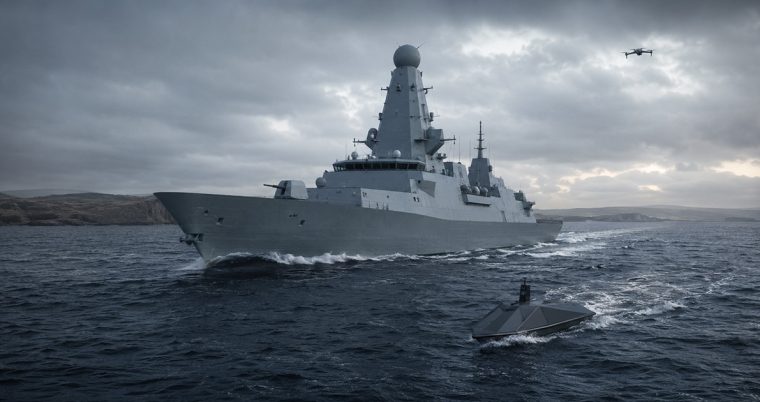
The UK Defence Investment Plan has moved the drone debate from battlefield relevance to force design.
With more than £5 billion committed to drones and autonomous systems over the next four years, the UK is signalling a shift towards hybrid capability across land, sea and air.
The harder question is whether funding, procurement and industrial capacity can keep pace with a force model built around speed, integration and distributed mass.
Visiongain Top Takeaways
- The UK Defence Investment Plan moves drones and autonomous systems from tactical add-ons to a core part of force modernisation.
- More than £5 billion has been committed over four years, supporting a shift towards hybrid capability across land, sea and air.
- The Royal Navy’s move from Type 83 destroyer plans to Common Combat Vessels marks a major test of distributed maritime air defence.
- The strongest supplier opportunities are likely to sit around integration, sensors, payloads, autonomy, electronic warfare, uncrewed platforms and AI-enabled command-and-control.
- Funding remains the main constraint. Industry will watch whether the UK can convert ambition into contracts, production capacity and fielded capability.
The Defence Investment Plan Moves Into Delivery
The UK has published its Defence Investment Plan with drones and autonomous systems as one of its clearest near-term priorities.
More than £5 billion has been committed over the next four years, described by the Government as the largest ever UK investment in drones for the Armed Forces.
Ukraine and the Middle East have shown how uncrewed systems can compress innovation cycles, expose expensive platforms and change the economics of attrition. The harder question is whether the UK can translate those lessons into force structure, procurement and production capacity.
The investment spans autonomous mine-hunting platforms, tactical quadcopters, loitering munitions and one-way attack drones. It also includes support for the Uncrewed Systems Centre in Swindon, described by the Government as Europe’s largest drone testing centre, and a new Uncrewed Systems Taskforce to accelerate the fielding of autonomous capabilities with industry.
The plan also places emphasis on sovereign British AI and autonomous technology, reinforcing the link between defence modernisation and industrial policy.
The Prime Minister said:
“This game-changing investment will strengthen our Armed Forces on land, at sea and in the air, ensuring our servicemen and women have the cutting-edge capabilities they need to deter evolving threats and keep the British people safe.”
Defence Secretary Dan Jarvis MBE MP said:
“The character of warfare is rapidly changing. In Ukraine and the Middle East, uncrewed systems are defining conflicts. This largest ever UK investment into these evolving technologies will help our Armed Forces stay ahead of our adversaries, backed by the best of our defence industry.”
That framing is politically useful, but it raises the standard for delivery. Jobs, sovereign technology and regional growth will only follow if programmes move beyond pilots and into funded production.
The difficult part is execution. Drones, autonomy and hybrid systems require secure networks, electronic protection, software assurance, trained operators, resilient components and support models that can survive operational attrition.
The funding picture is less clean than the headline suggests. The plan is backed by £298 billion over four years and £15 billion of additional spending, but nuclear investment, combat air, munitions, air and missile defence, shipbuilding and infrastructure are all competing for the same fiscal headroom. Suppliers will focus less on the announcement itself and more on contract timing, budget protection and evidence of repeatable production.
The Hybrid Navy Becomes A Test Case
The clearest force-structure break is at sea. The Royal Navy will procure at least six Common Combat Vessels as part of a new approach to maritime air defence. These ships will replace earlier plans for a Type 83 destroyer and sit at the centre of a hybrid force combining crewed platforms with uncrewed systems in the air, on the surface and under the sea.
The harder question is whether distributed autonomous systems can offset concerns over mass, tonnage, survivability and high-end air-defence capacity.
The planned system includes:
- Type 91 uncrewed missile platforms to increase the firepower of the hybrid fleet.
- Type 92 uncrewed sensing platforms designed to hunt submarines across the North Atlantic.
- Type 93 extra-large uncrewed underwater vessels to operate alongside crewed hunter-killer submarines.
- Type 94 uncrewed sensing platforms designed to scan the skies for threats to the fleet or the homeland.
The wider naval autonomy agenda also includes Project PANTHEON, which will trial jet-powered drones alongside the F-35B force as part of a future Hybrid Carrier Air Wing.
The Common Combat Vessel programme best illustrates this strategic shift. Moving away from a traditional Type 83 approach towards a hybrid maritime air-defence model could widen the supplier base, but it also raises the importance of combat-system integration. If the vessel becomes the command hub for uncrewed systems, value will increasingly sit in command architecture, data fusion, resilient communications and mission integration as much as in shipbuilding.
The approach has a clear rationale. It could extend reach, spread risk and reduce pressure on crew numbers. It also carries execution risk. Hybrid fleets depend on resilient communications, survivable sensors, electronic-warfare protection, data fusion, autonomous mission management and command arrangements that can hold up in the North Atlantic, not only in trials.
The Royal Navy will still need endurance, presence and credible high-end air defence. A hybrid fleet may complicate an adversary’s targeting problem, but it will not automatically replace the deterrent value or operational utility of major surface combatants.
The Defence Secretary said:
“Our Royal Navy is a formidable force, operating to protect our nation and our allies in the Atlantic and beyond. These Common Combat Vessels will provide our dedicated sailors with hybrid ships that are designed and built for the increasing threats we face.”
The programme also sits alongside Atlantic Bastion, Atlantic Shield and Atlantic Strike, designed to counter Russian activity in the North Atlantic and High North, protect critical underwater infrastructure and strengthen NATO deterrence.
Shipyards will remain central, but value will also move into combat-system integration, autonomous mission systems, sensor fusion, underwater sensing, air-defence networking, electronic protection and through-life support.
The export case is less certain, but the Government will position the CCV’s adaptable design as part of a wider British naval export proposition, building on international Type 26 selections by Australia, Canada and Norway.
Commandos, Drones And The High North
The Defence Investment Plan commits more than £500 million to the UK Commando Force, with the High North identified as a priority for UK and NATO security.
The package includes new high-speed Joint Commando Craft, developed in collaboration with Norway, plus nearly £100 million for uncrewed vessels, next-generation communications, networked targeting and strike drones. It also includes larger amphibious ships through a Netherlands-led Amphibious Transport Ship Programme.
The Defence Secretary said:
“We’re investing in new lethal strike drones, high-speed boats and amphibious transport ships to give our Commandos the equipment they need to stay ahead of adversaries and defend us.
The Defence Investment Plan will prioritise getting the latest kit into the hands of our frontline forces, so they can continue their vital work in an increasingly dangerous world.”
The High North focus links NATO deterrence, Russian maritime activity, Arctic access, undersea infrastructure and expeditionary operations. The operational test is practical: equipment must perform in severe weather, contested communications, dispersed logistics and fast-moving maritime operations. That will favour suppliers offering proven capability, ruggedisation, integration and long-term support, rather than novel technology alone.
Land And Air Forces Move Towards Autonomous Integration
The Army and RAF elements of the plan show how far drones have moved from stand-alone equipment into wider targeting, aviation and electronic warfare networks.
For the British Army, the emphasis is on adding lethality without relying solely on expensive crewed platforms. The plan includes investment in inexpensive expendable autonomous systems, loitering munitions and uncrewed ground vehicles. The RAPSTONE programme will receive a £50 million boost over the next 12 months for additional first-person view and interceptor drones.
Project NYX will support up to 24 autonomous armed drones by 2030, flying alongside upgraded Apache helicopters for reconnaissance, precision strike and electronic warfare. Project Corvus will provide up to 24 long-range surveillance drones to replace Watchkeeper in the ISTAR role.
For the RAF, the plan includes a national Collaborative Combat Air programme to develop autonomous aircraft that can operate alongside current and future crewed jets, with a demonstrator planned by at least 2030. The Storm Shroud uncrewed electronic warfare drone is also expected to enter service this year.
Crewed platforms are not disappearing. Their value is increasingly tied to how well they can share data, reduce exposure and operate with attritable systems. Drones alone are not enough. Militaries will need targeting networks, mission software, electronic warfare resilience, training systems, maintenance models, payload flexibility and supply chains that can absorb attrition. They will also need assurance and command arrangements that can keep pace with more autonomous systems.
Visiongain Insight
The Defence Investment Plan is not only a drone-buying programme. It is an attempt to reshape parts of the UK force while managing long-standing pressures around affordability, industrial capacity, munitions, shipbuilding, combat air and nuclear deterrence.
Drones and autonomous systems offer a route to lower-cost mass, faster adaptation and more distributed capability. They do not remove the need for crewed platforms, trained personnel, secure networks, electronic protection, software assurance, sustainment or resilient supply chains.
Value will not sit only with companies building airframes, boats or underwater vehicles. It will move towards suppliers that can make autonomous systems work inside military structures, from integration and mission software to payload flexibility, secure communications, maintenance, training and production depth.
The Common Combat Vessel decision is the clearest example. Moving away from the Type 83 route towards a hybrid maritime air-defence model could widen the supplier base, but it raises the standard for integration. If the vessel is to act as the control hub for uncrewed systems, value will sit as much in command architecture, sensing, data fusion and resilience as in shipbuilding.
Funding remains the constraint running through the plan. Nuclear deterrence, combat air, naval renewal, munitions and air defence are all competing for the same fiscal headroom.
The near-term opportunity will centre on programmes that help the UK demonstrate hybrid capability quickly and affordably. Contract timing, procurement reform, budget protection and evidence of repeatable production will matter more than headline investment figures. Over the longer term, competitive advantage will increasingly favour companies that can integrate autonomous systems into operational military architectures while delivering the production capacity and resilience to sustain them at scale.
From Visiongain
Visiongain’s market reports provide detailed forecasting and analysis to assess how these structural shifts will translate into long-term demand, investment priorities and competitive positioning.
- Small Drones Market Report
- Drone Service Market Report
- Loitering Munitions Market Report
- Counter-UAV (C-UAV) Market Report
- Explosives and Propellants Market Report
Press & Media Enquiries
For commentary, data requests or interview enquiries, please contact: press@visiongain.com