Offshore Remotely Operated Vehicle (ROV) Market to Reach US$5.1bn
9 June 2026.
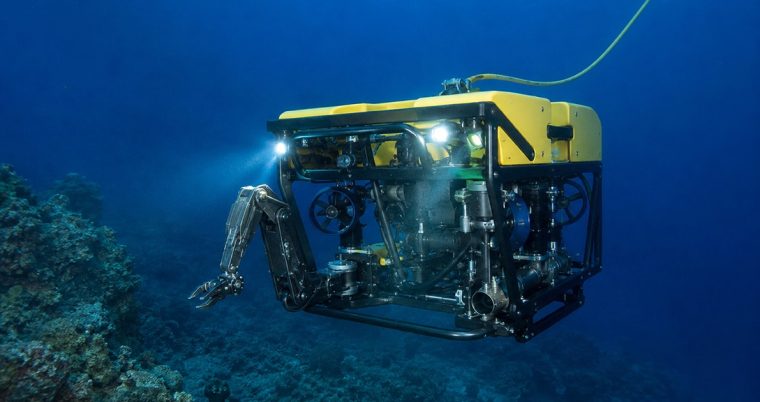
Visiongain’s latest report, Offshore Remotely Operated Vehicle (ROV) Market Report 2026-2036, provides detailed forecasts and strategic analysis across component, depth, type, end-user, and application segments, including technology trends, trade and supply chain dynamics, and competitive positioning.
The global offshore ROV market is valued at US$2.3 billion in 2026 and is projected to reach US$5.1 billion by 2036, at a CAGR of 8.1% during the forecast period. Growth is driven by accelerating ultra-deepwater exploration and production investment, the rapid build-out of offshore wind and renewable marine infrastructure and growing geopolitical focus on subsea cable and infrastructure protection across naval and defence applications.
Key Market Insights
- The global offshore ROV market will reach US$5.1 billion by 2036, growing at a CAGR of 8.1%
- Growth is driven by deepwater energy investment, offshore wind expansion, and rising demand for subsea infrastructure protection
- Key regions: North America, Europe, Asia Pacific
- Leading companies: Oceaneering International, Saab AB, Subsea 7, TechnipFMC, DeepOcean Group
- Key trend: Commercialisation of shore-based remote operations centres and all-electric ROV platforms reducing vessel dependency and operational costs
Market Drivers
Exponential Build-Out of Global Offshore Wind and Renewable Marine Infrastructure
The global commitment to net-zero carbon targets has triggered an unprecedented expansion of offshore wind farms, transitioning from shallow-water fixed foundations to complex deep-water floating turbine structures that demand continuous robotic support. ROVs are vital throughout the entire lifecycle of an offshore wind farm, covering unexploded ordnance clearance, seabed scour monitoring, array cable installation guidance, and post-installation structural integrity inspection on foundations and mooring lines.
Countries including Taiwan and Japan are rapidly designating offshore promotion zones to scale up wind capacity across Asia Pacific. To meet the operational challenges of these sites, including high-velocity currents and poor underwater visibility, operators are transitioning from heavy hydraulic systems to highly agile electric ROV platforms. Maritime contractor UCO expanded its fleet by ordering six additional Saab Seaeye Falcon electric ROV systems, bringing its total to 33 units, confirming that renewable energy infrastructure has become a foundational revenue pillar for the subsea robotics industry.
Escalating Geopolitical Focus on Subsea Infrastructure and Critical Cable Protection
The increasing vulnerability of international underwater fibre-optic cables, trans-national gas pipelines, and subsea power grids to sabotage, anchoring accidents, and espionage has driven global defence budgets to prioritise seabed infrastructure protection. Modern naval and defence doctrines recognise that safeguarding sovereign economic zones requires advanced, deep-rated subsea robotics capable of continuous monitoring, threat detection, and rapid intervention.
NATO selected the Saab-led MANGROVE consortium to steer the Allied Underwater Battlespace Mission Network project, leveraging advanced electric subsea vehicle platforms and multi-domain sensors to build a secure communication and situational awareness network across vulnerable seabed assets. This strategic initiative confirms that military, security, and sovereign asset protection have become major drivers for the specialised ROV market.
Technology & Innovation
Commercialisation of Shore-Based Remote Operations and Uncrewed Surface Vessels
The successful commercial integration of onshore Remote Operations Centres paired with Uncrewed Surface Vessels is eliminating the need for large, carbon-intensive manned support vessels. By utilising low-latency satellite communication links, cloud computing, and real-time data streaming, companies can now pilot subsea vehicles from control hubs located inland, reducing offshore personnel requirements and carbon footprints by more than 40%.
Fugro N.V. has led this transition through its global network of ROCs commanding automated fleets and uncrewed surface hulls, recently achieving a 28% reduction in inspection cycle time for Shell’s Prelude FLNG infrastructure. In May 2026, DeepOcean completed its first subsea intervention project with offshore operational leadership managed entirely from an onshore remote operating centre, conducted for Aker BP at the Idun Nord field in the Norwegian Sea. In April 2026, Oceaneering successfully completed its first onshore-piloted remote ROV operation on an offshore drilling rig in Brazil for Petrobras, controlled from its Onshore Remote Operations Centre in Macae.
Trade & Supply Chain Dynamics
U.S. tariffs on imported industrial equipment, electronic systems, semiconductors, steel, aluminium, and advanced robotic technologies are elevating manufacturing costs and extending procurement timelines for offshore ROV manufacturers and service providers. ROV systems rely on globally integrated supply chains sourcing precision sensors, sonar systems, fibre-optic tether systems, and specialised subsea tooling from China, Japan, South Korea, Germany, Norway, and the UK.
Supply chain constraints for subsea-qualified lithium-ion batteries are compounding these pressures. The supplier base for pressure-tolerant, high-density battery cells capable of withstanding hyperbaric conditions is highly consolidated, with procurement lead times extending to as long as 18 months due to competing demand from other high-tech industries. These delays are limiting the pace at which operators can scale up electric and resident ROV fleets despite strong commercial demand.
Commercial Impact
- Cost pressure: Tariffs on electronic systems, steel, and precision components are increasing manufacturing costs and affecting service pricing across IRM, drilling support, and construction contracts
- Supply chain shifts: Offshore technology companies are evaluating alternative sourcing, regional assembly operations, and domestic production to reduce dependency on tariff-sensitive imports
- Capex sensitivity: Higher equipment and operational costs may prompt operators to defer non-essential subsea projects or optimise maintenance budgets in the short term
- Competitive positioning: Companies with diversified supply networks and established localisation strategies are better positioned to maintain contract competitiveness under tariff pressure
Market Opportunities
Decommissioning of Legacy Offshore Fields and Plugging and Abandonment Operations
The structural decline of aging offshore oil and gas basins globally presents a significant counter-cyclical opportunity for heavy work-class ROV fleets specialised in decommissioning and permanent plugging and abandonment operations. As thousands of vintage platforms and subsea wells in the North Sea, Gulf of Mexico, and Southeast Asian shallow waters reach end of economic life, regulatory mandates are requiring operators to seal wells and remove subsea architecture.
This phase is highly intensive for ROVs, requiring complex subsea manipulation including abrasive water-jet cutting, structural conductor severance, subsea manifold removal, and pipeline cutting to the mudline. Oceaneering International secured multiple subsea robotics contracts from Esso Exploration Angola (Block 15), a subsidiary of ExxonMobil, worth an estimated US$80 million to US$90 million over three years, explicitly bundling work-class ROV services, specialised intervention tooling, and structural engineering packages for infrastructure lifecycle management.
Commercial Scaling of Resident Subsea Robotics and Permanent Seabed Docking Hubs
The offshore energy industry is approaching a major operational shift through large-scale deployment of permanent resident subsea vehicles that remain underwater continuously within seabed docking hubs. Rather than deploying from a surface vessel for each mission, a resident hybrid ROV or AUV stays submerged, using subsea inductive docking stations for data downloading and battery recharging. This allows operators to execute unplanned inspections, actuate subsea valves, or respond to environmental incidents instantly from an onshore remote centre, bypassing the cost and scheduling constraints of surface vessels.
Supermajors including Equinor and Petrobras are actively leading pilot-to-production programmes to install permanent robotic hubs at depths exceeding 1,000 meters, creating a high-margin market for ultra-reliable, corrosion-resistant subsea robotics capable of extended deep-sea deployment without human maintenance.
Competitive Landscape
The major players operating in the offshore ROV market include Blue Robotics, Boxfish Robotics, Deep Trekker Inc., DeepOcean Group, Forum Energy Technologies (FET), Ocean Botics, Oceaneering International, Outland Technologies, QYSEA Technology, Saab AB, SEAMOR Marine, Shark Marine Technologies, Subsea 7 S.A., TechnipFMC plc, and VideoRay LLC.
These companies are strengthening their market positions through M&A, R&D investment, fleet expansion, strategic collaborations, and development of electric ROV and remote operations capabilities, with increasing focus on offshore wind and defence applications alongside traditional oil and gas.
Recent Developments
- May 2026 – DeepOcean completed its first subsea intervention project with offshore operational leadership managed entirely from an onshore remote operating centre, conducted for Aker BP at the Idun Nord field in the Norwegian Sea using work-class ROV technologies
- April 2026 – ExxonMobil awarded Subsea Integration Alliance (Subsea 7 and SLB OneSubsea) an EPCI contract for the Redevelopment 2.0 Likembe Project offshore Angola, involving subsea tie-back infrastructure managed across offices in Paris, Luanda, Lisbon, Sutton, Houston, and Norway
- April 2026 – DeepOcean secured a contract for inter-array cable installation support at the TPC-II offshore wind project offshore Taiwan, utilising upgraded subsea vessels with new ROV systems and cable lay spreads to strengthen offshore renewable energy operations in Asia Pacific
- April 2026 – Oceaneering successfully completed its first onshore-piloted remote ROV operation on an offshore drilling rig in Brazil for Petrobras, controlled from its Onshore Remote Operations Centre in Macae, demonstrating advancements in remote subsea robotics and operational safety
- April 2026 – Petrobras awarded Subsea 7 a supermajor contract for the Sepia 2 field development in Brazil’s Santos Basin at water depths of 2,170 meters, covering SURF engineering, procurement, fabrication, installation, and pre-commissioning for 17 wells and one gas export line
Frequently Asked Questions
What is driving growth in the offshore ROV market?
Growth is driven by accelerating ultra-deepwater exploration and production investment, the rapid expansion of offshore wind and renewable marine infrastructure and growing geopolitical demand for subsea cable and seabed infrastructure protection across naval and defence applications.
How are trade and supply chain dynamics affecting the market?
U.S. tariffs on industrial equipment, semiconductors, steel, and advanced robotics are increasing manufacturing costs and extending procurement timelines. Supply chain constraints for subsea-qualified lithium-ion batteries are compounding these pressures, with lead times of up to 18 months limiting the pace of electric and resident ROV fleet expansion.
Who are the leading companies in the market?
Key players include Oceaneering International, Saab AB, Subsea 7, TechnipFMC, DeepOcean Group, and Forum Energy Technologies.
Related Reports
Autonomous Underwater Vehicle (AUV) Market Report 2026-2036
Naval USV/UUV Market Report 2026-2036
Undersea Defence Infrastructure & Security Market Report 2026-2036
About Visiongain
Established in 1998, Visiongain is an independent publisher of analyst-led market intelligence, delivering data-driven research, forecasts, and strategic insight across global industries and emerging markets. Visiongain supports evidence-based decision-making for investment, procurement, and long-term strategic planning.
Media Contact
press@visiongain.com
+44 (0)20 7336 6100
www.visiongain.com