Pharma’s Next Horizon: AI, Sustainability & Human Insight Meet at CPHI Europe 2025
30 October 2025.
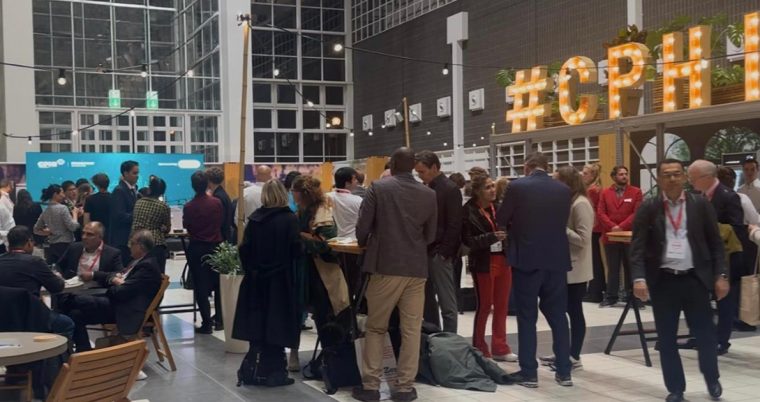
Welcome to CPHI Europe Market Watch: Pharma, Biotech and Healthcare
As the world’s largest pharmaceutical exhibition draws to a close, the conversation moved from breakthrough announcements to enduring themes. On Day 3, attention turned to people, platforms, and purpose. Signalling that digital transformation, regionalisation, and sustainability will define the next decade of global pharma.
Across the vast show floor and conference stages, discussions explored workforce transformation, investment in regional manufacturing, and the evolution of ESG goals from policy to process. The tone was reflective but forward-looking: an industry recalibrating around agility, accountability, and long-term value.
AI & the Pharma Workforce
Today’s opening session, AI’s Impact on the Pharma Workforce: From Obsolescence to Opportunity, explored how up to 90,000 traditional roles are set to disappear as automation and digital platforms reshape operations, creating new higher-value positions.
Speakers agreed that the challenge is not technology itself, but culture; hiring, training, and retaining talent who can operate at the intersection of science, software, and regulation. Several panellists noted that AI transformation has now become a leadership issue, not an IT project, and that success depends on aligning digital adoption with purpose, governance, and skills development.
Visiongain Insight: This transition is about job evolution, not job loss. Organisations that embed digital-native roles and reskill existing teams will lead the next phase of transformation, balancing innovation with human capability.
Regional Manufacturing & Supply-Chain Investment
As global trade tensions, energy volatility, and nearshoring trends continue, the final-day sessions underscored one message: manufacturing is going local but staying globally connected.
CDMOs and logistics leaders described a decisive shift toward regionalised, modular capacity facilities in Europe and North America, complementing expansions in Asia-Pacific and Latin America. Supported by digital twins and predictive analytics, these networks are redefining resilience; less about redundancy, more about responsiveness.
“Regionalisation doesn’t mean isolation, it’s about building smarter, data-connected ecosystems that can flex in real time.” Industry speaker, CPHI Manufacturing 5.0 Track
It was a timely reminder that resilience isn’t isolationist, it’s intelligent. The next evolution of global pharma production will be defined by an integrated digital infrastructure that unites local responsiveness with global reach.
Visiongain Insight: Pharma’s new edge lies in glocal integration, local agility, powered by global data. Expect continued investment in digitally harmonised, mid-scale facilities that can pivot between modalities while meeting ESG and regulatory demands.
European Biopharma: Innovation, Investment & East-West Collaboration
Another major talking point was the call for European biotechs to double down on innovation and forge deeper partnerships with Asian manufacturing hubs. At a senior-level investor panel featuring Martyn Eeles (Clarma Capital), Jan Vertommen, Anand Govindaluri (Govin Capital), and Thomas Kern (ISP Healthcare), the experts agreed that Europe’s funding gap stems less from a lack of capital than from investor caution.
“The funds exist, but they’re waiting for proof and many European biotechs have to look abroad by Phase II,” Martyn Eeles, Clarma Capital
Kern noted that while biotech IPOs have declined sharply since the post-COVID boom, valuations in large pharma have surged, deepening the disconnect between discovery and capital.
Govindaluri added that Asia, particularly Singapore, remains rich in early-stage investment but focused on manufacturing innovation rather than clinical assets.
“This creates the perfect bridge. Europe brings the technical excellence, Asia brings the manufacturing strength,” Anand Govindaluri, Govin Capital.
The panel’s consensus: Europe must leverage its scientific leadership through smarter global partnerships, joint ventures, royalty agreements and public-private partnerships to unlock capital and speed up commercialisation.
Visiongain Insight: European biopharma’s next growth cycle will hinge on strategic alignment, not scale pairing Europe’s innovation base with Asia’s execution power. Expect hybrid financing and asset-manufacturing alliances to define the funding landscape into 2026.
Sustainability in Process: From Packaging to Performance
Sustainability moved from keynote to core business at this year’s event. Day 3 discussions drilled deeper into how carbon, energy, and circularity metrics are now embedded across pharma’s operational fabric from bioreactor design to secondary packaging.
Speakers at the Sustainable Futures Theatre showcased fibre-based materials, green solvents, and closed-loop cleanroom systems as viable tools for reducing Scope 3 emissions. Metsä Group’s Maija Pohjakallio noted that lifecycle optimisation, not just material substitution, will define next-generation sustainability performance:
“By optimising your packaging solutions, you can reduce your Scope 3 emissions, but the real breakthrough comes when we rethink the entire process.” Maija Pohjakallio, VP Climate & Circular Economy, Metsä Group
This message captured the broader shift at CPHI 2025: sustainability is no longer a side conversation; it’s shaping investment priorities, partnerships, and process innovation across the value chain.
Visiongain Insight: Sustainability has become a measure of competitiveness. Leaders are monetising greener operations through lower costs, stronger brand equity, and verified ESG performance, setting the stage for the Net-Zero CDMO era.
From Forest to Pharma: The Nordic Circular Model
Visiongain caught up with Kalle Riihinen, the COO of Nordic Bioproducts Group Ltd (Finland), who urged industry leaders to adopt a “give-back” philosophy in resource use.
“People need to understand that whatever we take from nature, we must give back, otherwise this could be the last generation to truly see it.” Kalle Riihinen, COO – Nordic Bioproducts Group
Riihinen described how the Nordic region is reinventing its traditional pulp and forestry industries through circular innovation, moving “from forest to pharma.”
“We don’t want to be in the old commodity business of pulp and secrecy. We believe in openness, traceability, and building trust through transparent value chains.” Kalle Riihinen, COO – Nordic Bioproducts Group
He stressed that Nordic companies have the advantage and responsibility of combining education, natural resources and ethical standards to pioneer sustainability practices that could set a new global benchmark.
Visiongain Insight: The approach of Nordic Bioproducts Group encapsulates the shift from resource extraction to regeneration. Where circular design, traceable sourcing and transparency are fast becoming pharma’s next ESG frontier, with competitive advantage coming from accountability, not opacity.
Visiongain Perspective: What Comes Next
Across three days of insight and innovation, one narrative has crystallised: pharma’s next era will be human-centred, data-driven, and globally interdependent. AI, localisation, and sustainability are no longer parallel tracks; they’re assembling into a single operational framework built on collaboration and credibility.
As Visiongain continues to track these shifts, our analysts are mapping how talent, technology, and trust will define competitive advantage in 2026 and beyond.
What’s Next from Visiongain
Our latest market reports explore the infrastructure, technologies, and business models driving these transformations:
- Pharmaceutical Contract Manufacturing Market Report 2025-2035
- Biopharmaceutical Manufacturing Market Report 2025–2035
- AI-Enabled Drug Discovery and Clinical Trials Market Report 2025-2035
- Healthcare Cold Chain Logistics Market Report 2025-2035
- Clinical Trial Supply and Logistics Market for Pharma 2025-2035
Press & Media Enquiries
For commentary, data requests or interview enquiries, please contact: press@visiongain.com