The New Counter-UAS Systems Market
18 September 2026.
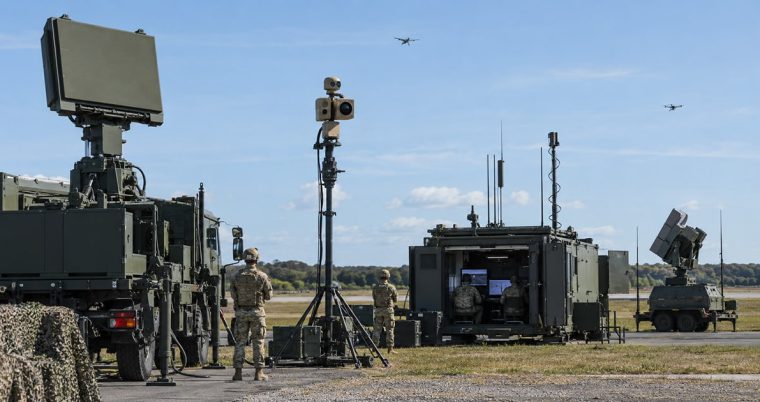
Counter-UAS is becoming a systems market. US procurement is putting more weight on how sensors, effectors and command-and-control work together, rather than assessing each technology in isolation.
The change is already showing up in new orders. On 15 September, JIATF 401 announced more than US$25 million in counter-UAS procurements for US Southern Command, covering interceptors, electronic-warfare suites and other systems designed to work together across detection, tracking and defeat.
Since February, Joint Interagency Task Force 401 (JIATF 401) has opened a marketplace for validated equipment, introduced common testing standards and backed an enterprise approach to command and control. Together, those moves are changing how counter-UAS technology is tested and bought.
Suppliers still need capable products, but buyers increasingly want comparable performance data and equipment that can fit into systems already in service.
Visiongain Top Takeaways
- The US Army is seeking US$994 million for small counter-UAS procurement in FY2027, nearly double the FY2026 enacted amount, with budget documents describing a “systems of systems” approach.
- JIATF 401 has backed Anduril’s Lattice as a common C2 platform for military and interagency counter-UAS operations.
- Three IDIQ vehicles with ceilings of US$500 million have been awarded since May to Perennial Autonomy, AeroVironment and CACI, although those ceilings are not guaranteed revenue.
- Common testing standards are already being used in multinational exercises: Project Flytrap 5.0 assessed more than 20 counter-UAS systems in Lithuania.
- Romania, Australia, Poland and South Korea can now procure through the JIATF 401 marketplace, giving validated suppliers another potential route into allied programmes.
Buyers Want Systems That Work Together
Counter-UAS programmes already combine radar, RF sensing, electro-optics, electronic warfare and several types of effector. The US Army’s latest budget plans show how far that approach is moving into procurement.
The service is seeking US$994 million for small counter-UAS procurement in FY2027, nearly double the FY2026 enacted amount. Army budget documents describe a “systems of systems” architecture spanning sensors, effectors, electronic warfare and mobile and fixed platforms. The largest share, US$414 million, is earmarked for operational small counter-UAS capabilities.
Command and control sits close to the centre of that model. In March, JIATF 401 backed an enterprise command-and-control agreement using Anduril’s Lattice platform as a common C2 layer, allowing different sensors and effectors to share data and coordinate responses.
A common backbone can make it easier to introduce or replace equipment without rebuilding the entire defensive system. But concentrating more of the architecture around a small number of software platforms raises its own questions about data rights, cyber resilience, licensing and vendor dependence.
Common Testing Is Raising the Bar
JIATF 401 introduced standard test and evaluation guidelines in March, requiring counter-UAS assessments to collect the same core data. The aim is to build a body of evidence that can be used across government, reducing repeated testing and making results easier to compare.
Those standards were subsequently used during Project Flytrap 5.0, a V Corps-led multinational exercise in Lithuania involving US and allied forces alongside industry. More than 20 systems were assessed for performance, interoperability and tactical use.
The need for comparison is clear in a market full of claims about detection range, accuracy and probability of defeat. Results can change with terrain, electronic interference, weather, target size and threat profile. A successful company demonstration does not necessarily show how equipment will perform at an operational site.
The same approach is feeding into procurement. JIATF 401’s marketplace reached initial operational capability in February and gives government buyers access to validated equipment and performance data. Its first four purchases, announced in April and worth a combined US$13 million, covered sensors, radars, electronic warfare systems and low-collateral effectors.
Common testing should make supplier claims easier to challenge. Suppliers will increasingly need repeatable results that hold up outside their own demonstrations.
Flexible Contracts Give Buyers More Room to Move
JIATF 401 is also using broader contract vehicles rather than tying requirements to a single product.
In May, defence autonomy company Perennial Autonomy received a three-year IDIQ with a US$500 million ceiling, covering systems including Merops interceptors, Bumblebee quadcopters and Hornet mid-range strike drones.
AeroVironment followed in July with a separate three-year US$500 million Domestic Shield IDIQ. A US$80.5 million task order under that vehicle covers its Titan multi-sensor system for US Air Force Global Strike Command.
Later that month, CACI International received another three-year IDIQ with a US$500 million ceiling, with SkyValor selected for the first task order. The vehicle also covers RF detection, direction-finding and non-kinetic defeat capabilities.
The US$500 million figures are ceilings, not guaranteed revenue. They set the maximum that can be ordered under each contract; actual revenue will depend on subsequent task orders and deployments.
The contract structure says more than the headline value. JIATF 401 says the model is intended to avoid narrowly defined, product-centred programmes and allow different capabilities to be bought as requirements change. Buyers therefore have more room to switch technologies without launching a new acquisition programme each time.
Smaller Suppliers Can Still Find a Route In
A more modular procurement model does not necessarily leave the market to the largest contractors. Specialist suppliers can compete for one part of the system rather than having to provide the entire counter-UAS architecture.
The marketplace gives those companies a more direct route from validation into government procurement. Equipment that needs extensive bespoke engineering will still be harder and more expensive to adopt, but smaller suppliers no longer need to own every layer of the solution to win business.
That route is beginning to extend beyond the US. Romania joined the JIATF 401 marketplace in April, followed by Australia, Poland and South Korea in May, enabling all four countries to procure counter-small-UAS technologies through the US system.
Suppliers already validated through the US system therefore have another potential route into allied requirements. National procurement rules and existing equipment will still determine what each country buys, so marketplace access should not be confused with automatic adoption of US technology or standards.
Market Outlook
Visiongain forecasts the global Counter-UAV (C-UAV) Market to grow at a 26.2% CAGR between 2025 and 2035, reaching US$25.16 billion by 2035. Demand spans detection, interdiction and neutralisation across military and defence, homeland security, critical infrastructure and other applications.
The next competitive test may come after validation. As procurement accelerates, suppliers will need to show that technology can be produced, fielded and supported at scale, with components, production capacity and field support becoming potential constraints.
Additive manufacturing is already playing a role. During Project Flytrap 5.0, US Army personnel used 3D printing to repair drones and fabricate components for integrating counter-UAS equipment onto Stryker vehicles, showing how it could support faster design changes and reduce some supply-chain pressures.
That question will be particularly relevant ahead of DroneX 2026, taking place at ExCeL London on 29–30 September. The useful test will be which suppliers can move from a successful demonstration to equipment that can be bought, fielded and supported in useful numbers.
Visiongain Insight: As counter-UAS procurement becomes more standardised, access to contracts and the ability to deliver at scale will matter alongside technical performance. C2 providers and systems integrators are gaining influence, but specialist suppliers still have room to compete where their products can be validated, procured and supported without adding unnecessary complexity.
From Visiongain
Visiongain’s market reports provide detailed forecasting and analysis to assess how these structural shifts will translate into long-term demand, investment priorities and competitive positioning.
Explore the Visiongain Drones & UAV Intelligence Hub for the latest analysis, market intelligence and research across drones and counter-UAS.
- Counter-UAV (C-UAV) Market Report
- Small Drones Market Report
- Directed Energy Weapons (DEW) Market Report
- Anti-Drone Market Report
- Military Radar System Market Report
Press & Media Enquiries
For commentary, data requests or interview enquiries, please contact: press@visiongain.com


