Washington Targets Missile and Drone Weak Links
7 August 2026.
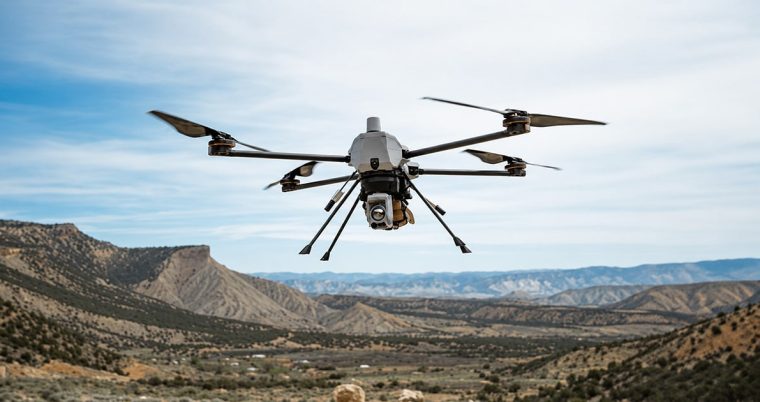
Washington is targeting the production constraints limiting US missile and drone output.
New agreements covering PAC-3 and THAAD components, alongside a conditional loan commitment of up to US$820 million for domestic drone-component manufacturing, show the government intervening more directly in critical parts of the defence supply chain.
The ambition is significant, but contracts and financing are not the same as delivered capacity. New production lines must still be built, staffed and qualified, while suppliers remain exposed to changing budgets and procurement priorities.
In this week’s Market Watch: Aerospace, Defence & Security, Visiongain examines where the main constraints remain, how US industrial policy is changing and which suppliers could benefit.
Visiongain Top Takeaways
- Washington is targeting deeper supply-chain weaknesses as missile and drone production comes under pressure.
- New agreements aim to support a tripling of PAC-3 output and a quadrupling of THAAD production, but the additional capacity still has to be built and qualified.
- A second source for PAC-3 solid rocket motors could ease one of the missile sector’s most persistent constraints, although meaningful output will take time.
- A conditional loan commitment of up to US$820 million to Performance Drone Works would support components for several US drone manufacturers and platforms.
- Longer-term commitments give suppliers more confidence to invest, but workforce shortages, qualification delays and shifting budgets remain material risks.
Washington Moves Deeper into the Missile Supply Chain
The US Department of War, working with Northrop Grumman and Lockheed Martin, has announced framework agreements designed to expand production of critical components for PAC-3 MSE and THAAD interceptors.
The measures support wider plans to triple PAC-3 output and quadruple THAAD production, while giving critical suppliers longer-term demand commitments to support investment in additional capacity.
The agreements come as operational use and allied demand increase pressure on US interceptor inventories. They also form part of the Department’s Acquisition Transformation Strategy, which is placing greater emphasis on critical suppliers rather than relying solely on prime contractors to resolve shortages further down the production chain.
“Building the Arsenal of Freedom requires robust, dynamic supply chains at every level of the industrial base,” said Michael P. Duffey, Under Secretary of War for Acquisition and Sustainment.
The initiative is being executed with the Munitions Acceleration Council, Economic Defense Unit, Missile Defense Agency and the Office of the Under Secretary of War for Acquisition and Sustainment. It also supports the administration’s wider push to increase domestic munitions capacity and strengthen integrated air and missile defence.
Prime contractors can expand final assembly, but missile output will still be limited if propulsion systems, seekers, structural parts or other critical components remain unavailable.
PAC-3 Adds a Second Motor Source
The PAC-3 arrangements establish a second source for solid rocket motors and increase production of ignition safety devices.
Solid rocket motors remain a constraint across the US missile portfolio, with a small number of qualified manufacturers supporting several competing programmes. Earlier this year, the US government announced a separate US$1 billion direct-to-supplier investment with L3Harris to expand solid rocket motor production, underlining the wider capacity problem.
Adding another PAC-3 source should reduce dependence on a narrow production base and make it easier to absorb higher demand or disruption. The benefit will not be immediate, however. New motor production must first be established, tested and qualified before it can contribute consistently to interceptor output.
THAAD Expansion Reaches Structural Components
The THAAD agreement covers mid-body shells, muzzle covers and rail car assemblies, with the aim of quadrupling production of these components to support higher interceptor output.
Structural parts are less visible than seekers or rocket motors, but shortages can restrict missile production just as quickly. In March, the Department announced a separate agreement with BAE Systems and Lockheed Martin aimed at quadrupling THAAD seeker production, highlighting the need to expand several parts of the same interceptor supply chain in parallel.
The expansion will also draw on skilled labour, materials and investment required by other priority missile programmes.
Drone Policy Moves from Platforms to Components
The Department of War’s Office of Strategic Capital (OSC) has announced a conditional loan commitment of up to US$820 million to Performance Drone Works (PDW), a Huntsville-based manufacturer of tactical unmanned aerial systems, to expand domestic production of critical drone components.
Together with additional private capital, the financing is intended to create capacity serving several manufacturers and platforms. The components are expected to support Group 1 and Group 2 unmanned aircraft produced by PDW and other US companies, with new facilities and workforce expansion forming part of the planned build-out.
“PDW will be one of several domestic component producers receiving OSC loan commitments,” said David A. Lorch, Director of the Office of Strategic Capital and Senior Advisor to Deputy Secretary of War Steve Feinberg.
James R. Shanahan, Senior Managing Director at OSC, said the organisation was “squarely focused on identifying and addressing bottlenecks in critical supply chains”, including drones and autonomous systems.
The commitment supports Executive Order 14307, Unleashing American Drone Dominance, which calls for stronger domestic production and a more secure US drone industrial base. Emil Michael, Under Secretary of War for Research and Engineering, said the policy requires “a secure and resilient industrial base here at home”.
The US$820 million remains a conditional commitment rather than completed financing. PDW must still satisfy financial, legal, technical and other due-diligence requirements before financial close.
Even if the financing closes, the new capacity will only prove worthwhile if manufacturers secure enough orders, remain cost-competitive and keep the facilities in use. Rapid changes in drone designs and technical requirements add another risk, while government funding cannot fix uncertain order volumes or differing standards across military customers.
Market Outlook
US demand for missile defence and unmanned systems is likely to remain strong as Washington rebuilds inventories, supports allies and prepares for more demanding operational requirements.
More of the commercial opportunity is likely to sit below the platform level. Manufacturers able to relieve constraints in propulsion, structures, electronics, communications, energetics and production equipment could benefit as the government directs more attention and capital towards critical suppliers.
Smaller companies controlling qualified processes, specialist components or difficult-to-replace intellectual property may become more strategically important. Prime contractors could also benefit from stronger supplier networks, although greater government involvement may bring closer scrutiny of supplier selection, costs and production performance.
New facilities need sustained orders to remain viable, while long manufacturing and qualification times mean additional funding may take years to translate into higher output.
Washington is already applying similar measures elsewhere in the defence industrial base. What matters now is how far the approach spreads and whether procurement volumes remain strong enough to support the investment being encouraged.
Visiongain Insight: Strong defence demand is exposing the importance of industrial throughput. Suppliers controlling qualified components, scarce processes and expandable production capacity could become increasingly important as Washington rebuilds inventories.
From Visiongain
Visiongain’s market reports provide detailed forecasting and analysis to assess how these structural shifts will translate into long-term demand, investment priorities and competitive positioning.
- Directed Energy Weapons (DEW) Market Report
- U.S. DoD & Space Force Budget Market Report
- Anti-Drone Market Report
- Military Radar System Market Report
- Military Identification Friend or Foe Market Report
Press & Media Enquiries
For commentary, data requests or interview enquiries, please contact: press@visiongain.com


