AUKUS at Pace: Undersea Autonomy Tests Capacity
5 June 2026.
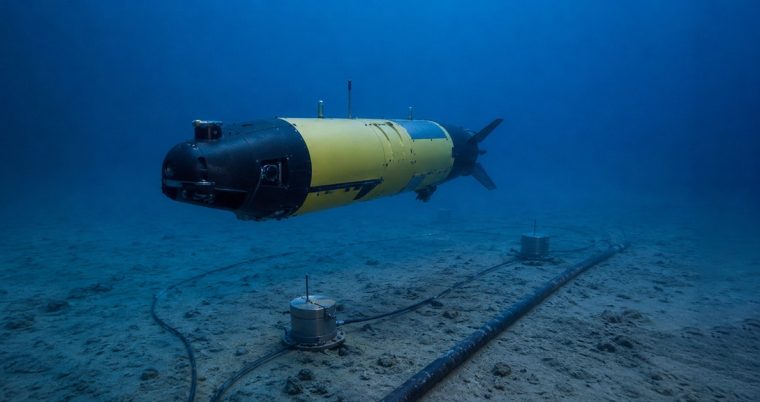
AUKUS is moving further into delivery mode.
Australia, the UK and the US have announced the first AUKUS Pillar II Signature Project, focused on payloads and enabling systems for uncrewed undersea vehicles. Delivery is expected to begin from 2027.
The choice of undersea autonomy is significant. While Pillar 1 remains a long-term and highly complex submarine programme, Pillar II offers a faster route to visible capability, industrial participation and allied interoperability.
For suppliers, the opportunity is becoming more defined. Demand is likely to build around UUV payloads, sensors, command-and-control, secure communications, seabed infrastructure protection, electronic warfare, mine countermeasures and integrated crewed-uncrewed naval operations.
Visiongain Top Takeaways
- AUKUS Pillar II is entering a more practical delivery phase, with the first signature project focused on uncrewed undersea capability and delivery expected from 2027.
- Uncrewed undersea vehicles are becoming a near-term test case for allied interoperability, maritime deterrence and industrial execution.
- The Maritime Innovation Challenge shows how Pillar II can create opportunities for companies of different sizes across the trilateral industrial base.
- Licence-free collaboration, export-control reform and narrower technology exclusions will be critical to speeding up cross-border development.
- Undersea autonomy is becoming increasingly central to naval strategy, particularly around infrastructure protection, ISR, strike, mine countermeasures and electronic warfare.
AUKUS Pillar II Moves Into Delivery Mode
AUKUS Pillar II has entered a more practical phase with the announcement of its first signature project, focused on uncrewed underwater technologies.
The UK Ministry of Defence described the development as a:
“First-of-its-kind project to develop cutting-edge uncrewed underwater technologies as AUKUS nations ‘step on the accelerator’ for Pillar II.”
It also highlighted:
“three British companies named amongst winners of the UK 2025 AUKUS Maritime Innovation Challenge, receiving a share of £3 million.”
Announced by AUKUS Defence Ministers at a meeting in Singapore, the project marks further progress in the trilateral security partnership between Australia, the United Kingdom and the United States. Delivery is expected to start in 2027.
Under AUKUS, Pillar 1 focuses on Australia’s acquisition of conventionally armed, nuclear-powered submarines. Pillar II brings together the three nations’ defence sectors to develop advanced military capabilities that support wider security and deterrence objectives.
Announced by Defence Secretary John Healey MP alongside US Secretary Pete Hegseth and Australian Deputy Prime Minister Richard Marles, the project will develop, produce and deploy technologies carried by uncrewed underwater vessels. The work is designed to strengthen maritime readiness and accelerate interoperable capability across the three partners.
The project will support payloads, including sensors and weapons systems, that can be deployed across the three nations’ UUV fleets. This is intended to increase collective strength and deterrence across the Indo-Pacific and Euro-Atlantic. It also responds to growing concern over critical seabed infrastructure, including undersea cables, pipelines and other assets increasingly viewed as strategic vulnerabilities.
Defence Secretary John Healey MP said:
“AUKUS is delivering for our security and for our economy. Together we are announcing ground-breaking underwater capabilities that will keep Britain safe, backing British businesses that are driving growth, and standing shoulder to shoulder with our closest allies. This is what modern defence looks like. We’re stepping on the accelerator to develop cutting-edge tech to boost our collective deterrence and support our shared security.”
For the UK, the project offers a route to additional industrial activity in underwater capability, with opportunities for suppliers working in autonomy, payload integration, sensors, communications, command-and-control and naval systems.
The first capabilities are expected to support the Royal Navy’s transition to a Hybrid Navy, blending crewed and uncrewed platforms. The payloads are intended to help detect underwater threats to the UK and allied critical undersea infrastructure, while enabling the Royal Navy to integrate payloads from the US and Australia. The technology will also support the future SSN-AUKUS attack submarine fleet.
Visiongain Insight: AUKUS Pillar II gives the partnership a faster route to visible capability. While nuclear-powered submarine delivery remains strategically important, uncrewed undersea systems offer earlier opportunities for deployment, industrial participation and allied interoperability.
Uncrewed Undersea Systems Become the Near-Term Test Case
The Defence Ministers’ joint statement set out the scale of ambition behind the first AUKUS Pillar II Signature Project.
It confirmed that Australia, the UK and the US will develop:
“cutting-edge payloads and enabling systems”
for AUKUS partners’ uncrewed undersea vehicles, with delivery starting in 2027.
The project is designed to strengthen the partners’ ability to protect critical national seabed infrastructure, deploy surveillance, reconnaissance and strike capabilities, conduct logistics operations and improve performance across anti-submarine warfare, anti-surface warfare, mine countermeasures, electronic warfare and contested littoral manoeuvre.
The accompanying fact sheet highlights four areas of particular importance.
First, the undersea environment is becoming increasingly central to national security, economic resilience and military planning. Subsea cables, pipelines and seabed infrastructure support global trade, communications, energy flows and defence operations. As a result, the undersea domain is no longer a niche naval concern. It is becoming a strategic theatre in its own right.
Second, the signature project will deliver UUV payloads and enabling systems that can be used across each partner nation’s vehicles. This is intended to increase interoperability through shared standards, trilateral operational concepts and common control systems. It will also allow capabilities to be tested and proven through joint exercises, experimentation and shared research and development communities.
Third, delivery will follow a phased approach. Initially, each nation will develop national payloads that are interchangeable and can be integrated by the other partners. Each country’s development work will focus on a different operational effect. The partners will then move towards jointly developed and produced trilateral payloads and enabling technologies, including next-generation systems.
Fourth, the project reinforces the role of UUVs as force multipliers. These vehicles can operate alongside crewed ships and submarines to provide surveillance over large ocean areas, protect underwater infrastructure, support naval operations and enhance the agility, survivability and reach of maritime forces.
For suppliers, the most important point is that future undersea advantage will not depend only on the vehicle itself. Competitive value will increasingly sit in payloads, mission systems, software, autonomy stacks, secure communications, common control systems, interoperability standards and integration across allied fleets.
Visiongain Insight: The undersea domain is rising quickly on allied defence agendas. As risks to subsea cables, pipelines and maritime infrastructure increase, demand is likely to strengthen for UUVs, seabed sensors, payload integration, secure communications and persistent surveillance architectures.
UK Industry Gains from the Maritime Innovation Challenge
Defence Secretary John Healey also announced the winners of the 2025 AUKUS Maritime Innovation Challenge.
The challenge is the second iteration of AUKUS Pillar II’s Innovation Challenge Series. It sought companies developing technologies that enable undersea command, control, communications and the teaming of undersea systems.
Three of the four winning suppliers are UK-based:
- Decision Analysis Services Ltd., an SME based in Basingstoke
- SEA Ltd., a large enterprise based in Frome
- A-2i, a micro-consultancy based in Dorchester, Dorset
- MSI Transducers, a large enterprise based near Boston, USA
The winners show how AUKUS Pillar II is drawing in different parts of the defence technology base. The group includes one SME, two large suppliers and one micro-consultancy. Each company will receive a share of £3 million in funding to develop and test its capabilities.
This is commercially important because the challenge does not point only to major platform primes. It highlights demand for specialist suppliers that can support autonomy, sensors, communications, command-and-control, systems integration and undersea operations.
Many of the hardest problems in uncrewed undersea operations are integration problems. UUVs must communicate securely, operate in denied or degraded environments, work alongside crewed platforms and exchange data across national systems. Companies that can solve these practical challenges are likely to be well positioned as AUKUS moves from experimentation to deployment.
Visiongain Insight: Pillar II could create a more open route into allied defence programmes for specialist suppliers. Companies that can solve practical integration problems, particularly around command, control, communications and teaming, will be well placed as AUKUS moves from demonstration to operational capability.
Industrial Collaboration Becomes a Strategic Enabler
The Defence Ministers’ joint statement also highlighted defence trade and industrial base collaboration:
“The Deputy Prime Minister and Secretaries confirmed their support for expanding the breadth of the AUKUS licence-free environment between AUKUS partners by taking expeditious and practical steps to narrow the list of excluded technologies. The Deputy Prime Minister and Secretaries also reaffirmed the value of the Advanced Capabilities Industry Forum and deepening collaboration across the trilateral defence industrial base.”
This is critical because AUKUS delivery depends on more than technology. It requires Australia, the UK and the US to reduce barriers, align industrial capacity and create faster routes for development, testing and deployment.
The licence-free environment is particularly important. It can exempt certain defence goods, technologies and services from permit requirements when transferred between AUKUS partners. If the list of excluded technologies is narrowed, companies across the three countries may have greater scope to collaborate on advanced capabilities with less export-control friction.
That could support faster prototyping, more efficient joint development and stronger supply chain alignment. It could also make it easier for companies to move from funded challenge activity into larger development and procurement pathways.
However, the key test will be implementation. AUKUS partners will need to ensure that export-control reform, shared standards and industrial collaboration mechanisms translate into faster capability delivery rather than additional administrative complexity.
Visiongain Insight: AUKUS industrial collaboration will be judged by how quickly it can move technology across borders and into service. Export-control reform, shared standards and cross-border partnerships are becoming as important as the platforms themselves.
Submarine Rotational Force-West Reinforces the Wider AUKUS Roadmap
AUKUS Defence Ministers also announced progress on Submarine Rotational Force-West, which will establish a rotational presence of UK and US nuclear-powered submarines at HMAS Stirling in Australia.
The first US submarine rotation is expected in 2027, followed by a UK Astute Class submarine. This follows the first successful submarine maintenance period conducted on a UK Astute Class submarine at HMAS Stirling earlier this year.
The initiative supports Pillar 1 by expanding regional sustainment capacity and helping Australia prepare to own, operate, maintain and regulate a sovereign conventionally armed, nuclear-powered submarine capability.
For industry, this reinforces the wider AUKUS roadmap. Pillar 1 will remain the strategic centre of gravity, but it is long-cycle, capital-intensive and politically complex. Pillar II, by contrast, is likely to generate earlier market activity around systems that enhance, protect and extend crewed submarine fleets.
This includes uncrewed platforms, payloads, underwater sensing, seabed infrastructure protection, communications, logistics support, maintenance, training and common control architectures.
Visiongain Insight: Submarine Rotational Force-West strengthens the long-term AUKUS roadmap, while Pillar II is likely to drive earlier market activity around systems that enhance, protect and extend crewed submarine fleets.
Market Outlook
The latest AUKUS announcements show why Pillar II is likely to receive increased political and industrial attention.
Pillar 1 remains central to the agreement, but it is longer-term and more complex. By contrast, parts of Pillar II can produce tangible results sooner. Uncrewed undersea systems give AUKUS partners a visible way to show progress while building capabilities that respond to current maritime security risks.
For industry, the opportunity is becoming clearer. Demand is likely to build around UUVs, undersea payloads, sensors, surveillance systems, seabed infrastructure protection, anti-submarine and anti-surface warfare, mine countermeasures, electronic warfare, secure communications, common control systems and systems integration.
The next challenge is converting political intent into deployable capability. Delivery will depend on industrial capacity, cross-border collaboration, technology-sharing rules and the ability to integrate systems across different fleets.
Suppliers that can support interoperability, scale production and prove capability through trials and experimentation are likely to benefit most. The strongest opportunities are likely to sit with companies that can combine technical specialisation with practical integration capability.
For AUKUS, undersea autonomy is becoming an early test of whether the partnership can move advanced technology from policy announcement to operational deployment at pace. For suppliers, it is becoming a clearer route into future allied maritime programmes.
Visiongain Insight: AUKUS Pillar II is becoming the near-term delivery test for the partnership. Competitive advantage will sit with companies that can provide practical, interoperable and scalable capabilities that strengthen allied maritime operations at pace.
From Visiongain: Undersea & Maritime Intelligence Hub
Undersea capability is becoming central to naval strategy, critical infrastructure protection and allied deterrence.
Visiongain’s Undersea & Maritime Intelligence Hub brings together briefings, analysis and market insight on the technologies shaping this domain, from UUVs and autonomous platforms to seabed systems, networked infrastructure and maritime support capabilities.
Explore the Undersea & Maritime Intelligence Hub for strategic updates and related market reports.
New Visiongain Related Reports
- Undersea Networked Systems Market Report 2026-2036
- Uncrewed Underwater Vehicles Market Report 2026-2036
- Recovery & Support Systems Market Report 2026-2036
- Seabed Fixed Undersea Systems Market Report 2026-2036
- Uncrewed Surface Vehicles Market Report 2026-2036
Press & Media Enquiries
For commentary, data requests or interview enquiries, please contact: press@visiongain.com