Visiongain Market Watch | On the Radar – Event Dispatch
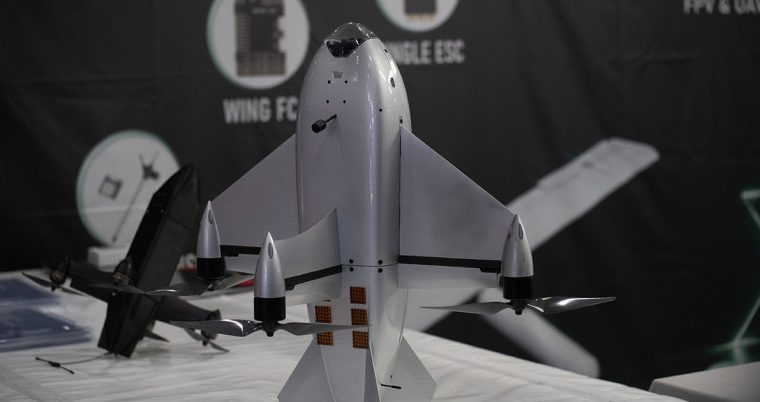
Ukraine’s combat-proven systems were a strong presence at DroneX 2026, with Ukrainian companies benefiting from extensive combat use at wide scale against a peer opponent. General Cherry, SkyFall, Sine Engineering, Phantom Defense and Stellarion presented systems that illustrated the drone ecosystem’s growing diversity and rapid development.
That relationship between battlefield experience and industrial development was also the subject of Stellarion’s second-day presentation; “War in Ukraine: Lessons for Drone Industry,” focusing on how real-time battlefield feedback directly reshapes design, supply chains and production culture.
Across DroneX 2026, combat experience and the pace of development demanded by peer combat involving drones at scale were recurring themes. The diversity and maturity of the platforms and solutions on display brought both into focus.
Systems ranged from relay drones and “jet-killers” to low-cost, deep magazine-orientated drone interceptors, heavy bomber drones and an extensive array of FPV drones forming their own sub-ecosystem.
Stellarion presented the Deadliner Q1 fibre-optic FPV drone, ranked first by number of sorties conducted by Unmanned Systems Forces units and second in the overall ranking of Armed Forces of Ukraine strike systems, as of July 2026.
One particularly notable development was the introduction of battery-dropping modules for the Deadliner series. Unlike standard FPV or strike drones that carry an integrated battery pack until impact, Deadliner drones equipped with this module can mechanically release their primary flight battery. The design serves two specific tactical purposes:
Modularity and flexibility were defining themes of the first day, with exhibitors demonstrating adaptable solutions throughout the value chain. The emphasis also extended to production, where additive manufacturing had a prominent presence within the drone ecosystem. Visiongain will examine this area in a separate article.
Another Visiongain event pick was Inductive Power Projection’s (IPP) patented, world-leading MHz wireless charging technology, described as technology “that removes the need for human or mechanical intervention, enabling truly autonomous power delivery for critical civilian and defence applications.”
IPP states that its technology can achieve up to 98% ring-to-ring power-transfer efficiency, with potential benefits across deployment, maintenance and autonomous operation.
Key advantages highlighted included:
Visiongain has identified IPP’s wireless charging technology and Stellarion’s battery-dropping modules as key solutions to watch. Each addresses a different aspect of one of the most widespread challenges facing the drone ecosystem: power.
Power remains a critical bottleneck, identified across defence drone programmes and industry studies. Technologies that address this constraint are likely to become a major area of development and investment in the coming years.
Ukraine’s experience, the rapid spread of operational knowledge and increasingly decentralised drone development and production all point to power and recharging solutions becoming an increasingly important part of the drone value chain over the next decade.
Visiongain Market Watch will continue to examine these developments over the coming months, with further analysis of drone supply chains, regulation, power and the technologies shaping the next phase of the market.