Distributed Maritime Operations to Drive Global Naval USV/UUV Market at 10.2% CAGR
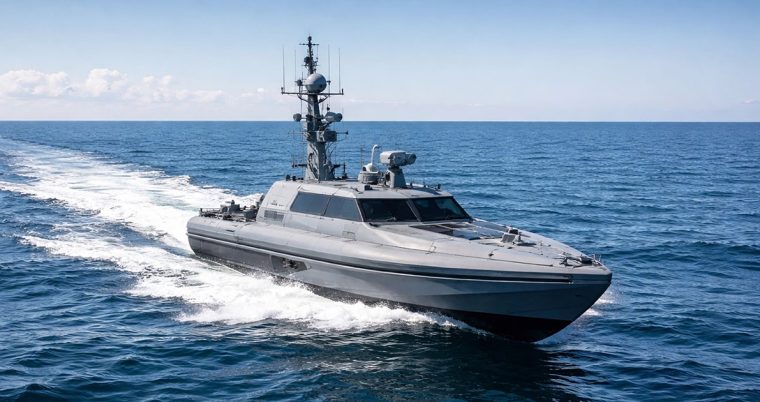
Visiongain has published a new report, Naval USV/UUV Market Report 2026-2036 (Including Impact of U.S. Trade Tariffs), providing detailed forecasts and strategic analysis across key mission types, payloads, communication systems, end-users and regions.
The global naval USV/UUV market is estimated at US$4.35 billion in 2026 and is projected to expand at a CAGR of 10.2% during the forecast period 2026-2036.
Market Drivers
Rising Demand for Mine Countermeasures and Undersea Security
Mine countermeasures (MCM) and undersea infrastructure protection are among the strongest immediate drivers of demand in the naval USV/UUV market. Naval mines remain a low-cost but highly disruptive threat to maritime operations, driving increased procurement of uncrewed MCM solutions. This is accelerating adoption of USVs as remote sensor carriers and UUVs for mine detection, classification and neutralisation, reducing risk to crewed vessels while improving operational efficiency.
At the same time, growing concern over the vulnerability of subsea cables, pipelines and offshore energy infrastructure is expanding demand for persistent monitoring capabilities. UUVs and networked USV platforms provide cost-effective, long-endurance solutions for surveillance and asset protection, enabling naval and maritime security forces to maintain continuous presence without relying on high-cost crewed assets. This shift is reinforcing the strategic importance of unmanned systems in safeguarding critical undersea infrastructure.
Transition to Larger Platforms and Fleet Integration
The naval USV/UUV market is undergoing a structural shift from small, experimental systems to larger, operationally deployable platforms integrated into naval fleets. Extra-large UUVs and larger USVs are increasingly moving into formal procurement programmes, reflecting growing confidence in their operational value across ISR, anti-submarine warfare and logistics support missions.
This transition is expanding the market beyond initial platform procurement into higher-value segments, including autonomy software, mission systems, payload integration and long-term lifecycle support. As navies adopt distributed maritime operations and seek scalable force multipliers, unmanned systems are becoming embedded within broader fleet architectures rather than remaining niche capabilities.
Technology and Capability Development
Advancement of Autonomy and Sensor Integration
Technological progress in autonomy, communications and sensor payloads is accelerating the operational deployment of USVs and UUVs. Improvements in AI-enabled navigation, mission planning and data processing are enabling greater levels of autonomy, reducing operator workload and extending mission duration.
At the same time, integration of advanced payloads such as synthetic aperture sonar, high-resolution imaging systems and environmental sensors is enhancing mission effectiveness across mine warfare, seabed mapping and infrastructure monitoring. These capabilities are strengthening the value proposition of unmanned systems as persistent, multi-mission platforms capable of operating in contested and complex maritime environments.
Trade and Supply Chain Considerations
Impact of U.S. Trade Tariffs on the Naval USV/UUV Market
U.S. trade tariffs may influence the naval USV/UUV market primarily through supply chain adjustments and cost pressures rather than direct demand reduction. Many critical components, including electronics, sensors and propulsion systems, are sourced globally, with significant manufacturing capacity in Asia.
Any escalation in tariffs could increase production costs for defence contractors and suppliers, potentially affecting procurement budgets and programme timelines. In response, companies may pursue supply chain diversification, localisation of production and strategic partnerships to mitigate risk. Over time, these shifts could reshape supplier ecosystems and influence cost structures across the unmanned maritime systems market.
Market Opportunities
Service-Based Models and Fleet-as-a-Service Concepts
An emerging opportunity in the naval USV/UUV market is the development of service-based operational models. Rather than solely selling platforms, some providers are beginning to offer unmanned systems as a service, including deployment, maintenance and mission support.
This approach reduces upfront capital requirements for naval and security operators while enabling more flexible and scalable capability deployment. It also creates recurring revenue streams for industry participants and supports faster adoption of evolving technologies without the constraints of traditional procurement cycles.
Expansion of Distributed Maritime Operations
The shift towards distributed maritime operations is opening significant long-term growth opportunities for unmanned systems. Navies are increasingly prioritising dispersed, networked force structures that enhance survivability and situational awareness across contested environments.
USVs and UUVs are well positioned to support this model by extending sensor coverage, enabling persistent surveillance and acting as force multipliers alongside crewed platforms. As geopolitical tensions continue to shape defence priorities, investment in unmanned maritime capabilities is expected to remain a key focus area, supporting sustained market expansion through the forecast period.
Competitive Landscape
The major players operating in the naval USV/UUV market are BAE Systems, Boeing Company, China State Shipbuilding Corporation, EDGE Group PJSC, Hanwha Defence, Israel Aerospace Industries Ltd. (IAI), Kongsberg Gruppen ASA, L3Harris Technologies, Inc, Leonardo S.p.A., Lockheed Martin Corporation, Mitsubishi Heavy Industries, Northrop Grumman Corporation, Saab AB, Teledyne Technologies Incorporated, and Thales SA. These major players operating in this market have adopted various strategies comprising M&A, collaborations, investment in R&D, regional business expansion, partnerships, and new product launch.
Recent Developments
- 28-Jan-26, China Shipbuilding Trading Co., Ltd. and CSSC Qingdao Beihai Shipbuilding signed a contract with a Greek shipowner for one 161,800 DWT Suezmax tanker. The vessel features an energy-optimized design with exhaust gas scrubbers, reducing fuel consumption and lifecycle operating costs. Delivery is scheduled for early 2029, marking Beihai Shipbuilding’s strategic entry into the Suezmax market.
- 21-Jan-26, BAE Systems secured US$98 million in contracts from the U.S. Navy to modernize and maintain USS Kansas City (LCS-22) and USS Stockdale (DDG-106). The work includes underwater hull preservation, system upgrades, and crew habitability refurbishment, supporting long-term fleet readiness.
- 29-Dec-25, Thales secured a major contract from Defence Equipment and Support to deliver next-generation portable autonomous command centres for the Royal Navy. The solution integrates cortAIx-powered AI, Mi-Map, and M-Cube applications to enable remote, AI-driven mine hunting and support the UK’s Hybrid Navy vision.
- 17-Dec-25, Thales strengthened collaboration with the Italian Navy by opening a Navy Service Centre in Taranto and securing multi-year support contracts. These include 4-year logistic support for sonar and electronic warfare systems on FREMM frigates and 18-month sonar support for GAETA-class minehunters, enhancing fleet readiness and responsiveness.
- 15-Dec-25, Thales unveiled Sonar 76Nano, a compact AI-enabled acoustic detection system designed for submarine detection, seabed mapping, and underwater data exchange. Developed in under ten months, the modular sonar supports deployment on naval platforms and drones, reinforcing maritime security capabilities for the UK, NATO, and allied forces.
- 10-Dec-25, The U.S. Navy awarded BAE Systems a five-year IDIQ contract worth up to US$1.7 billion for APKWS® laser-guidance kits, with an initial US$322 million order. The kits convert unguided rockets into low-cost precision munitions deployable across air, ground, and maritime platforms.
About Visiongain
Established in 1998, Visiongain is an independent publisher of analyst-led market intelligence, delivering data-driven research, forecasts, and strategic insight across global industries and emerging markets. Visiongain supports evidence-based decision-making for investment, procurement, and long-term strategic planning.
Media Contact
press@visiongain.com
+44 (0)20 7336 6100
www.visiongain.com