Who Controls the Supply Behind Radiopharma’s Growth?
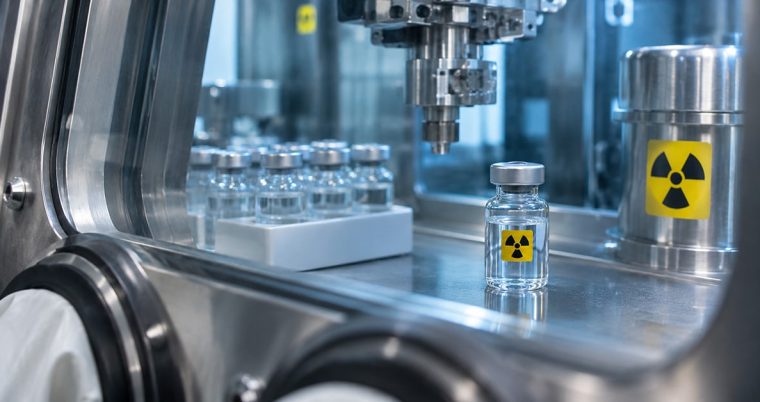
Telix Pharmaceuticals is betting up to US$2.35 billion on ITM, a cancer drug developer and established supplier of radioactive isotopes. One of those isotopes, lutetium-177, delivers the radiation in Novartis’s prostate cancer treatment Pluvicto. Drugmakers need a reliable supply of the isotope to increase production as demand grows.
The acquisition could make Telix both a supplier to and a therapeutic competitor of Novartis. On 19 November, Novartis put Pluvicto’s peak annual sales potential at US$5 billion.
That same day, ITM announced a new lutetium-177 supply agreement with Canadian manufacturer AtomVie. Telix shareholders are due to vote on the share issuance required for the acquisition on 1 December.
The bid raises a wider question for the industry. Will future demand for radiopharmaceuticals justify the investments being made to secure and expand isotope supply?
Visiongain Top Takeaways
- Pluvicto has room for further growth: Sales reached US$1.97 billion in the first nine months of 2026, up 41% at constant currencies. Recent US and Chinese approvals broaden its use.
- Telix could earn revenue from a major competitor: ITM’s supply relationship with Novartis dates back to 2018.
- Manufacturers are investing ahead of future drug launches: TerraPower’s US$450 million actinium-225 facility is a substantial bet on treatments still in development.
- Patient eligibility does not guarantee sales: Hospital capacity, specialist staffing and reimbursement will influence how many patients receive treatment.
Why Telix Wants More Than a Drug Pipeline
ITM’s manufacturing division generated US$77 million in adjusted EBITDA in 2025, but the company recorded an overall adjusted EBITDA loss of US$45 million as it invested in drug development.
Its isotope business offers Telix an established source of earnings. Through an agreement with Isogen, ITM has secured 15-year exclusive access to irradiation services at Bruce Power’s Canadian nuclear reactors for lutetium-177 production.
ITM-11, its lead investigational treatment for neuroendocrine tumours, could compete with Novartis’s Lutathera if approved.
Under the acquisition terms, up to US$250 million in additional payments depends on FDA approvals for ITM-11. Up to a further US$450 million is linked to sales performance, with the maximum payment triggered if global net sales reach US$300 million in 2030.
Telix will need to retain the third-party customers that make ITM’s manufacturing business valuable, even as its own therapeutic portfolio expands.
Earlier Treatment Opens a Larger Market
Pluvicto was originally approved for patients with advanced prostate cancer who had already received chemotherapy. According to Novartis, its July 2026 US approval for PSMA-positive metastatic hormone-sensitive prostate cancer nearly doubled the eligible patient population.
Earlier use is already driving sales growth, although regulatory progress varies by market. Novartis withdrew a separate European application for pre-chemotherapy use in metastatic castration-resistant prostate cancer following regulatory feedback, despite securing approval for that indication elsewhere.
Visiongain forecasts the global radiopharmaceutical therapies market to grow from US$7.65 billion in 2026 to US$31.65 billion by 2036, at a CAGR of 15.3%.
The Multibillion-Dollar Bet on Actinium-225
Four months after Bristol Myers Squibb completed its US$4.1 billion acquisition of RayzeBio in February 2024, an actinium-225 shortage forced the temporary suspension of recruitment to its lead candidate’s Phase III trial.
On 12 October 2026, BMS reported positive interim results. Investigational treatment RYZ101 improved progression-free survival in patients with gastroenteropancreatic neuroendocrine tumours whose disease had progressed following lutetium-177 therapy. The magnitude of benefit has yet to be disclosed.
According to Visiongain’s latest research, targeted alpha therapy is forecast to be the fastest-growing therapy segment through 2036. TerraPower’s US$450 million Philadelphia facility, scheduled to begin production in 2029, forms part of an expansion that the company says will increase global actinium-225 production capacity twentyfold.
Building too late could cost isotope producers customers and delay drug development. Building too early risks leaving expensive specialist facilities underused.
The Barriers Between Approval and Sales
In August, the FDA declined to approve ITM-11 in its submitted form, citing manufacturing controls and inspection-related issues at a third-party facility. According to ITM, the regulator identified no clinical safety or efficacy concerns.
Resubmission of the application, or agreement between Telix and ITM on how to proceed, is a condition of completing the acquisition.
A 2026 modelling study published in The Lancet Regional Health – Europe, funded by Novartis, estimates that the number of patients potentially eligible for radioligand therapies across the EU could rise from approximately 11,000–13,000 in 2025 to 130,000–180,000 by 2035.
Without corresponding investment in specialist facilities and staffing, drugmakers could find themselves with sufficient manufacturing capacity but too few treatment centres to meet projected demand.
Market Outlook
In its November SEC filing, US isotope producer Ionetix identified planned European actinium-225 production as a potential source of pressure on prices and market share.
Major pharmaceutical companies are also securing supply without acquiring producers. AstraZeneca extended its actinium-225 agreement with Niowave to ten years in December 2025. Novartis signed its own long-term supply agreement with the company in February 2026.
Visiongain Insight
Today’s isotope shortages may not justify tomorrow’s acquisition valuations. Additional actinium-225 production could put pressure on supplier margins if new treatments take longer to reach the market or demand falls short of expectations. The commercial risks will differ by isotope.
Owning production can reduce dependence on external suppliers, but pharmaceutical companies must absorb the cost of unused capacity if clinical programmes fail or sales disappoint.
Buyers should weigh the earnings from external customers and the benefits of internal production against acquisition and operating costs. Where expected volumes do not justify those costs, long-term supply agreements may offer better returns.
From Visiongain
Visiongain’s Radiopharmaceutical Therapies Market Report 2026–2036 provides ten-year revenue forecasts by radioisotope, therapy type, indication and end user across 21 geographical markets.
Identify the fastest-growing market segments, assess future revenue opportunities and benchmark your strategy against leading industry players.
Explore the report and download free sample pages.
Press & Media Enquiries
For commentary, data requests or interview enquiries, please contact: press@visiongain.com.