Uncrewed Underwater Vehicles (UUV) Market to Reach US$14.40bn by 2036
4 June 2026.
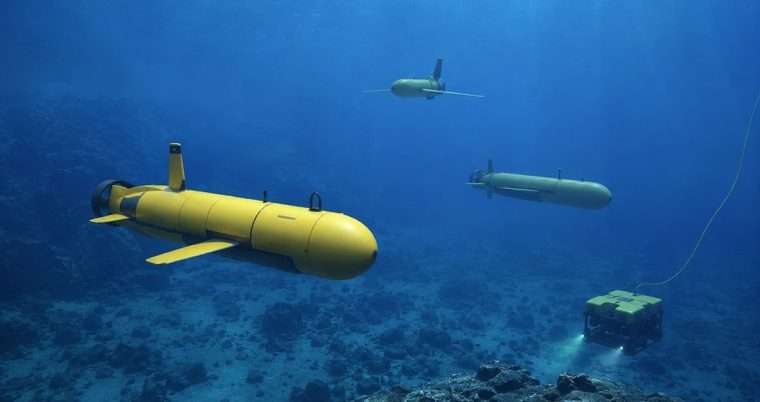
Growing naval modernisation programmes, seabed security concerns, and advancements in artificial intelligence are accelerating global UUV adoption.
The global defence industry is witnessing a profound shift toward autonomous maritime operations, with Uncrewed Underwater Vehicles (UUVs) emerging as one of the fastest-growing segments within naval defence. As governments seek to strengthen maritime security, improve underwater intelligence capabilities, and protect critical subsea infrastructure, investment in autonomous underwater technologies is increasing rapidly.
According to Visiongain’s latest market analysis, the global Uncrewed Underwater Vehicles (UUV) Market is projected to grow from US$6.78 billion in 2026 to US$14.40 billion by 2036, representing a compound annual growth rate (CAGR) of 7.8% over the forecast period.
The market is benefiting from growing defence budgets, increased geopolitical tensions, rapid technological advancements, and the emergence of new operational concepts that rely heavily on autonomous underwater systems. UUVs are increasingly being deployed to conduct intelligence gathering, surveillance, reconnaissance, mine countermeasure operations, infrastructure inspection, environmental monitoring, and seabed security missions.
Download Free Sample Report (incl. forecasts, market data, and methodology)
Aggressive Expansion of Anti-Submarine Warfare (ASW) and Distributed Maritime Operations
The rapid modernization and sharpening acoustic concealment profiles of next-generation sovereign submarine fleets have severely overextended traditional surface hull tracking architectures. Global naval commands are responding by shifting away from a small number of hyper-expensive, crewed vessels toward highly distributed uncrewed sensor arrays.
Budgetary streams are being aggressively re-routed into uncrewed underwater vehicle (UUV) acquisitions to serve as persistent, front-line search and tracking nodes. These autonomous platforms allow allied maritime forces to screen massive ocean sectors, establish continuous containment lines across vital geographic chokes, and execute complex localized tracking loops without risking high-value crewed assets or exposing surface ship signatures.
Escalating Gray-Zone Threats to Critical Undersea Infrastructure (CNI)
Frequent, coordinated disruptions targeting trans-oceanic fiber-optic data trunks, energy conduit valves, and seafloor power cables have fundamentally rewritten international naval doctrine. The physical protection of underwater assets has abruptly evolved from a routine maritime law enforcement task into an urgent national security priority.
Navies are compelled to deploy high-endurance autonomous underwater vehicles to provide continuous, high-resolution surveillance around submarine data hubs and energy corridors. The ongoing imperative to deter asymmetric deepwater sabotage and detect localized interferences near seabed choke-points represents a primary capital expenditure driver expanding the overall UUV market scale.
Technology and Innovation
Edge-Computed Autonomy and Advanced Target Recognition (ATR)
The defining technological milestone within the subsurface domain is the decoupling of uncrewed hulls from manual, surface-tethered umbilical cables. Driven by breakthroughs in edge-computed artificial intelligence and onboard machine learning, modern UUV platforms execute real-time autonomous path re-planning, multi-agent swarm coordination, and underwater obstacle avoidance independent of human control.
Equipped with advanced Synthetic Aperture Sonars (SAS) and automated target recognition software, these systems cross-reference acoustic returns against pre-loaded target databases locally on the ocean floor. Instead of merely collecting passive aerial or sonar imagery for retrospective interpretation, the platform identifies, flags, and classifies anomalies instantly, streamlining mine countermeasures (MCM) and hydroacoustic mapping operations at a fraction of standard operational timelines.
Trade and Supply Chain Considerations
Impact of U.S. Trade Tariffs on the Global Uncrewed Underwater Vehicles (UUV) Market
The imposition of stringent U.S. trade tariffs and expanded protectionist procurement policies is fundamentally altering the industrial flow of the global defence-grade maritime autonomy market. The implementation of strict Buy American Act provisions and aggressive regional tariff frameworks has targeted foreign imports of specialized micro-electronics, lithium-ion battery cell matrix components, and rare-earth magnets required for high-efficiency electric thrusters. These tariffs have injected significant volatility into the cost structures of primary Western defence contractors, directly lengthening lead times and extending overall vehicle completion horizons.
Concurrently, these trade penalties are forcing a structural division within the allied industrial supply chain base. To mitigate dependency risks on foreign mineral refiners and components susceptible to geopolitical embargoes, prime defence contractors are rapidly reshaping their manufacturing footprints.
Sovereign acquisition mandates are requiring 100% domestic pressure-hull fabrication, cleanroom sensor assembly, and component supply insulation. While these tariffs accelerate local technology investments within domestic borders, they present a near-term capacity constraint, causing extensive delivery backlogs across non-insulated tier-2 supply pipelines.
Resident Autonomous Subsea Docking Grids
The critical operational limitation historically constraining uncrewed underwater vehicles has been short chemical battery depletion loops, necessitating frequent launch and recovery cycles from surface ships. This constraint is opening a major commercial opportunity in “Resident UUV” seafloor-mounted grid infrastructures.
By strategically placing permanent, inductive power docking stations directly onto the ocean bed, autonomous systems can remain submerged for several months at a time. Vehicles can launch automated, edge-computed patrol routines around pipeline conduits, return to the seafloor cradle to recharge, and transmit collected telemetry links directly back to land command centres via secure subsea fibre networks, eliminating the operational footprint and high costs of surface support tenders.
Standardized Containerized Payloads and Modular Refit Upgrades
The shift toward decoupling mission-specific hardware suites from dedicated military hulls represents an expansive growth opportunity for agile systems integrators. The market is aggressively pursuing standardized, containerized modular payload architectures that utilize universal plug-and-play connections for acoustic modems, side-scan sonars, and data routing gateways.
This technological modularity enables naval forces to rapidly transform ordinary commercial offshore patrol or support vessels into highly capable uncrewed motherships via standard deck space refits. Handoff operations can seamlessly shift between mine warfare modules and deepwater anti-submarine arrays based on immediate theatre demands, compressing platform procurement cycles and lowering asset entry barriers by up to 65%.
Competitive Landscape
The major players operating in the uncrewed underwater vehicles (UUV) market are Anduril Industries, ASELSAN, BAE Systems Plc, Curtiss-Wright, DSIT Solutions, Elbit Systems, Exail Technologies, FINCANTIERI S.p.A., General Dynamics, Hanwha Group, Huntington Ingalls Industries, Israel Aerospace Industries, Kraken Robotics, Kongsberg Gruppen, L3Harris Technologies, Leonardo S.p.A., Lockheed Martin, Naval Group, Oceaneering International, Inc., RTX Corporation, Saab AB, Teledyne Technologies, Thales Group, ThyssenKrupp Marine Systems (TKMS), Atlas Elektronik, . These major players in this market have adopted various strategies, including M&A, collaborations, R&D investments, regional expansion, partnerships, and new product launches.
Recent Developments
- May 30, 2026, In the first official deliverable announced under Pillar 2 of the AUKUS trilateral security framework, defense ministers from the United States, United Kingdom, and Australia signed a major joint agreement to co-develop advanced payload technologies for uncrewed underwater vehicles (UUVs). The project focuses on standardizing control systems and payload interoperability to deploy UUVs for anti-submarine warfare, electronic warfare, and tracking threats against critical undersea infrastructure like data cables and energy pipelines. The UK has initially committed $201.8 million to jumpstart the initiative.
- April 27, 2026, HII (Huntington Ingalls Industries), the largest producer of UUVs for the U.S. Navy, was awarded a contract by the Defense Innovation Unit (DIU) to deliver a specialized Torpedo Tube Launch and Recovery (TTLR) system. The technology allows submarines to autonomously deploy and retrieve HII’s REMUS UUV variants directly from standard submerged torpedo tubes without diver intervention. This contract builds on successful live overseas testing executed from the Virginia-class submarine USS Delaware.
- March 12, 2026, Defense technology firm Anduril Industries was selected by the U.S. Navy and the Defense Innovation Unit (DIU) to participate in the Combat Autonomous Maritime Platform Project (CAMP). Under this initiative aimed at rapidly fielding extra-large autonomous underwater vehicles (XL-AUVs), Anduril is tasked with executing a long-duration, operationally representative demonstration of its Dive-XL vehicle. The company is actively scaling up production at its dedicated facilities in Rhode Island, USA, and Sydney, Australia, to manufacture hundreds of uncrewed subsea systems annually.
- May 20, 2026, Celebrating the 25th anniversary of its REMUS UUV line at the Combined Naval Event (CNE 2026) in the UK, HII highlighted a new strategic integration agreement with Babcock International Group. The partnership focuses on merging REMUS open-architecture UUV platforms with Babcock’s proprietary submarine weapon handling and launch hardware. This joint effort is designed to open new forward-deployed, highly stealthy operational pathways for allied naval forces across the Atlantic and Indo-Pacific regions.
Download Free Sample Report (incl. forecasts, market data, and methodology)
About Visiongain
Established in 1998, Visiongain is an independent publisher of analyst-led market intelligence, delivering data-driven research, forecasts, and strategic insight across global industries and emerging markets. Visiongain supports evidence-based decision-making for investment, procurement, and long-term strategic planning.
Media Contact
press@visiongain.com
+44 (0)20 7336 6100
www.visiongain.com