US Missile-Defence Deals Reach Deeper into the Supply Chain
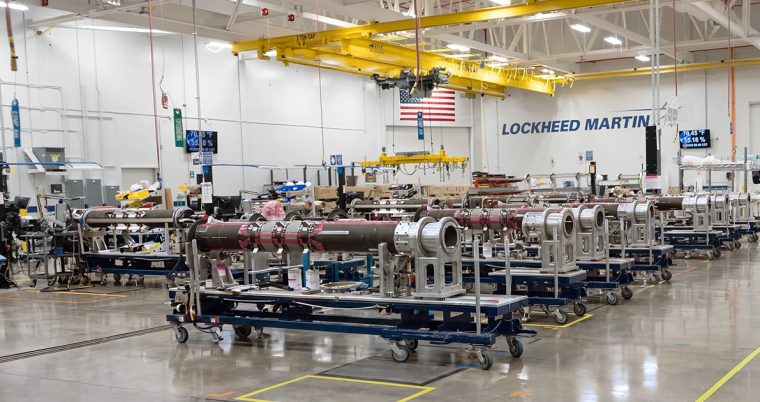
US demand for missile interceptors is running ahead of an industrial base built for lower and less predictable production volumes. Washington is responding with seven-year agreements for PAC-3 MSE and THAAD, supported by direct arrangements with the propulsion and seeker manufacturers that determine how many complete missiles can be produced.
The approach gives companies a clearer view of future demand, but it will not produce additional interceptors overnight. Output will still depend on final contract terms, congressional funding and whether specialist manufacturers can expand facilities, equipment and skilled workforces quickly enough.
Visiongain Top Takeaways
- Washington is no longer relying solely on larger orders to prime contractors. It is dealing directly with the propulsion, seeker and control-system manufacturers that can limit interceptor production.
- The US has put substantial multiyear contract structures behind both programmes: up to $58.62 billion for PAC-3 MSE and approximately $35.3 billion for THAAD. Those headline values do not mean the full amounts have already been funded or ordered.
- L3Harris is expected to nearly triple PAC-3 propulsion production and quadruple THAAD propulsion output, while Boeing’s seven-year framework is intended to triple PAC-3 seeker production.
- Washington is also sharing more of the investment risk. A $1 billion government investment in L3Harris’s missile business will support facilities used across PAC-3, THAAD, Tomahawk and Standard Missile production.
- The strategic problem extends beyond US stockpile replenishment. Limited output must also serve allied requirements, increasing the risk of longer delivery schedules and harder allocation decisions.
Washington Reaches Deeper into the Missile Supply Chain
On 27 July 2026, L3Harris announced two seven-year frameworks with the Department of War and Lockheed Martin covering critical propulsion and control components for PAC-3 MSE and THAAD.
The PAC-3 MSE agreement covers the interceptor’s two-pulse solid rocket motor, attitude-control motors and lethality enhancer. L3Harris expects the resulting contract to nearly triple production of these components.
The THAAD framework covers solid rocket boost motors and Liquid Divert and Attitude Control Systems, with propulsion output intended to increase fourfold. Both contracts are expected to be finalised later in 2026.
These components are central to the performance and availability of the complete interceptor. A shortfall in propulsion or terminal-control capacity would restrict deliveries regardless of how quickly Lockheed Martin expands final assembly.
The supplier agreements sit alongside much larger awards to the prime contractor. On 29 July, the US government added an interim contract modification worth up to $53.86 billion for PAC-3 MSE, bringing the programme’s total seven-year contract value to $58.62 billion. Some pricing, quantities and delivery terms remain subject to final agreement. Lockheed Martin says the award will support an increase in annual PAC-3 MSE interceptor production capacity from approximately 600 to 2,000 by the end of 2030.
THAAD received a separate multiyear, fixed-price incentive contract in June. Its total stated value is approximately $35.3 billion, with performance running from March 2026 to June 2032. Only about $842.9 million was obligated when the award was announced, underlining the difference between a contract’s headline value and funding already committed.
The agreements amount to a more active form of industrial policy. Washington is not replacing the prime-led model, but it is intervening further down the supply chain, where shortages can prevent larger prime contracts from becoming delivered missiles.
Targeting Production Bottlenecks
The same approach is visible in PAC-3 seeker production. Boeing entered a seven-year framework in April 2026 intended to triple seeker output, with Boeing, the government and Lockheed Martin negotiating towards a multiyear award.
That framework builds on approximately $2.7 billion in contracts awarded to Boeing in October 2025. Those agreements cover more than 3,000 seekers, with deliveries planned at rates of up to 750 a year through 2030.
Boeing has invested more than $200 million in its Huntsville, Alabama, operations since 2024, including a 35,000-square-foot expansion. The investment is material, but seeker availability is only one part of the production system. Propulsion, specialist materials, electronics, testing infrastructure and qualified labour must increase at compatible rates.
This is why larger final-assembly targets cannot be treated as production forecasts. A complete interceptor depends on numerous specialised inputs, often produced by a limited number of qualified manufacturers. If one company falls behind, additional capacity elsewhere may remain unused.
Longer Agreements, but Risk Remains
Seven-year contracts offer greater visibility than annual purchasing, but duration alone does not remove the commercial risk of expansion.
Manufacturers will still examine minimum quantities, funding profiles and contract terms before committing capital to new facilities and skilled labour. Interim awards can allow work to begin sooner, but they may leave pricing, quantities and delivery terms open to further negotiation.
Washington has already acknowledged that demand signals may not be enough. In April, L3Harris closed a $1 billion government investment in its Missile Solutions business. The funding takes the form of a convertible preferred security and is intended to support production and modernisation across several missile programmes.
The arrangement shifts part of the expansion risk from the contractor to the state. It may help unlock capacity more quickly, but it also creates an unusual relationship in which the government is both a major customer and a prospective shareholder. That will require careful oversight of pricing, competition and the allocation of public capital.
Other manufacturers will judge the model by whether it offers enough certainty to justify similar investment. Missile facilities and qualified workforces can take years to establish, while future orders remain vulnerable to changing budgets and operational priorities.
Market Outlook
The latest agreements mark the start of a significant industrial expansion, not evidence that the interceptor shortage has been resolved.
Higher output may expose constraints elsewhere in the production system. The present focus is on motors, seekers and control systems, but specialist materials, testing capacity and skilled labour could become more important as volumes rise.
There is also an unavoidable delay between investment and delivery. New facilities must be built, equipped and certified; workers must be recruited and trained; and lower-tier manufacturers must qualify additional production. Lockheed Martin’s planned PAC-3 MSE capacity increase is not expected to be fully established until the end of 2030.
The commercial opportunity extends beyond Lockheed Martin, Boeing and L3Harris. Companies providing propulsion materials, electronics, manufacturing equipment, testing services and production infrastructure could benefit as spending moves through the supply chain.
Capacity must now grow quickly enough to rebuild US inventories without further delaying allied requirements. Failure to do so would leave Washington facing difficult choices over how available interceptors are divided between operational commands, stockpile needs and partner nations.
Ultimately, the success of these agreements will be measured not by their headline contract values, but by whether they create a more resilient, scalable and responsive missile industrial base.


